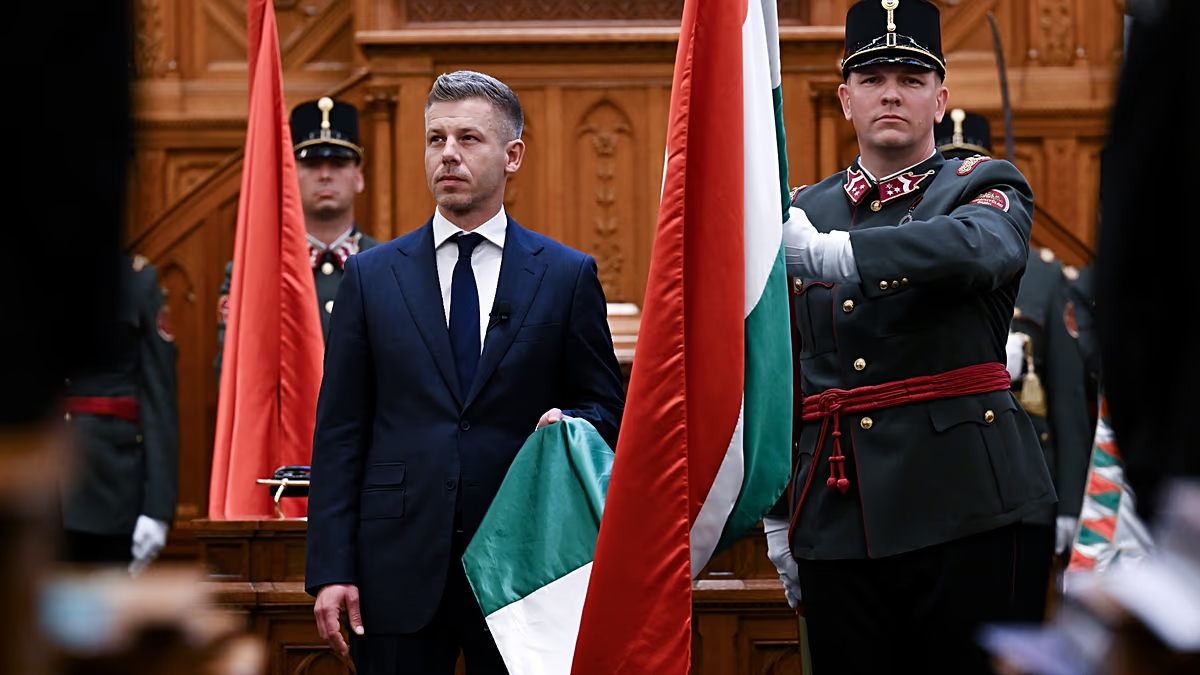



A new government under Péter Magyar is poised to take a critical, reforming look at a major Hungarian defense funding plan, inherited from the era of Viktor Orbán, amidst concerns over corruption and political favoritism. As reported by Euronews, the incoming administration will review a substantial national proposal for the EU’s Strategic Armaments Financing for Europe (SAFE) initiative—a low-interest loan scheme designed to bolster continental defense industries and military readiness in response to Russian aggression. This review signals a decisive break from the practices of the past, with Magyar’s team emphasizing that future decisions will be grounded in “real needs” and a rigorous “assessment of corruption risks.” The very initiation of this scrutiny before the government has formally taken office underscores the urgency and priority accorded to cleansing public procurement and ensuring national security interests are served transparently, not by cronyism.
The SAFE program, launched by the European Commission, represents a collective European effort to strengthen defense capabilities, distributing approximately €150 billion across 19 member states. Hungary, under the outgoing Orbán government, submitted a request for €16.2 billion last December, outlining various defense and dual-use projects. This request placed Hungary among the top applicants, seeking more funding than even France. However, unlike plans from several other nations, Hungary’s submission has languished in Brussels without approval. While the Commission has publicly framed the holdup as a technical matter requiring revisions, sources within Magyar’s circle and the former diplomatic corps perceive a more politicized delay, alleging the plan was effectively frozen ahead of Hungary’s elections and met with uncharacteristic silence from EU officials.
At the heart of the incoming government’s review is the issue of corruption risk, explicitly linked to Hungarian industrial interests closely tied to Orbán’s long-standing administration. The concern is that lucrative contracts under such a vast financing plan could have been directed to allies of the previous regime rather than being awarded through fair and competitive processes that best serve Hungary’s defensive needs. By promising a critical audit, Magyar’s team is addressing a core grievance of many Hungarian voters and aligning with the broader rule-of-law concerns that have led the EU to freeze billions in other funding for Hungary. This move is both a practical step in governance and a powerful symbolic gesture, affirming a commitment to end an era of perceived graft.
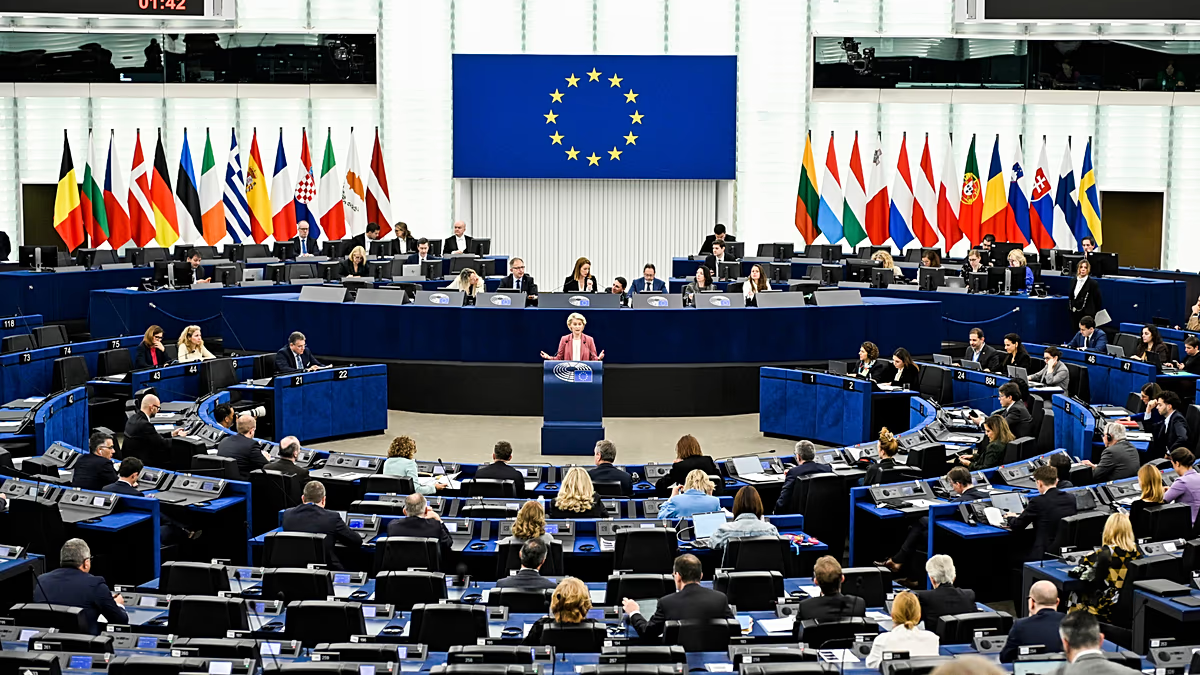
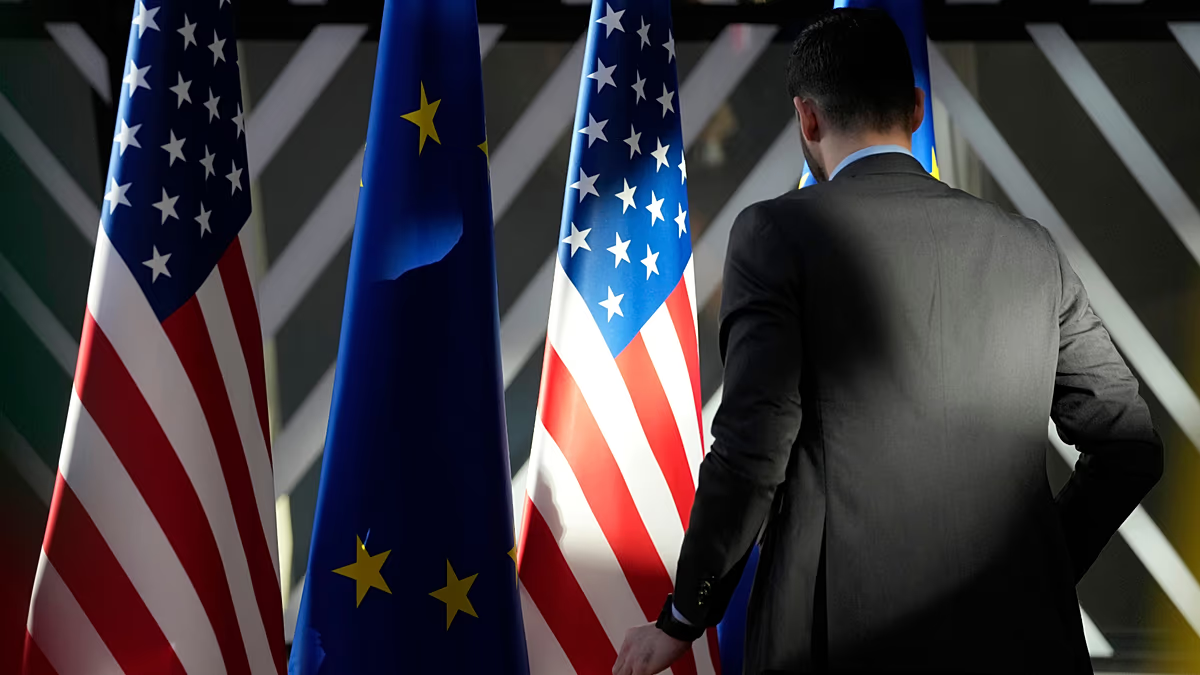
The European Commission, for its part, has engaged proactively with the incoming administration, indicating a shared desire to move forward. A high-level delegation, led by Ursula von der Leyen’s chief of staff, recently traveled to Budapest for preliminary talks with Magyar’s representatives—a notable overture given their yet-unofficial status. In these discussions, the blocked SAFE plan was addressed alongside the larger, critical issue of Hungary’s approximately €17 billion in frozen EU funds. The Commission spokesperson confirmed openness to dialogue, stating the assessment of Hungary’s defense plan is ongoing and will be approved when ready, while firmly rejecting claims that the delay was a political blockade. This engagement suggests a window of opportunity for resetting Hungary’s often-fraught relationship with Brussels.
For the average Hungarian citizen, this complex bureaucratic and political maneuvering translates into very real stakes. The successful unlocking of both the SAFE funds and the broader frozen EU allocations is pivotal for Hungary’s economic and infrastructural development. Magyar’s entire election campaign centered on the promise to restore this vital flow of European capital by repairing trust and demonstrating a genuine commitment to democratic standards. With a deadline to access €10 billion in post-pandemic recovery funds looming at the end of August, the pressure to demonstrate swift, credible reform is immense. The review of the defense plan serves as the first major test of this new approach, a tangible action to prove that the change in leadership will mean a change in how the country conducts its business.
Ultimately, the scrutiny of the SAFE plan is more than a routine policy adjustment; it is a microcosm of Hungary’s potential political transition. It represents a shift from closed-door dealings to transparent assessment, from geopolitical friction with the EU to constructive negotiation, and from allegations of systemic corruption to a promise of accountability. The outcome will signal whether a new chapter is truly beginning—one where Hungary can secure the resources it needs for security and growth through cooperation, based on merit and integrity rather than patronage and political conflict. The path forward requires careful balancing: meeting urgent defense needs, satisfying the EU’s rigorous criteria, and fulfilling the public’s demand for honest governance. How Magyar’s team navigates this first challenge will set the tone for their entire tenure.