




In a late-night social media post that captured the volatile state of international affairs, U.S. President Donald Trump delivered a stark ultimatum to Iran. On his Truth Social platform, he declared that time was running out for the Iranian regime, warning that if it did not swiftly comply with American demands and agree to a deal securing a permanent ceasefire, “there won’t be anything left of them.” This blunt threat, emphasizing that “TIME IS OF THE ESSENCE,” underscored the heightened tension and the profound frustration felt by the White House. The conflict, ignited by major U.S. and Israeli strikes on Iran beginning February 28th, has paralyzed diplomatic progress and plunged the Middle East into a prolonged crisis, with the broader peace process stalled in a seemingly intractable impasse.
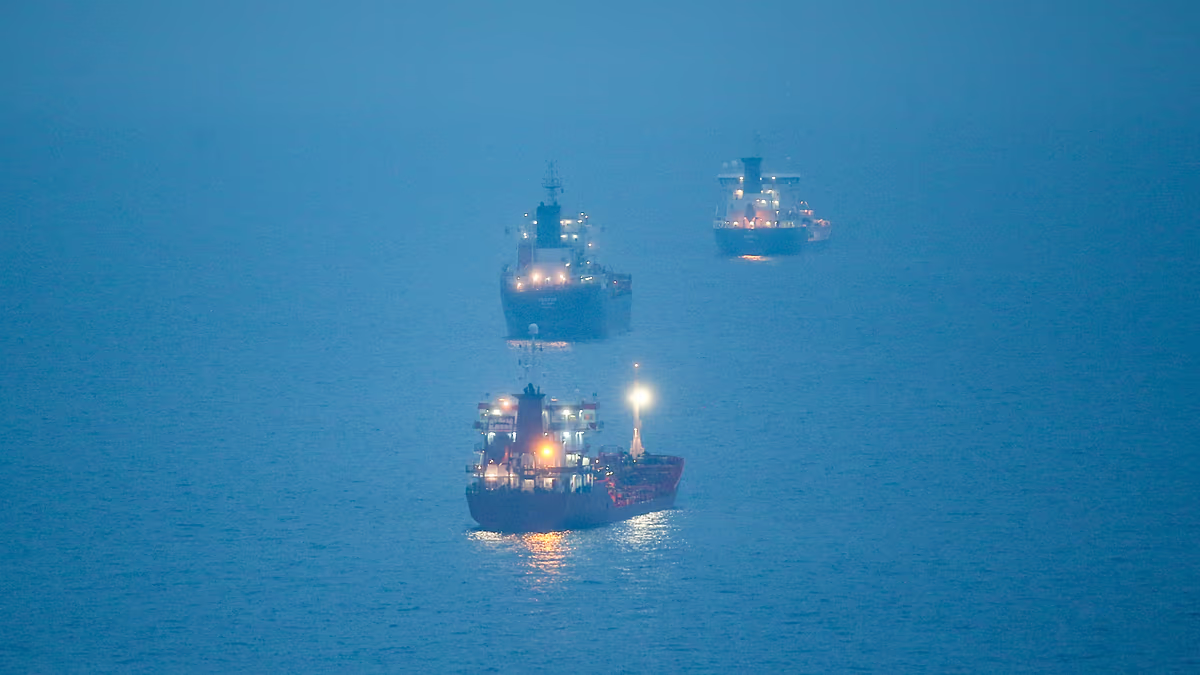
The ramifications of this ongoing war extend far beyond the direct combatants, destabilizing the entire region and sending shockwaves through the global economy. A critical consequence has been the effective blockade of the Strait of Hormuz, a maritime artery through which a fifth of the world’s oil exports traditionally flow. This disruption has contributed to soaring global energy prices, affecting nations worldwide. Furthermore, the conflict has spilled over borders, drawing neighboring countries like Israel and Lebanon into a deadly and separate confrontation. Iran, the patron of the Lebanese militant group Hezbollah, has insisted on a lasting ceasefire in Lebanon as a precondition for any broader peace agreement with the United States. This demand, coupled with Tehran’s refusal to accept a deal solely on Trump’s terms, has created a deadlock where both sides, while expressing a nominal readiness to resume full-scale fighting, find themselves trapped in a cycle of threats and stalled negotiations.
Central to this diplomatic stalemate is the enduring and deeply contentious issue of Iran’s nuclear program. The United States, under Trump’s direction, seeks an absolute commitment from Iran to completely eradicate its nuclear infrastructure. Conversely, Tehran aims to preserve elements of its program for stated civilian purposes. The latest U.S. proposal, as reported by Iranian media, appears to involve a slight easing of demands but remains fundamentally stringent. It reportedly includes a five-point list requiring Iran to operate only one nuclear site and to transfer its significant stockpile of highly enriched uranium to American custody. This stockpile, approximately 440 kilograms of uranium enriched to 60% purity, represents a grave concern for the international community; it theoretically provides Iran with enough fissile material for multiple nuclear weapons if further enriched, a process described as a short, technical step.
As diplomatic channels stagnate, the theater of conflict has visibly widened, with regional tensions escalating dramatically. This expansion was starkly illustrated by a serious incident targeting a United States ally. On Sunday, Iranian drones struck the Barakah nuclear power plant in the United Arab Emirates, sparking a fire in what UAE authorities denounced as an “unprovoked terrorist attack.” The facility, a $20 billion project built with South Korean expertise and the only nuclear plant in the Arab world, provides a quarter of the UAE’s energy needs. While officials reported no injuries or radiological release, and confirmed that plant safety was not compromised—with one reactor temporarily relying on emergency diesel generators—the symbolic and strategic impact of the strike was profound. The UAE Defence Ministry detected three drones near the facility, confirming one hit the site while two others were intercepted, and pointedly accused Iran of launching the new attacks.
The assault on the Barakah plant was immediately condemned as a dangerous escalation by regional powers. Anwar Gargash, a diplomatic advisor to the UAE president, stated that such an attack, “whether carried out by the principal actor or through one of its proxies,” marked a grave intensification of hostilities. This sentiment was echoed by Saudi Arabia, which both condemned the attack on its neighbor and later reported intercepting three drones that entered its airspace from Iraq. The incident underscored a pattern of retaliation, with Iran and its allied Shiite militias in Iraq having launched numerous drone and missile attacks targeting Gulf Arab states since the war’s inception. Nations like Qatar, Kuwait, Bahrain, Saudi Arabia, and Oman have all been subjected to what Iran describes as retaliatory strikes for U.S.-Israeli actions, placing the entire Gulf region on a persistent defensive footing.
This confluence of events—a dire presidential ultimatum from Washington, a frozen negotiation over a core nuclear dispute, and a brazen attack on a critical civilian energy facility in a allied nation—paints a picture of a crisis spiraling toward a potential tipping point. President Trump’s ticking clock rhetoric suggests an appetite for a decisive, perhaps devastating, military resolution if diplomacy fails to yield immediate results. Meanwhile, Iran’s willingness to target strategic infrastructure in neighboring states demonstrates its capacity and intent to broaden the conflict and retaliate against U.S. allies. The situation now hangs in a precarious balance, where the next move—a substantive concession at the negotiating table or another provocative military action—could determine whether the region descends into an even more catastrophic phase of war or finds a fragile, last-minute path toward an uneasy peace. The stakes, encompassing global energy security, regional stability, and the existential threat of nuclear proliferation, are impossibly high.