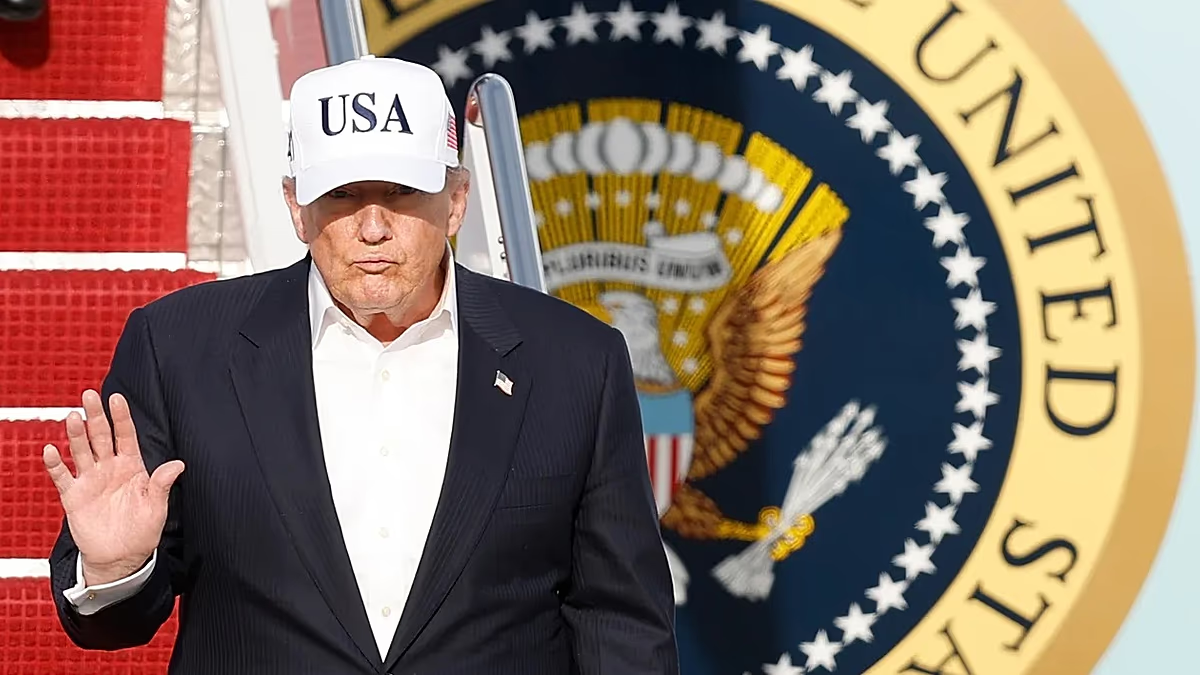



The relationship between the United States and Cuba, a story of profound ideological conflict spanning over six decades, has entered a period of heightened tension and unexpected diplomatic maneuvering. According to recent U.S. media reports, Washington is considering a legally explosive measure: the indictment of Cuba’s former President, Raúl Castro. Now 94 years old and the brother of the late revolutionary leader Fidel Castro, Raúl is a symbol of the Cuban system. Such an indictment would represent a dramatic escalation, targeting the man who once oversaw a historic diplomatic thaw with the United States under President Barack Obama in 2015. This potential legal action, reportedly focused on the 1996 downing of two civilian planes operated by anti-Castro activists, underscores a hardening U.S. stance under President Donald Trump, who has repeatedly signaled his desire to topple Cuba’s communist government. The move comes as Cuba grapples with a severe humanitarian crisis, marked by constant power outages attributed to a U.S. fuel blockade.
Amidst this landscape of threatened indictments and economic pressure, an extraordinary and seemingly contradictory event occurred: the head of the CIA, Director John Ratcliffe, visited Havana. This was a remarkable step, given the CIA’s central role in the long history of espionage and hostility between the two nations. Official photos showed Ratcliffe meeting with Cuban intelligence officials, a visual paradox in a time of deepening crisis. The Cuban government framed the visit as an opportunity to calm tensions and engage in political dialogue. It forcefully used the occasion to assert that Cuba does not and will not constitute a threat to U.S. national security, challenging its inclusion on the U.S. list of state sponsors of terrorism. This high-level intelligence meeting, occurring while the threat of indicting a former president loomed, highlights the complex, two-track nature of current relations—where confrontation and clandestine diplomacy exist simultaneously.
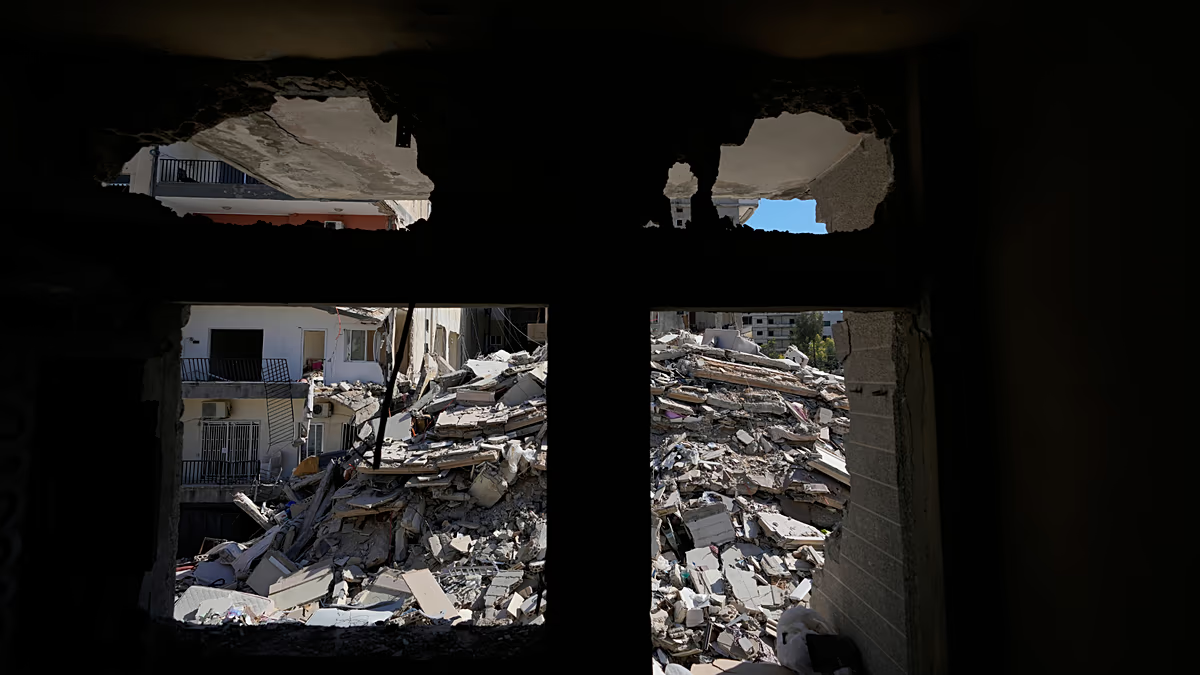
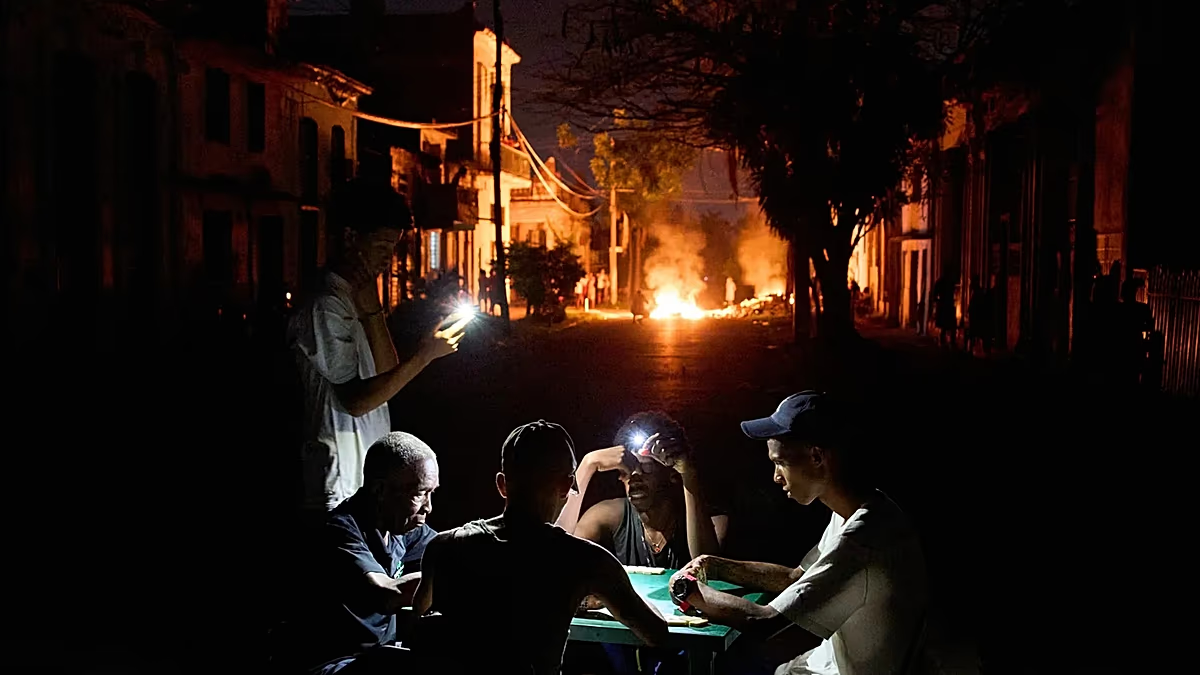
The context for these developments is an acute and desperate energy shortage on the island. Cuba’s Energy Minister publicly stated that the country has run out of oil, attributing the crisis directly to the U.S. blockade. The once-reliable flow of fuel from Venezuela, a key economic lifeline, was severed following U.S. actions against that country’s government. Only a single tanker from Russia, Cuba’s historic ally, has managed to deliver relief. This blockade has crippled daily life, causing blackouts and scarcity, and forms the backdrop against which all political actions are now measured. The Cuban people’s suffering is the palpable reality behind the geopolitical chess game.
In response to this humanitarian situation, U.S. Secretary of State Marco Rubio renewed an offer of $100 million in aid, conditioned on distribution through the Catholic Church rather than the Cuban government. In a televised interview, Rubio placed blame for the crisis squarely on Cuba’s leadership, not on U.S. policy. He argued that it is in America’s national interest to prevent a “failed state” so close to its shores, framing the aid as a direct lifeline to the Cuban people, bypassing their rulers. This conditional offer underscores the political dimension of the crisis, where humanitarian assistance is intertwined with strategic objectives to undermine the government.
Cuban President Miguel Díaz-Canel responded directly to this offer on social media, arguing that the solution is not conditional aid but the lifting of the blockade itself. He stated that the humanitarian situation is “coldly calculated and induced” by U.S. policy, implying that the suffering is a deliberate tool of pressure. His plea was for the U.S. to ease the damage in a “simpler and faster way” by relaxing the sanctions that directly cause the fuel and medicine shortages. This exchange highlights the fundamental disagreement: the U.S. views the crisis as a failure of communism to be circumvented; Cuba views it as an imposed stranglehold to be removed.
Despite these intense public hostilities and the shadow of a potential indictment against Raúl Castro, official channels of communication remain open. A high-level diplomatic meeting took place in Havana in April, marking the first time a U.S. government plane had landed there since 2016. This suggests that beneath the surface of public threats and accusations, both nations recognize the necessity of maintaining some dialogue. The current moment is thus one of stark contradiction—of threatened legal warfare against an iconic leader alongside intelligence chief visits and diplomatic talks, all set against the backdrop of a nation in tangible distress due to economic warfare. The path forward remains fraught, balancing between the ghosts of past incidents like the 1996 plane shootdown and the urgent present needs of a population caught between two governments’ enduring struggle.