



Paragraph 1
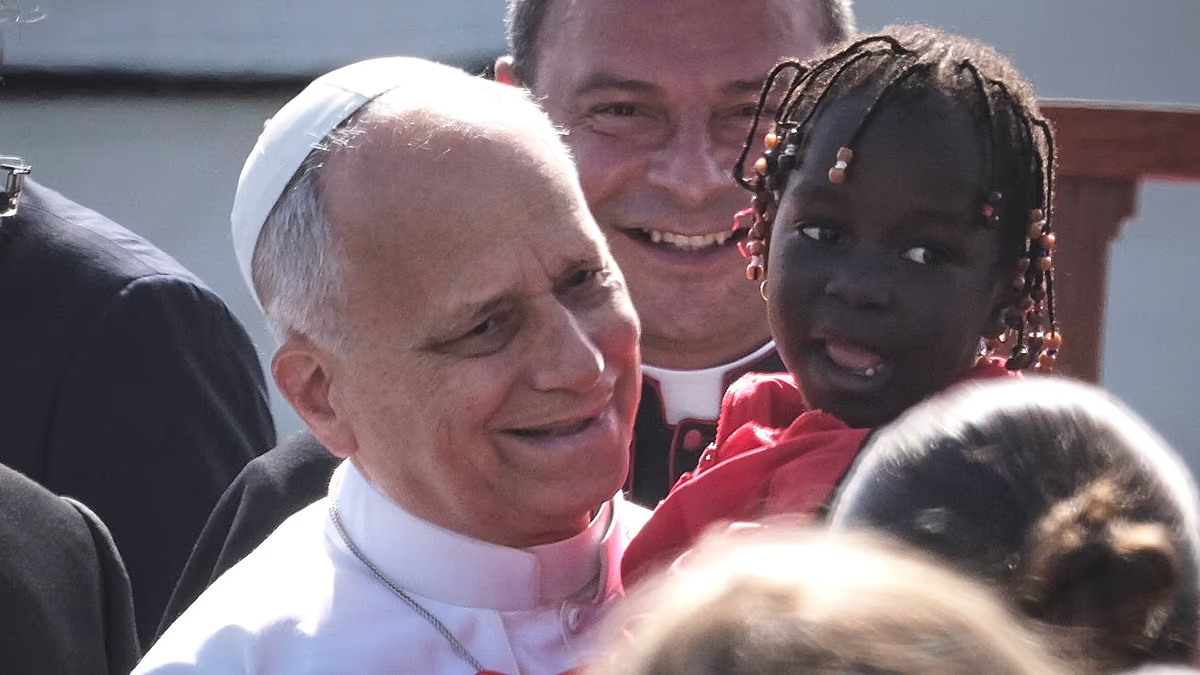
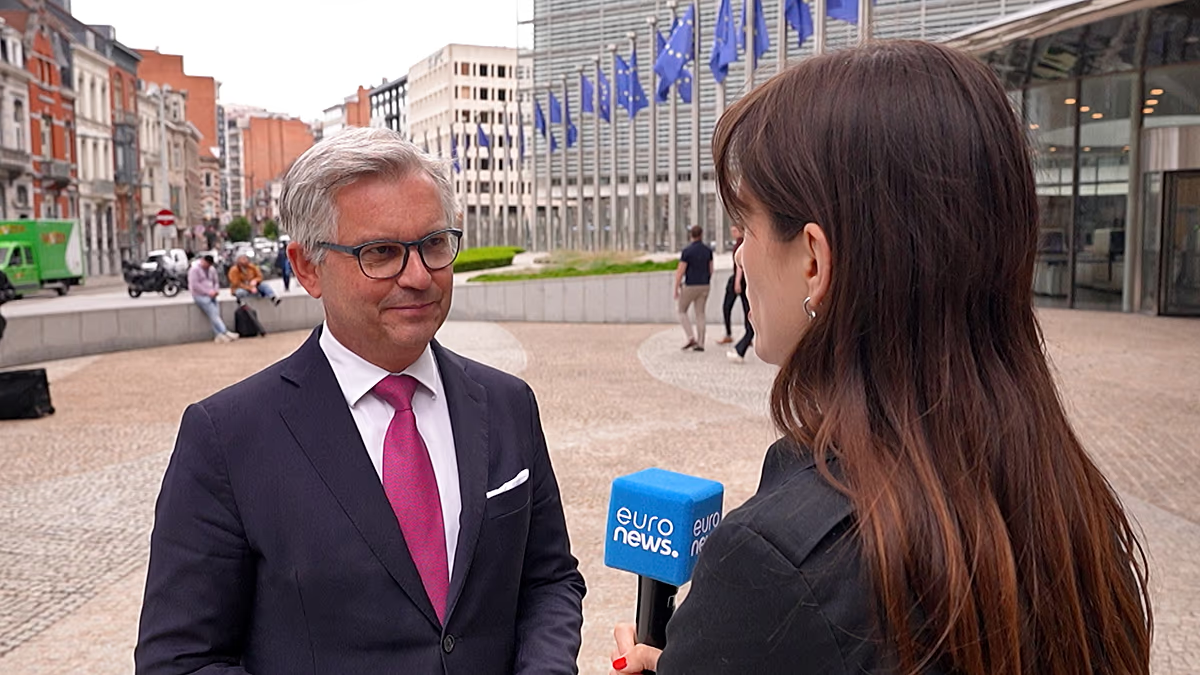
As the European Union stands on the brink of implementing its most significant overhaul of migration policy in ten years, a notable conversation has emerged at the intersection of high-level politics and moral authority. European Commissioner for Migration, Magnus Brunner, revealed in an interview with Euronews that he recently discussed the contentious reforms with Pope Leo XIV. This dialogue highlights the profound tension at the heart of the EU’s approach: the urgent political drive to manage borders and processes systematically, and the unwavering ethical imperative to uphold human dignity. Brunner sought to align these spheres, asserting that principles of human dignity and international law are central to the new pact. The Pope, having just visited the migrant-intensive Canary Islands, reinforced this sentiment, declaring that “Human dignity has no passport,” a powerful reminder that legal frameworks must not eclipse fundamental human worth.
Paragraph27
The Pope’s stance was further amplified by his recent address to the Spanish Parliament, where a prolonged standing ovation greeted his call for greater protection and “love” for society’s most vulnerable, including migrants. When questioned on whether Brussels’s vision was compatible with this humanitarian appeal, Commissioner Brunner affirmed, “Definitely, yes.” He contends that the new system is designed to be both firm and fair. The reforms, encapsulated in a pact covering ten legislative files, aim to create what he calls a “comprehensive European-wide system.” This system promises stronger external border checks, accelerated asylum procedures at the border, and a more efficient mechanism for the entire bloc. For Brunner, this represents a necessary step to “bring our European house in order,” suggesting that without a structured, unified approach, chaos prevails and human suffering can be exacerbated.
Paragraph 3
However, the proposed reforms, particularly the establishment of “return hubs,” have ignited fierce criticism and reveal a stark divide in perspective. These hubs, deportation centres located outside the EU’s borders, are intended to process individuals whose asylum claims have been definitively rejected. Modeled on Italy’s existing centers in Albania—a project praised by Prime Minister Giorgia Meloni—the concept echoes the UK’s controversial and legally challenged Rwanda plan. Proponents like German Chancellor Friedrich Merz argue the pact will deliver “better control and order, faster procedures, and a fair distribution of responsibility” among member states. Yet, human rights organizations offer a grim counter-narrative. Amnesty International has condemned the proposals as “cruel,” while survivors of similar offshore detention schemes, such as those from Australia, have warned EU lawmakers of the profound human “tragedy” that such policies can inflict.
Paragraph 4
The driving force behind this hardline component is a stark statistic that Commissioner Brunner finds unacceptable: currently, only about 29% of individuals ordered to leave the EU are actually returned to their home countries. In his view, the “return regulations” are the crucial missing piece that will make the entire migration pact credible and effective. The political logic is clear; without a tangible means of enforcing rejections, the entire asylum system risks being perceived as undermined. Simultaneously, the EU points to data from its border agency, Frontex, showing a year-on-year decline in irregular border crossings since 2021, with current figures around 178,000. This trend is used to argue that robust management and deterrence, coupled with legal pathways, can reduce dangerous, irregular journeys.
Paragraph 5
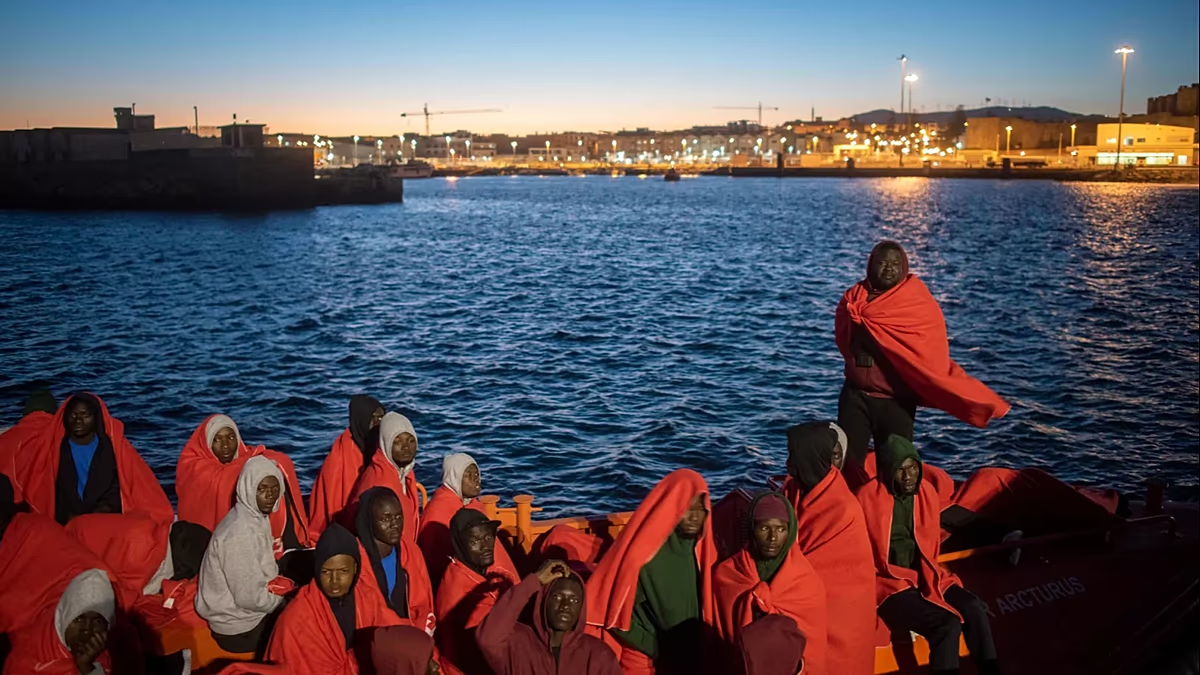
Nevertheless, the ethical chasm between statistical management and lived human experience remains vast. The Pope’s symbolic backdrop in the Canary Islands—rescue ships and a wooden cross fashioned from the wreckage of a migrant boat—serves as a potent visual manifesto against policies that risk dehumanization. Critics argue that outsourcing asylum procedures and deportations to third countries creates legal black holes, distances oversight, and subjects vulnerable people to prolonged detention in potentially inadequate facilities. They fear that a system predicated on speed and efficiency at the borders may ultimately fail to provide the nuanced, individual assessment that genuine refugee protection requires, confusing the swift rejection of a claim with justice.
Paragraph 6
In essence, the EU’s new migration pact represents a monumental attempt to square a circle that has long confounded the bloc: reconciling sovereign control with humanitarian obligation, and regional unity with ethical consistency. Commissioner Brunner and supportive national leaders frame it as a long-overdue rationalization of a broken system, essential for maintaining public trust and social cohesion within Europe. Their opponents see it as an institutionalization of fortress Europe, a system where deterrence and deportation trump protection. As member states move to implement these reforms, the haunting words of the Pope and the applause in Madrid will continue to serve as a moral benchmark. The ultimate test of this “comprehensive system” will not be found in quarterly return statistics or border crossing numbers alone, but in its ability to navigate the narrow path between order and empathy, ensuring that in bringing the “European house in order,” its foundations are built on a genuine respect for the dignity that has no passport.