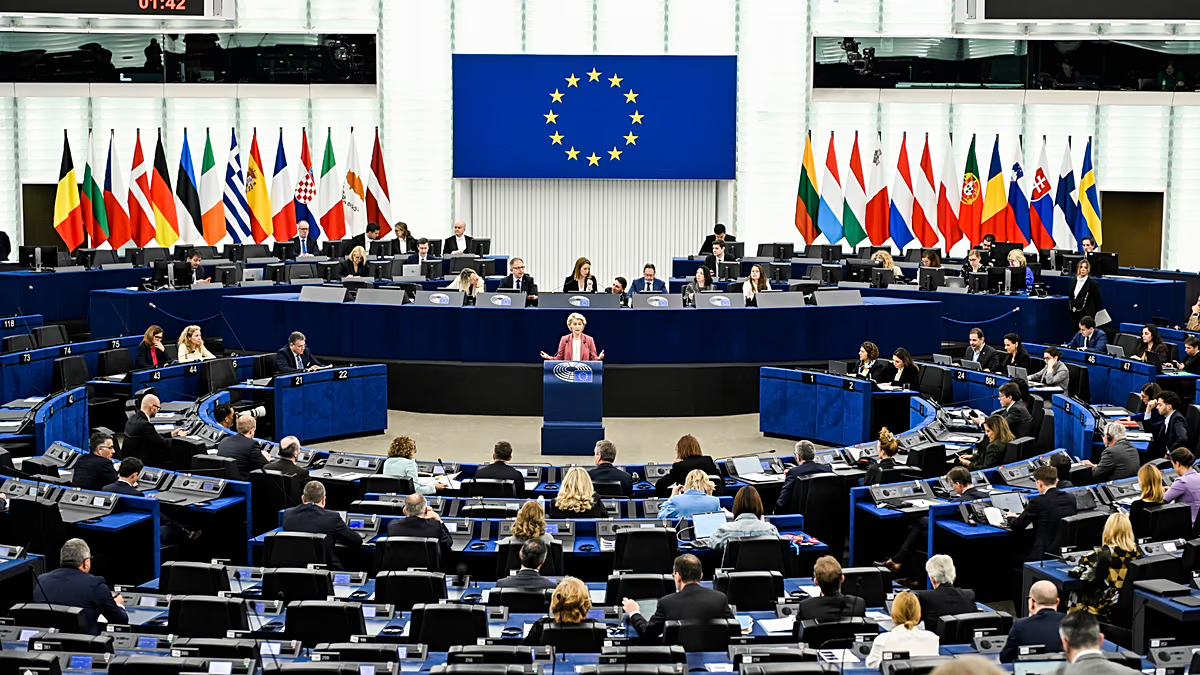


In a rapidly evolving European political landscape, the April 20, 2026, edition of Europe Today, anchored by Mared Gwyn, offers a crucial snapshot of the continent’s pivotal challenges. The show, driven by a mission to deliver not just events but analysis, promises a deep dive into stories shaping the European Union and the wider world. From election shocks in the Balkans to geopolitical manoeuvring in Central Europe and escalating conflicts in the Middle East, the broadcast weaves together a complex tapestry of instability, shifting alliances, and democratic recalibration. It is a program designed for viewers seeking to understand the interconnected forces at play, moving beyond headlines to provide context and expert insight on the day’s most pressing developments.
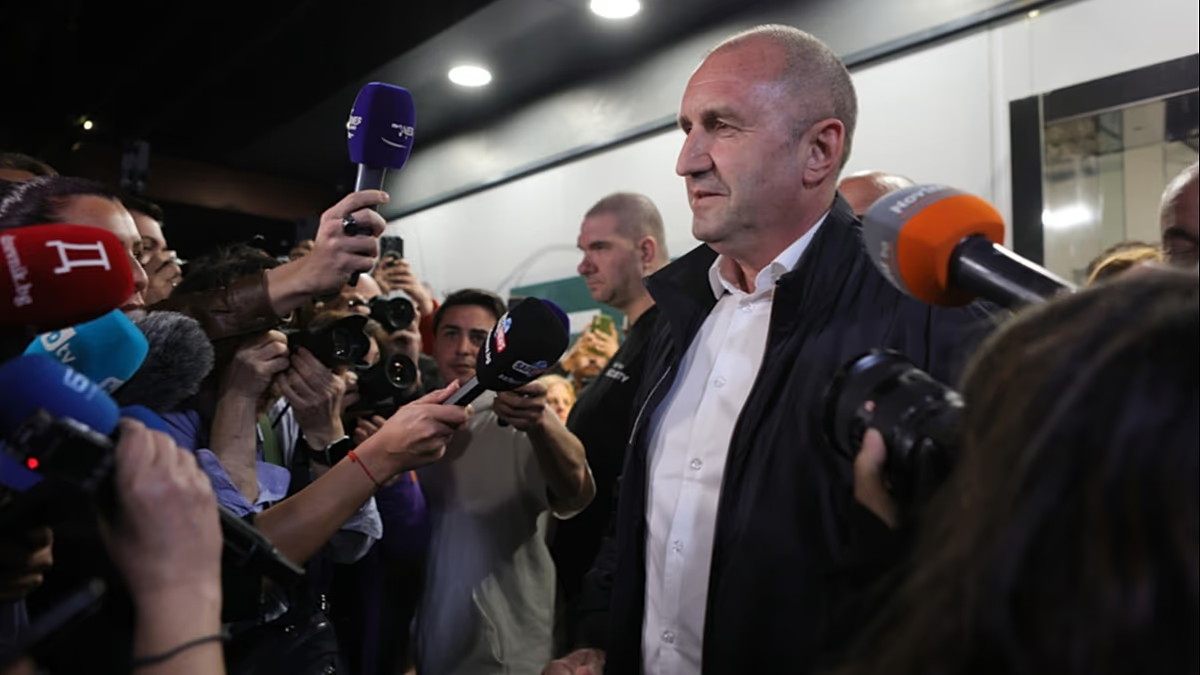
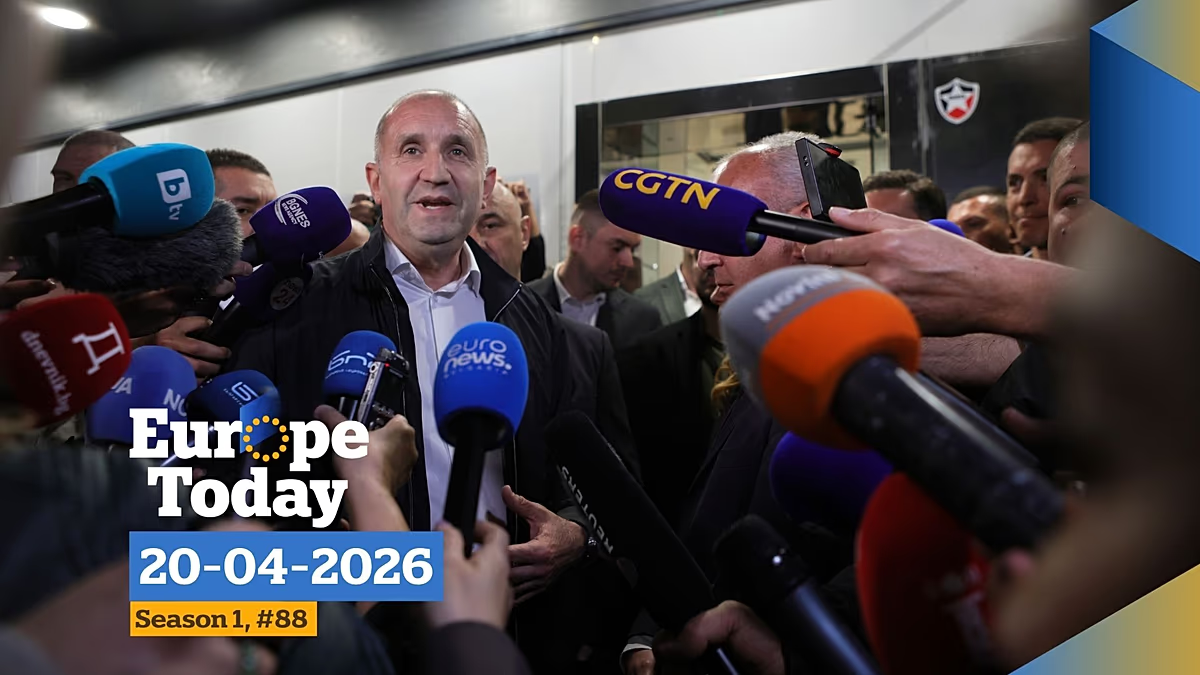
The top story focuses on Bulgaria, emerging from a significant national election. Marina Stoimenova reports from Sofia, where voters have delivered a verdict that is still being deciphered. The results, likely reflecting public fatigue with corruption, economic anxiety, or geopolitical orientation, signal a potential new chapter for the southeast European nation. To unpack the implications, the program features an interview with Martin Vladimirov, an analyst from the Centre for the Study of Democracy. Vladimirov provides a nuanced look at Bulgaria’s political and economic outlook, exploring whether this electoral shift will translate into tangible stability or reform. His analysis is vital, as Bulgaria’s trajectory has profound implications for EU cohesion, energy security in the region, and the bloc’s stance toward Russia’s ongoing war in Ukraine, a conflict that remains the central fault line in European politics.
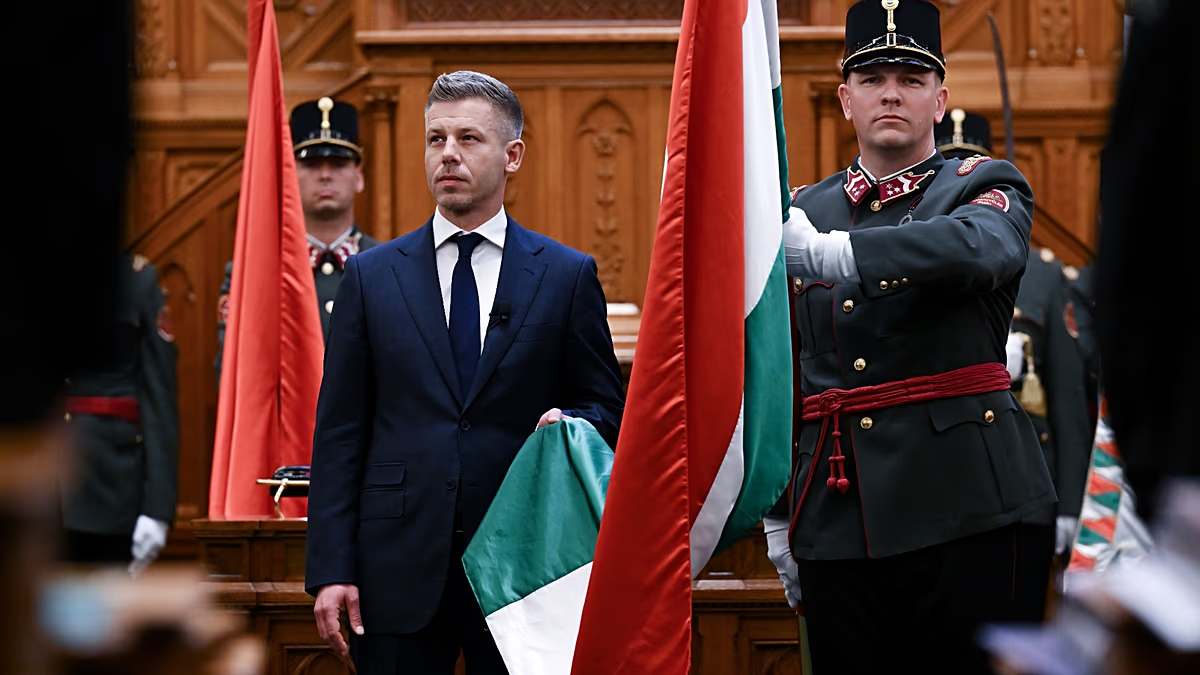
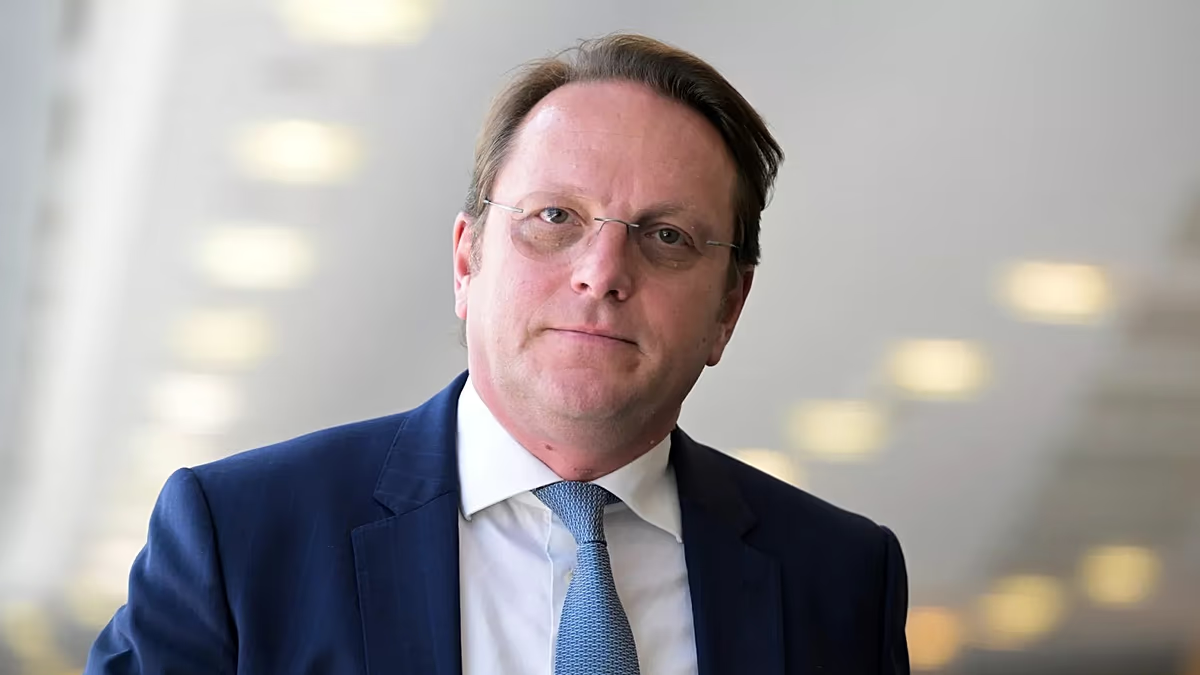
That very conflict leads the broadcast to its next, closely related segment. Euronews’ Sándor Zsíros reports on a surprising development from Budapest: Hungarian Prime Minister Viktor Orbán appears willing to unblock the EU’s substantial €90 billion loan package for Ukraine. This represents a potential seismic shift, as Orbán has been the most persistent EU critic of unconditional support for Kyiv. The move, should it be finalized, could drastically ease internal EU tensions and ensure a steady flow of financial aid to a nation fighting for its survival. However, it raises immediate questions about what prompted Orbán’s seeming change of heart. The report likely explores whether this is a genuine strategic pivot, a tactical concession to secure other EU funds for Hungary, or a reflection of intense behind-the-scenes pressure from fellow member states desperate to present a united front.
To provide deeper context for this Hungarian moment, analyst Jakub Janas offers an explainer on what Hungary can learn from Poland’s recent political shift. Poland, once a governing partner in illiberalism with Orbán’s Hungary, has seen a dramatic change of government to a more pro-EU, centrist coalition. Janas’s piece is a compelling study in political contrasts and potential lessons. It examines whether the Polish example—where voters ultimately turned away from prolonged confrontation with Brussels—serves as a cautionary tale for Orbán, or if Hungary’s political landscape is too distinct for the same script to apply. This analysis moves the discussion from immediate news to a broader understanding of democratic cycles and the potential limits of populist governance within the European framework.
Shifting from European power plays to a direct crisis, the program then turns to the escalating conflict in the Middle East. Euronews correspondent Jane Witherspoon reports live from Dubai with the latest on the Iran war. While details from the segment are unspecified, her live location underscores the gravity and immediacy of the situation. The reporting would cover the military and humanitarian dimensions of the conflict, its impact on global oil markets and regional stability, and the delicate, often fraught, diplomatic efforts to contain the violence. This segment is a stark reminder that Europe’s security and economic fortunes are inextricably linked to events far beyond its borders, and that EU leaders must navigate this crisis amidst their own internal challenges.
Finally, the program looks toward a coordinated political response to the rise of right-wing populism, with EU News Editor Maria Tadeo providing an inside look at the Global Progressive Mobilisation meeting in Barcelona. Led by Spain’s Prime Minister Pedro Sánchez, this gathering represents an attempt to forge a united front among centre-left and progressive leaders across the continent. Tadeo’s report would explore the agenda, the key figures involved, and the policy platforms being promoted as an alternative to nationalist agendas. It asks whether this mobilization can effectively articulate a compelling vision for social democracy, climate action, and European solidarity that resonates with a weary electorate. The show concludes by reminding viewers that Europe Today, under the stewardship of chief anchor Méabh Mc Mahon and Maria Tadeo, is available daily across TV, digital platforms, and as a podcast and newsletter, providing an essential service for citizens navigating an increasingly complex world.