



Paragraph 1: The Sudden Shock in Newark
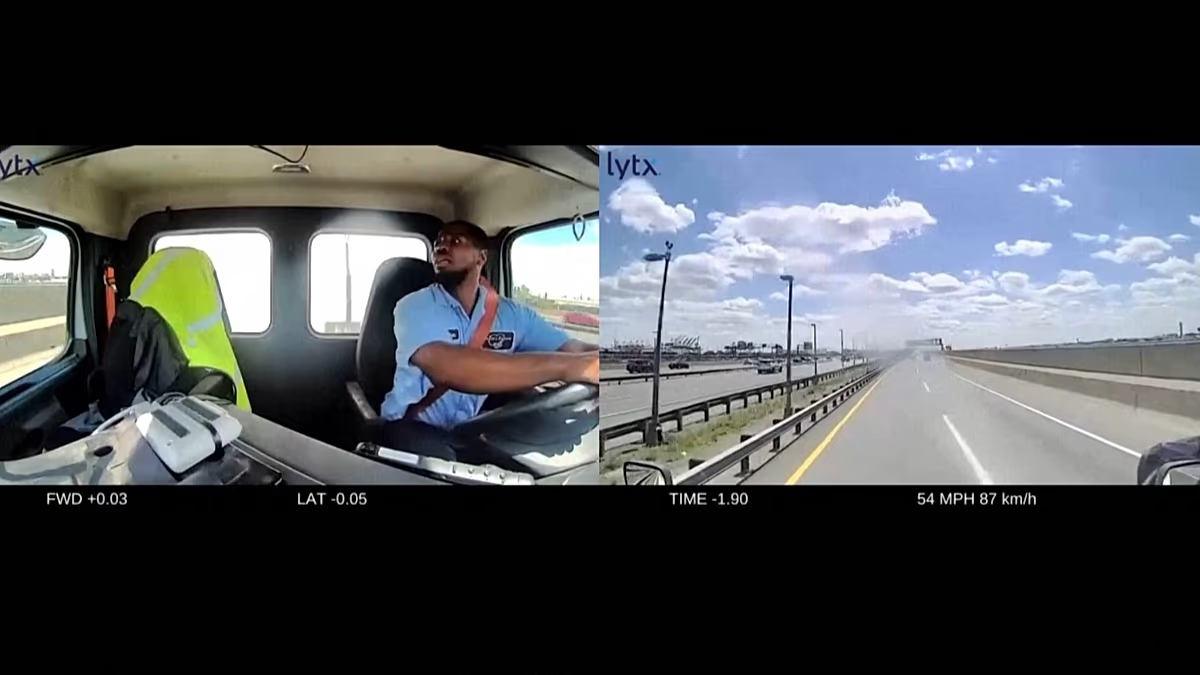
On a seemingly routine day at Newark Liberty International Airport, an event unfolded that was anything but ordinary. A United Airlines flight, carrying 231 passengers and crew, was attempting to land when it struck a light pole and, in a terrifying cascade of events, a bakery delivery truck parked near the runway. The jarring incident was captured by a dashcam, a piece of technology that transformed an unseen aviation anomaly into a visceral, shared public experience. In a split second, the video shows debris—likely from the shattered light pole—smashing through the windshield of the truck. This moment, frozen in digital footage, underscores the unpredictable nature of such events, where the boundary between the controlled world of airport operations and the chaos of an accident collapses entirely.
Paragraph 2: The Human Impact Beyond the Cabin
While the headline number—231 souls aboard the aircraft unharmed—is a profound relief, the true human dimension of this event extends beyond the cabin door. The bakery truck driver, an individual performing his everyday job, delivering goods in the airport’s industrial ecosystem, became an unwitting participant in this drama. Suffering minor injuries from the flying debris, his experience highlights the often-overlooked network of ground personnel who make air travel possible. Their safety is equally vital. This incident serves as a stark reminder that airport safety is a holistic concept; it is not just about the passengers in the sky, but also about every worker on the ground, from the baggage handler to the caterer, all operating in the periphery of immense kinetic energy.
Paragraph 3: The Miraculous Outcome and the Questions It Raises
The fact that no one on the aircraft was injured is, without exaggeration, miraculous. It speaks to the robust structural integrity of modern aircraft and, likely, to the skill of the pilots in managing the aftermath of the impact. However, this fortunate outcome should not mute the serious questions this event naturally raises. How, in a highly regulated and technologically monitored environment like a major international airport, does a landing aircraft come into contact with ground infrastructure and a vehicle? It prompts immediate inquiries into procedures, clearance protocols, the designated paths for ground traffic, and the real-time communication between flight crews and airport ground control. The “why” behind this incident is crucial for preventing any future occurrence, regardless of the positive outcome this time.
Paragraph 4: The Role of Technology as Witness and Tool
The dashcam video is a pivotal element of this story. It acts as an impartial witness, providing investigators with an immediate, unambiguous visual record far beyond typical radar data or eyewitness accounts, which can be fragmented. This technology democratizes evidence, making the sequence of events clear for analysis. Beyond investigation, such footage also plays a role in public understanding and accountability. It visually confirms the reality of the event, fostering informed discussion. In a broader sense, this incident may accelerate conversations about augmenting airport ground safety with more pervasive technology—such as enhanced surveillance, automated warning systems for ground vehicles, and advanced sensors to create a digital “safety dome” around active runway areas.
Paragraph 5: The Inevitable Path of Investigation and Recovery
Following such an event, a meticulous and multi-layered investigation will commence, involving United Airlines, the Port Authority of New York and New Jersey, the Federal Aviation Administration (FAA), and likely the National Transportation Safety Board (NTSB). This process will dissect every second from the flight’s approach to the moment of impact. They will examine flight data, cockpit communications, ground control logs, airport layout, and the dashcam footage. Simultaneously, a recovery operation unfolds: the aircraft must be inspected for damage, the runway area cleared and made safe, and the affected ground personnel supported. This period is about restoring normalcy while building a forensic understanding to fortify that very normalcy against future risk.
Paragraph 6: A Sobering Reminder of Shared Vulnerability
Ultimately, this incident at Newark is a sobering reminder of the shared vulnerability within our complex transportation systems. It is a story of near-miss and minor injury, rather than catastrophe, and we must be grateful for that. But it punctuates the fact that the seamless experience of air travel is underpinned by millions of perfectly aligned operations. When one element misaligns—be it a positional error, a miscommunication, or an unexpected obstruction—the potential for consequence is real. For the public, it’s a cue to maintain respect for the skill and systems that protect us daily. For the industry, it is an imperative call to re-examine and reinforce the invisible safeguards that protect everyone, both in the air and on the ground, ensuring that the only thing landing should ever touch is the runway itself.