




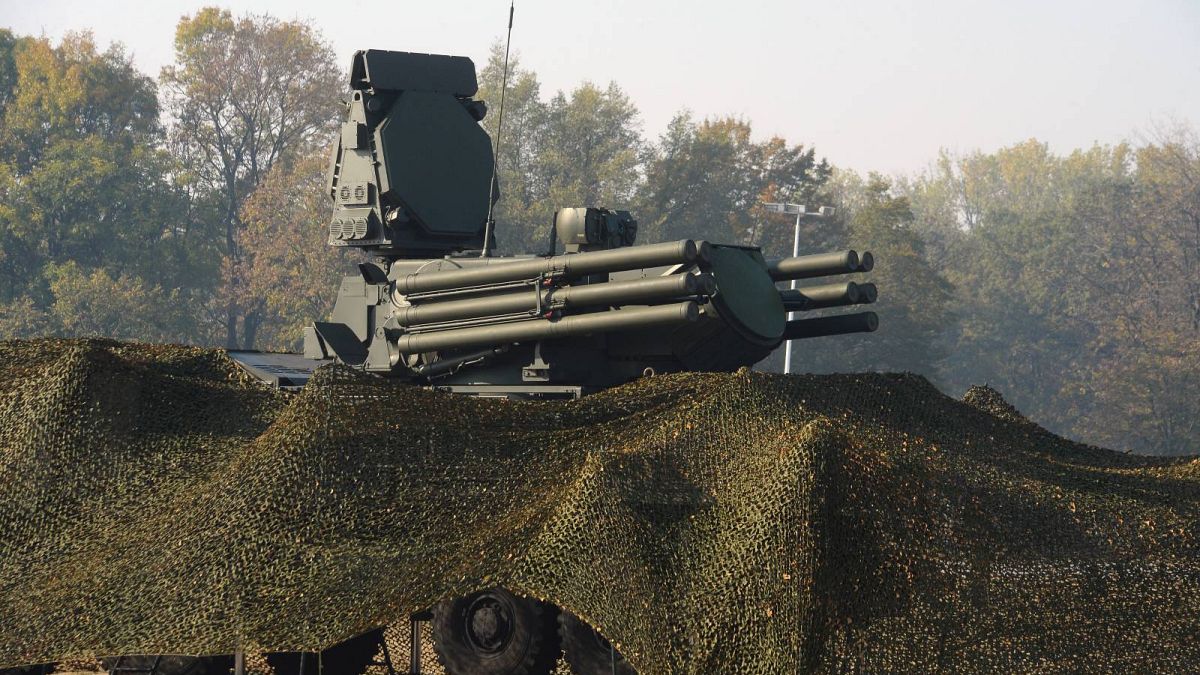
The Pantsir-S1, a Russian-made air defense system, has come under scrutiny following suspicions of its involvement in the downing of Azerbaijan Airlines flight 8243 in December 2024. Initial reports suggest the aircraft was struck by a missile amidst drone activity over Grozny, Chechnya, leading to accusations against Russia by Azerbaijan’s President Ilham Aliyev, though he acknowledged the possibility of unintentional action. This incident highlights the Pantsir system’s capabilities and potential risks, prompting a closer examination of its characteristics and operational history.
Developed in the 1990s by the Instrument Design Bureau in Tula, the Pantsir-S1, also known as the SA-22 Greyhound by NATO, is a mobile, medium-range surface-to-air missile system marketed by Russia as the “perfect protection” for various installations. It integrates both missile and gun armaments, allowing it to engage a wide array of airborne threats, including aircraft, missiles, and precision-guided munitions. The system boasts a range of up to 20 kilometers for missiles and 4 kilometers for guns, with altitude capabilities reaching 15,000 meters and 3,000 meters, respectively. Its intended applications include defense of military, administrative, and industrial facilities, as well as bolstering broader air defense networks against large-scale air attacks. The mobile version comprises a combat vehicle alongside up to six supporting vehicles, equipped with 30mm cannons and a transporter-loader.
The Pantsir system has undergone numerous modifications throughout its lifespan, particularly in response to the ongoing conflict in Ukraine. Russia claims widespread use against Ukrainian missiles and fighter jets, including reported interceptions of ATACMS missiles in the Belgorod region. Recent upgrades showcased at the Army 2024 International Military and Technical Forum focus on enhanced anti-drone capabilities through the integration of mini-missiles. Another variant, the Pantsyr-SM-SV, features a tracked chassis for improved mobility in challenging terrain, supporting ground troops on the move. Further developments include compact anti-drone missiles and software updates aimed at countering HIMARS and Storm Shadow missiles. These enhancements reflect a continuous effort to adapt the system to evolving battlefield requirements.
Previous enhancements to the Pantsir system involved increasing missile capacity to 12 surface-to-air missiles alongside the twin anti-aircraft guns, capable of firing approximately 5,000 rounds per minute. The system is also equipped with a thermal imager to detect explosives on approaching aerial targets, further increasing its defensive capabilities. This constant evolution showcases Russia’s commitment to modernizing its air defense arsenal in response to emerging threats and technological advancements.
Beyond Russia, the Pantsir system has seen international adoption by several countries, including Algeria, Ethiopia, Iraq, Libya, the United Arab Emirates, and Serbia. This widespread deployment highlights the system’s perceived effectiveness and adaptability to diverse operational environments. However, the alleged incident with Azerbaijan Airlines flight 8243 raises concerns about the potential for unintended consequences and the importance of stringent operational protocols to minimize risks to civilian aircraft.
The ongoing investigation into the Azerbaijan Airlines incident will be crucial in determining the precise role of the Pantsir-S1 system and any contributing factors. This event underscores the complex challenges of operating sophisticated air defense systems in contested airspace, particularly in proximity to civilian flight paths. It highlights the need for clear communication, robust identification procedures, and rigorous training to prevent tragic accidents and maintain international air safety standards. The outcome of the investigation will likely have significant implications for the future deployment and operational guidelines governing the use of the Pantsir-S1 and similar air defense systems worldwide.
The future of the Pantsir system will undoubtedly be shaped by the findings of the investigation and the subsequent international response. While the system boasts advanced capabilities and a proven track record in certain contexts, the potential for unintended engagement of civilian aircraft necessitates a careful reassessment of operational procedures and safety protocols. The incident serves as a stark reminder of the delicate balance between national security imperatives and the paramount importance of safeguarding civilian lives. The lessons learned from this tragic event will be crucial in shaping the development and deployment of future air defense systems, ensuring they effectively address evolving threats while minimizing the risks to innocent bystanders.