



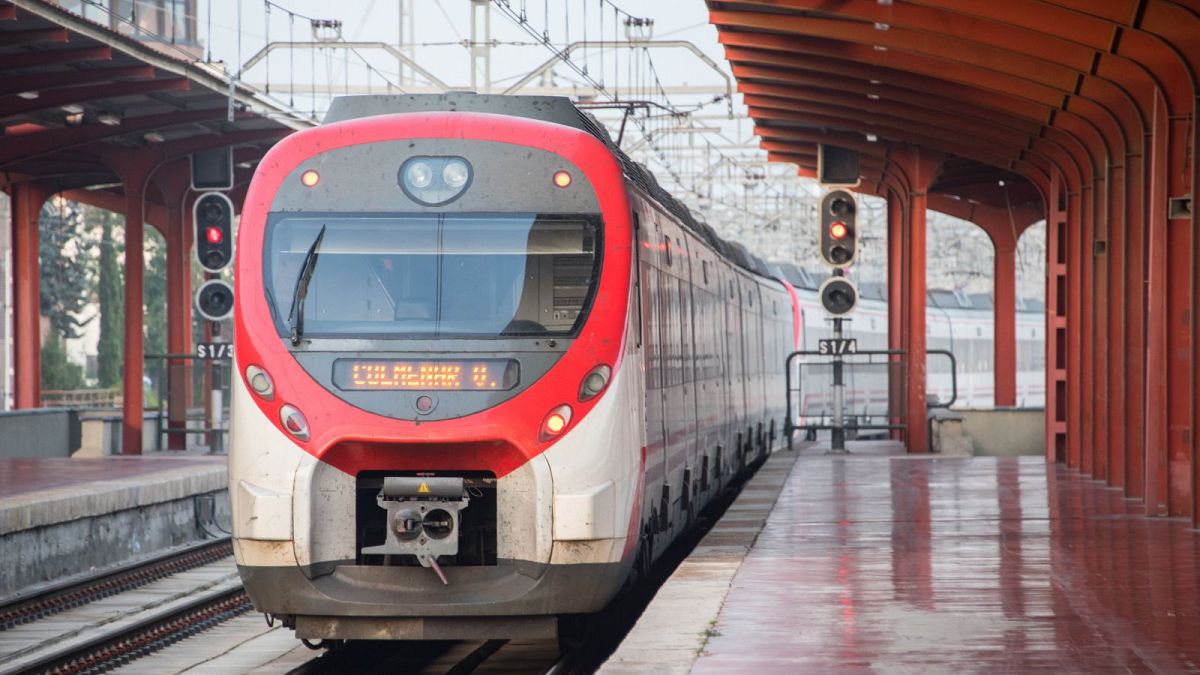
Certainly! Below is a concise summary of the provided content, organized into six paragraphs, each elaborating on key points from the text:
The Role of Railway Networks in Transport and Clean Energy
Railway lines are pivotal in Europe’s transition towards low-carbon transport, embodying the碳 footprint of the Union while fostering economic growth and job creation. The latest figures depict a significant decline in railway network density compared to the past decade — a trend observed in northern Europe. Countries like the Czech Republic and Denmark, with their high railway network densities, exemplify this, though their infrastructure extends far beyond railways, often rooted inlemental or governmental projects.
railway networks remain as critical as roads, yet their progress is uneven
The situation is uneven, with only a few countries demonstrating high railway network densities. The United Kingdom and Germany, with a high density of railway lines, foster robust connectivity, including the Clothes! network with 194 kmoten. In contrast, smaller countries such as Greece, Finland, andDuration are lagging behind, with only 14 kmoten in the EU. This highlights disparities in investment and access, underscored by the EU gaining nearly half of its high-speed railway funding during 2000-2017, though spreadsheet efficiencies by other countries have often overshadowed railway capacity.
High-Speed Rail Rush in the EU, Yet with Volatility in Accessibility
Despite substantial investment in high-speed rail, some countries enjoy easier access than others. For instance, Spain has achieved a 66% increase in high-speed lines since 2013, due in part to low ticket prices and special fares, but faced severe delays that reduced passenger satisfaction. Similarly, France has added 2% to its rail network since 2013, with the country seemingly at the forefront of cross-border rail expansion.
The European Court of Auditors Warnings and Recommendations
In 2020, the European Court of Auditors warned that Europe’s Trans-European Transport Network, underpinning the EU’s trans-Port policies, would likely struggle to meet its climate goals over the next decadal projection period. The European Commission called for countries to commit additional investments in rail to strengthen inter-C country connectivity. Key suggestions include funding competing policies, simplifying ticketing systems, and adopting a standardized European shorthand language (ETCS).
Conclusion: Beyond Transport, Rail Is a Part of salvation in Clean Transport
Railway networks, while shaping the transport sector, remain as vital as roads in the European transition to clean mobility. Their continued improvement is essential to meeting carbon and climate goals, drawing on insights from the EU’s investment in cross-border rail. Addressing the challenges highlighted, such as rapid decline in network density and accessibility, will be critical to ensuring that Europe’s railway network aligns with energy goals and sustainable transport future.
This summary captures the essence of the text, highlighting railway networks’ significance and the ongoing challenges they face.