



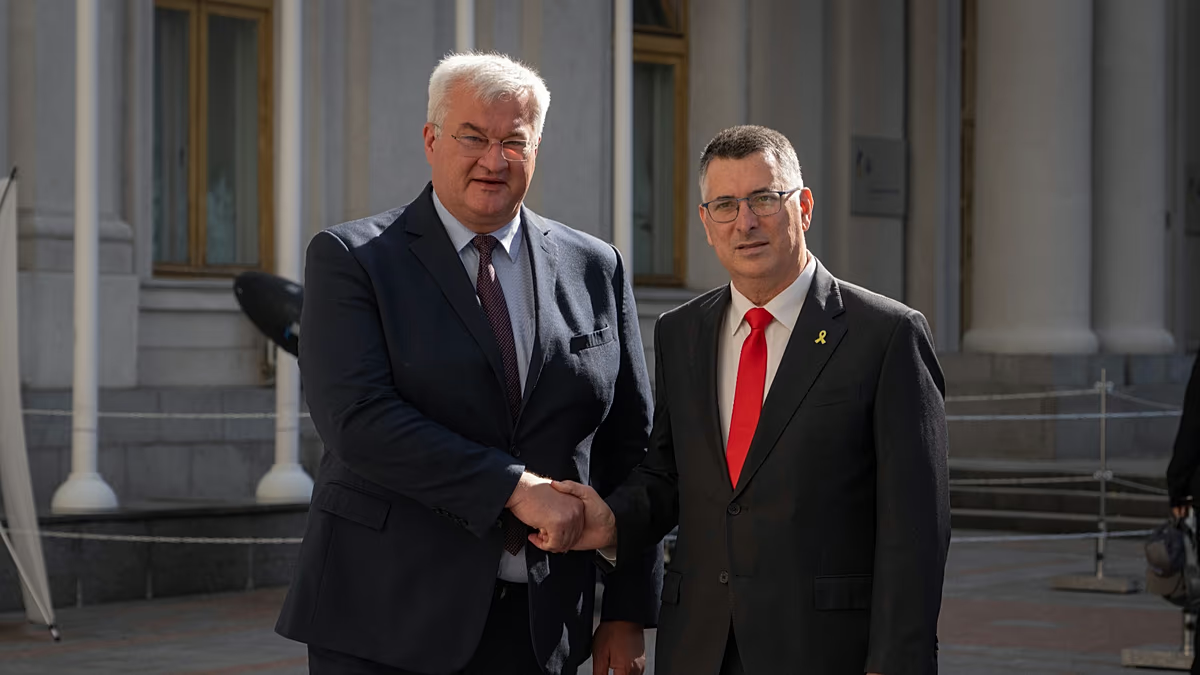
The diplomatic relationship between Ukraine and Israel, forged in mutual support and empathy since Russia’s full-scale invasion, has encountered a significant and public rupture. The point of contention is Israel’s handling of maritime cargo that Ukraine asserts is grain looted from its occupied territories. This clash escalated when Ukraine formally requested Israel to arrest the bulk-carrier Panormitis, which was laden with what Kyiv alleges to be over 25,000 tonnes of stolen Ukrainian wheat and barley, as it waited near the port of Haifa. This request followed a deeply frustrating precedent for Kyiv: just days earlier, another vessel, the Russian-flagged Abinsk, had been allowed to unload nearly 44,000 tonnes of similar cargo at the same Israeli port without interference, despite Ukrainian protests. For Ukraine, which estimates Russia has stolen at least 15 million tonnes of its grain since 2022, this is not merely a commercial dispute but a matter of international law and moral principle, viewing the grain as both stolen property and a tool of Russian economic warfare.
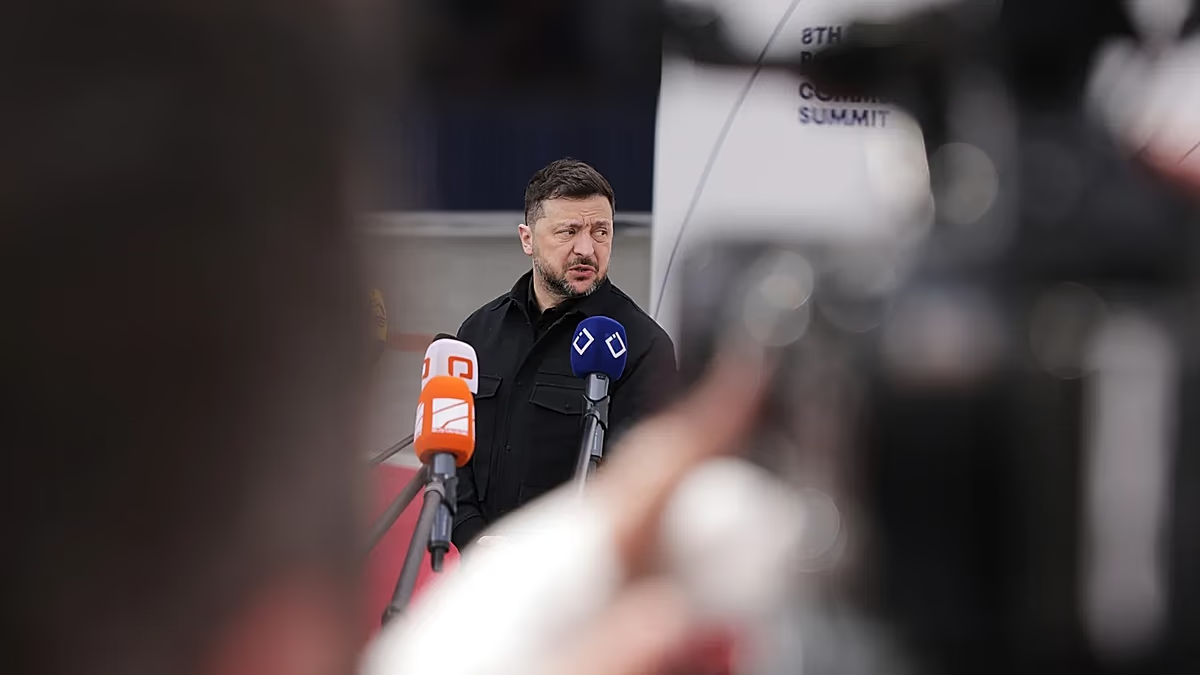
Ukraine’s approach has been a multi-channel campaign of quiet diplomacy that ultimately erupted into public view. Officials in Kyiv reveal that for at least a month and a half, they had been privately urging Israel not to purchase grain originating from Russian-occupied Ukraine. Following the Abinsk incident, they engaged in a series of formal diplomatic notes and meetings, culminating in summoning Israel’s Ambassador, Michael Brodsky, to urge action on the Panormitis. Frustrated by what they perceived as a lack of substantive response or action—with Israeli authorities reportedly focusing on procedural questions rather than the cargo’s origin—Ukrainian Foreign Minister Andrii Sybiha took to the social media platform X to publicly announce the legal arrest request. This move, intended to apply international pressure, was framed as a last resort after conventional channels seemed to yield no results.
The Israeli reaction, however, was swift and sharply critical of the method, rather than engaging with the underlying accusation. Within minutes, Israeli Foreign Minister Gideon Sa’ar posted a rebuttal, chastising Kyiv for what he termed “Twitter diplomacy.” He argued that a proper legal request, submitted just hours earlier, should have preceded a public tweet, implying the social media post was an unnecessary and theatrical escalation. This public exchange highlighted a fundamental disconnect: while Ukraine was focused on the urgency of halting what it sees as a clear-cut case of trafficking in stolen goods, the Israeli response fixated on diplomatic protocol. As Ukrainian sources noted, Israel’s public commentary avoided addressing the core allegations about the vessel and its cargo, instead criticizing the communication strategy.
Beneath this diplomatic spat lies a complex web of geopolitical calculations for Israel. The Israeli government walks a delicate tightrope, maintaining crucial military coordination with Russia over Syria while expressing strong political support for Ukraine. Seizing a Russian-connected cargo, even one carrying allegedly stolen goods, risks provoking Moscow and potentially endangering Israeli security operations in Syria. Furthermore, with global food supply chains under strain, the grain represents a tangible economic commodity. The investigation by Haaretz, suggesting at least four such shipments have reached Israel this year, indicates a commercial pattern that may be difficult to unwind without significant political and economic cost. Israel’s apparent reluctance may stem from a desire to avoid a direct legal confrontation with Russia over cargo where establishing definitive, court-admissible proof of origin can be challenging.
For Ukraine, the stakes are profoundly symbolic and practical. Every shipload of stolen grain that reaches the international market not only funds the Russian war machine but also normalizes the plunder of Ukrainian resources. Kyiv’s detailed public timeline of its requests is a deliberate effort to demonstrate its adherence to due process and to underscore Israel’s passive response. The specific legal measures requested—arresting the ship, seizing its cargo and documents, questioning the crew—are steps aimed at gathering evidence to disrupt the entire illicit supply chain and establish legal precedents. This is part of a broader global effort by Ukraine to treat seized assets as stolen property, not merely as contraband, thereby imposing greater consequences on those who trade in it.
This incident has exposed a painful rift between two nations that have historically shared deep bonds. It transforms a private diplomatic disagreement into a public test of international solidarity. The question now is whether the relationship can withstand this friction. Can Israel reconcile its strategic ambiguities with a clear moral and legal stance against the trade in looted Ukrainian resources? Conversely, how will Ukraine balance its justifiable outrage with the diplomatic pragmatism needed to maintain crucial alliances? The fate of the Panormitis and its cargo is more than a legal matter; it is a litmus test for the international enforcement of norms in the face of aggression. The outcome will signal whether the principles of sovereignty and international law can withstand the pressures of realpolitik and complex global supply chains, or if they will be quietly unloaded with the next shipment at port.