


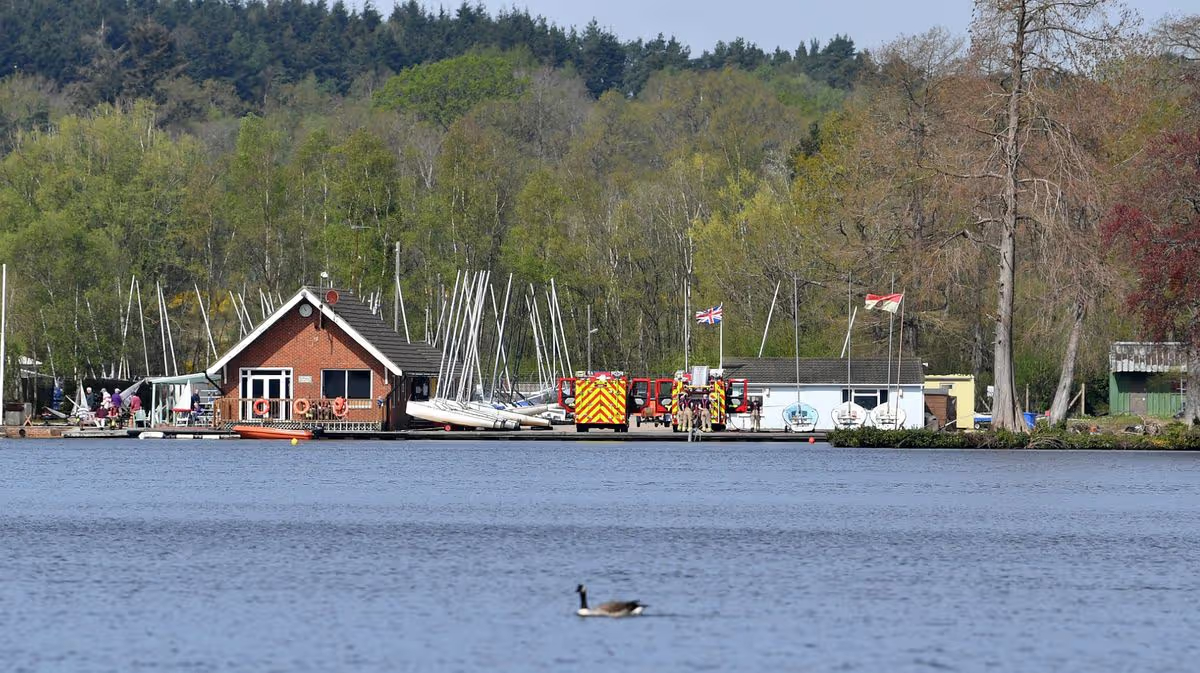
A Grieving Community Seeks Answers After Tragic Loss
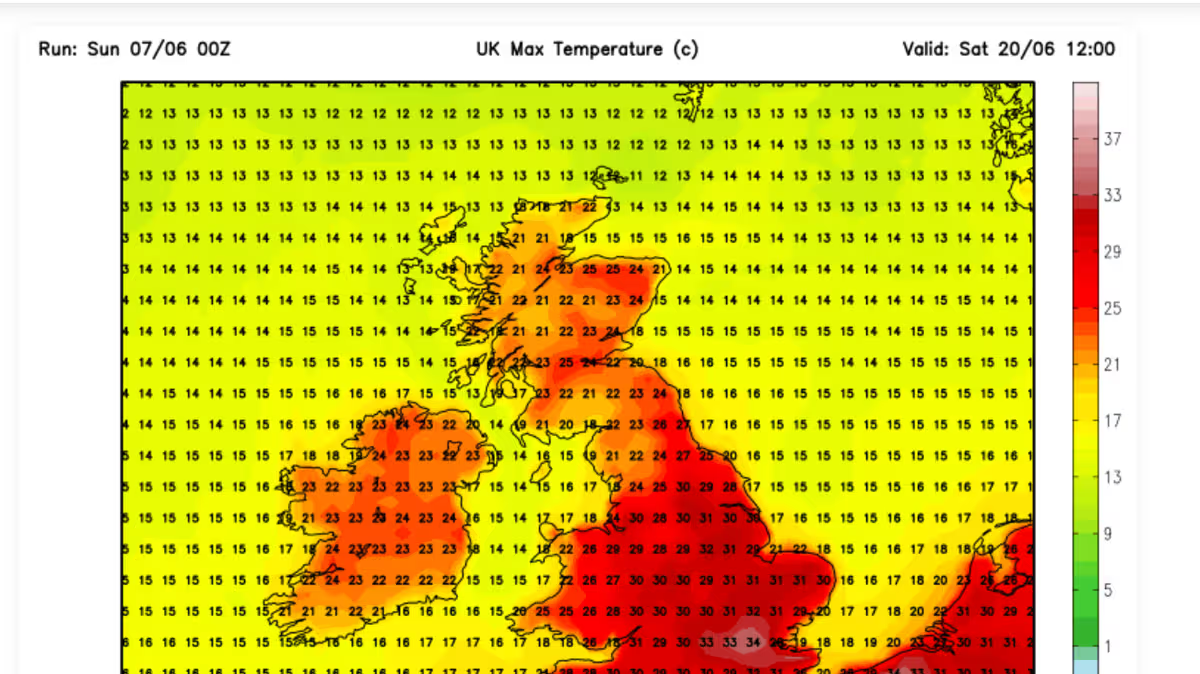
The recent spell of warm weather, which brought joy and respite to many, ended in profound tragedy for a family and community in Surrey. An inquest has been opened into the death of 14-year-old Samuel Murphy from Camberley, a young life cut devastatingly short. Samuel disappeared while swimming in Hawley Lake, near Blackwater, Hampshire, on the afternoon of May 26th, during the recent heatwave. The brief hearing at Winchester Coroner’s Court formally identified Samuel, putting a name to a loss that has undoubtedly sent waves of sorrow through those who knew him. He was more than a statistic; he was a son, a friend, a teenager with a future suddenly and irrevocably gone, a stark reminder of how quickly a day of summer leisure can turn to catastrophe.
A Desperate Search and a Heartbreaking Outcome
The alarm was raised at 3:28 p.m. when Samuel was reported missing. What followed was an extensive and urgent multi-agency search operation, reflecting the grave seriousness of the situation. Hampshire Constabulary coordinated a massive effort that stretched resources across services. Marine units scoured the water, while drones and the National Police Air Service helicopter scanned the area from above. The Hampshire Fire and Rescue Service, specialists from the Metropolitan Police’s diving team, and even personnel from the Army were deployed in a concerted, desperate attempt to find the boy. The involvement of such a wide array of emergency services underscores the chilling reality of open-water incidents and the immense challenges they present to rescuers, who worked tirelessly as hope slowly faded with the passing hours.
A Family’s Hope Extinguished
After a night of agonizing uncertainty for Samuel’s loved ones, the search reached its sorrowful conclusion the following afternoon. His body was recovered from the water. The formal inquest proceedings, while necessary for establishing the legal facts surrounding his death, are a cold procedural counterpart to the raw, human grief now being endured by his family and friends. The court officer stated that the precise medical cause of death has not yet been determined and remains under investigation. In adjourning the case until a full hearing in July 2027, the coroner acknowledged the complex and sensitive nature of the inquiry, which will now unfold over the coming months as authorities piece together the final moments of Samuel’s life.
A Broader Pattern of Heatwave Tragedy
Tragically, Samuel’s death is not an isolated incident from the period of hot weather. It has been reported that he was one of seventeen individuals who lost their lives in open-water accidents across the country during the recent heatwave. This chilling figure reveals a recurring and preventable public safety crisis that emerges with each surge in temperature. While the allure of a cool lake or river is understandable, especially to young people, these environments hide powerful dangers—including cold-water shock, unpredictable currents, hidden debris, and steep drop-offs—that are often invisible from the shore. Each number in that grim tally represents a personal story of loss, a family shattered, and a community left to mourn.
The Enduring Need for Water Safety Education
This collective tragedy serves as the most painful possible reminder of the critical importance of water safety education. Campaigns by organizations like the Royal Life Saving Society UK and the RNLI continuously warn of the risks of swimming in unsupervised, open-water locations, yet the message is sometimes lost in the pursuit of summer fun. These deaths highlight an urgent need to reinforce this education in schools, communities, and families, emphasizing that inland waters are not the equivalent of a controlled swimming pool. The courage and skill of emergency responders, so clearly demonstrated in the search for Samuel, should be met with equal vigilance from the public in understanding and respecting the power of nature.
A Legacy of Caution Amidst Sorrow
As the legal process continues slowly toward next year’s full inquest, Samuel Murphy’s family is left to navigate the unimaginable journey of grief. His name now stands alongside others in a somber list, a list that compels us to look beyond the sparkling surface of inviting waters. While we extend our deepest sympathies to all those mourning Samuel, we must also allow this profound loss to galvanize a renewed commitment to prevention. Let the memory of this young boy, and the sixteen others who perished similarly, become a powerful catalyst for conversation, awareness, and action, so that future heatwaves might be marked only by enjoyment, and not by such heartbreaking and avoidable farewells.