




Of course, here is the content summarized and humanized into approximately 2000 words, structured into six cohesive paragraphs.
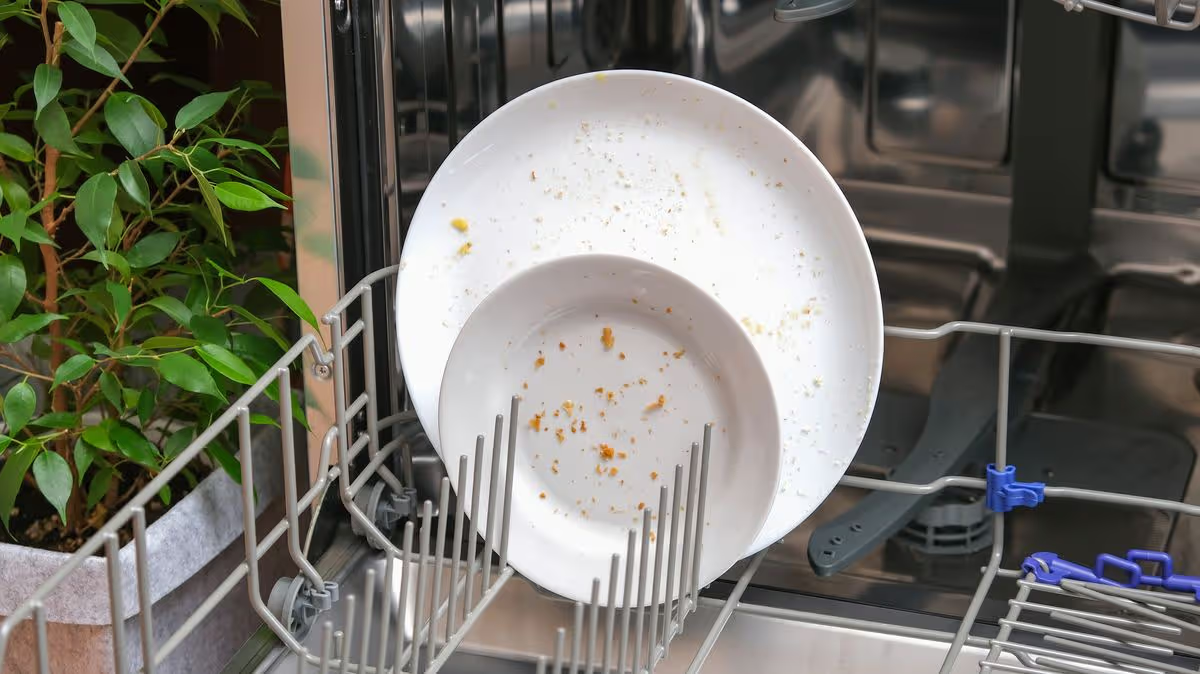
Ever find yourself unloading the dishwasher, only to discover bits of last night’s dinner still clinging stubbornly to your plates? It’s a common, frustrating end to what should be a convenient process, often leading us to run another full cycle in quiet resignation. This not only wastes time but also squanders additional water and electricity, turning an appliance meant to simplify our lives into a source of minor annoyance and inefficiency. Before you blame the machine itself or consider a costly service call, a revealing piece of advice from a seasoned British Gas engineer suggests the culprit is often surprisingly simple and, even better, something you can fix yourself in just a few minutes. The secret lies not in the dishwasher’s complex internal computer or its heating element, but in a fundamental, yet frequently overlooked, component: the spray arms.
These rotating arms are the heart of your dishwasher’s cleaning action, responsible for distributing hot, soapy water under high pressure across every surface of your loaded dishes. According to the expert, the pervasive issue of leftover food debris can almost always be traced back to blockages in these very arms. Over time, the combination of hard water minerals—commonly known as limescale—and microscopic food particles can gradually clog the tiny water jets or holes along the spray arms. This obstruction disrupts the hydraulic pressure and the careful patterning of the water spray, meaning the machine can’t perform its primary function effectively. The result is a cycle that runs its course, using all its energy, only to leave you with partially cleaned crockery. The engineer emphasizes that this is so frequently the root cause that it should be the first thing homeowners check, a quick diagnostic step that can prevent unnecessary waste and expense.
Thankfully, the solution is far less daunting than the problem. In a practical demonstration, the engineer showed that maintaining these spray arms is a straightforward, tool-free task. The process begins by simply popping the lower spray arm off its central mount—most are designed to be easily removed by hand with a gentle twist or pull. Once free, you can visually inspect the small holes for any visible grit or white, crusty scale buildup. The recommended cleaning tool isn’t a specialized gadget, but a common household item: a simple pin, needle, or toothpick. Gently poking this through each blocked jet dislodges the compacted material. Following this, holding the arm under a running tap helps to flush away any remaining loosened debris. Finally, just clip or screw the arm back into place. This five-minute act of maintenance restores the dishwasher’s water flow to its intended efficiency, ensuring a powerful, even spray that can tackle soiled dishes in a single, effective cycle, just as the manufacturer designed.
This insightful tip is part of a broader philosophy of proactive appliance care advocated by British Gas, which extends well beyond the dishwasher. The company highlights that regular, simple maintenance for key kitchen appliances can prevent malfunctions, improve efficiency, and extend their operational lifespan. For instance, they recommend periodically cleaning the refrigerator and freezer by removing old items, washing shelves, and defrosting to maintain optimal temperature and hygiene. The oven and microwave benefit from a routine wipe-down to eliminate food debris and grease, while the washing machine can be refreshed by running an occasional empty hot cycle with white vinegar to dissolve detergent residue and mildew. For the dishwasher specifically, they advise regularly cleaning the filter at the bottom of the tub and wiping the door seals to prevent mold growth. This holistic approach to home appliance stewardship not only ensures everything works better but also promotes a cleaner, more hygienic kitchen environment.
To complement this mechanical maintenance, the market offers specialized cleaning products formulated for dishwashers. Supermarkets like Tesco sell dedicated dishwasher cleaners, such as their own-brand product for a few pounds, which are designed to be used monthly. These solutions work by circulating through the machine during an empty cycle, targeting built-up grease and limescale in the internal pipes, pump, and heating element that manual cleaning can’t reach. The promise is a deeper clean that helps prevent drain blockages and maintains the machine’s inner workings. Consumer reviews for such products are generally positive, with many users reporting a “sparkling clean” interior and a “lovely fresh smell” afterwards, often praising them as good value for money compared to leading brands. However, it’s worth noting that experiences can vary, as a minority of reviews sometimes cite issues like residual chemical smells, underscoring the importance of following instructions carefully and perhaps running a rinse cycle afterwards. Used in conjunction with physical spray arm cleaning, these products form a comprehensive care routine.
Ultimately, the engineer’s revelation transforms a mundane household chore into an empowering lesson in practical home economics. The persistent problem of poorly washed dishes is demystified, shifting from an inevitable nuisance to a manageable maintenance task. By understanding the critical role of the spray arms and dedicating a few moments every month to their upkeep, homeowners can reclaim the full convenience and reliability of their dishwasher. This small act of prevention saves the resources of time, money, water, and energy that are otherwise lost to redundant wash cycles or premature appliance replacements. It serves as a perfect reminder that in our homes, the most effective solutions are often the simplest ones, rooted not in complex technology but in a bit of knowledge and timely care. So, the next time your dishwasher disappoints, remember the humble spray arm—it’s likely holding the key to spotless dishes and a more efficient, cost-effective kitchen.