

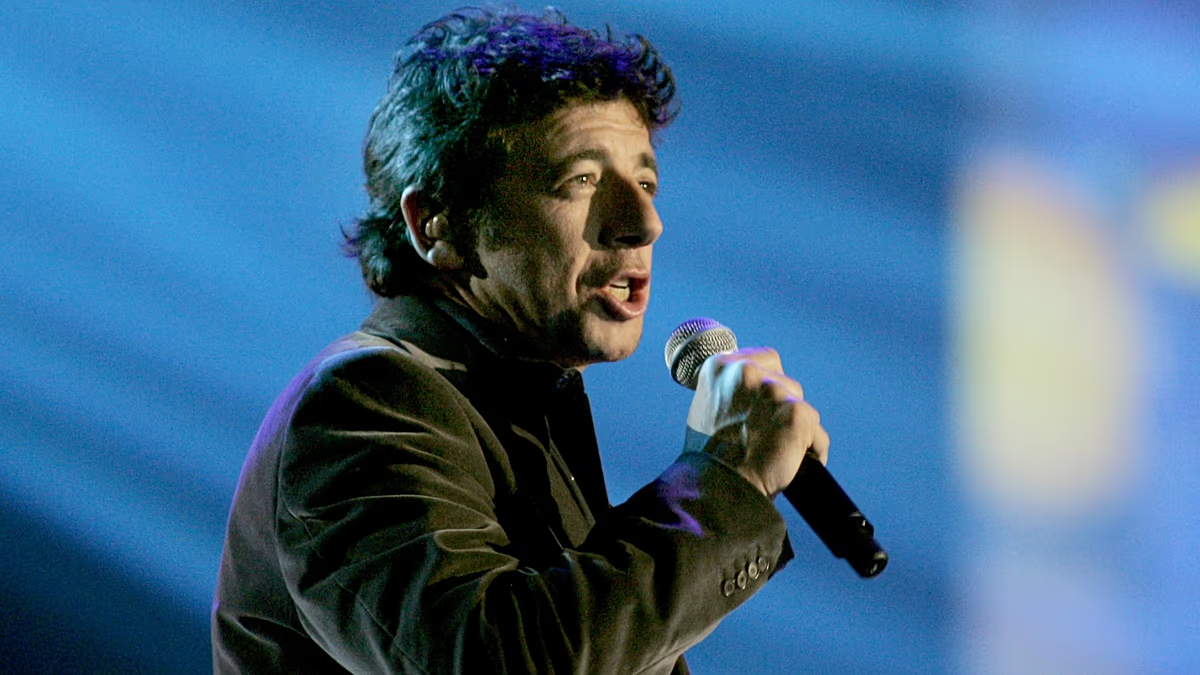
In a development that has sent shockwaves through the French cultural landscape, celebrated singer and actor Patrick Bruel was taken into police custody on Monday. The Nanterre public prosecutor’s office confirmed the action, which stems from a series of formal complaints alleging sexual violence filed against the 67-year-old artist. This legal step, following a report by franceinfo, marks a significant and serious escalation in long-simmering allegations, moving them from the realm of media speculation into the structured, consequential process of the judicial system. Bruel was questioned by investigators from the 1st district of the judicial police in Paris, where he was obligated to address these renewed allegations that have now been formally centralized under the Nanterre prosecutor’s authority. This custody procedure, a foundational step in French criminal inquiries, underscores the weight the authorities are giving to the accusers’ accounts, initiating a critical phase where evidence is gathered and testimonies are heard.
The allegations laid before the investigators are numerous and span a considerable period, painting a troubling pattern of alleged misconduct. They include a complaint from Daniela Elstner for attempted rape and sexual assault said to have occurred in 1997 in Acapulco. A culture journalist has come forward with an account of an attempted rape in Monaco in the year 2000. Further, an employee of Patrick Bruel’s own record label alleges two separate sexual assaults in 2002 and 2003. The list continues with a complaint lodged in Metz concerning events from 2008, and another for rape alleged to have taken place in 2012 during a film festival in Dinard. It is important to note that a separate, high-profile complaint filed by television presenter Flavie Flament is not part of this specific custody procedure, nor are other complaints already known to the prosecutor’s office. This current wave represents a distinct and newly consolidated set of cases, each carrying its own profound gravity and demanding individual scrutiny within the broader investigation.
Within the framework of French law, Patrick Bruel remains presumed innocent, a cornerstone legal principle designed to protect the rights of the accused until proven guilty. The artist, through his representatives, has consistently and firmly disputed all allegations against him. Police custody in France can last for up to 48 hours, a period during which investigators intensively question the individual and work to verify the accounts presented. At the conclusion of this period, several outcomes are possible: he could be released without charge, placed under formal judicial investigation, or potentially brought before a magistrate for further legal proceedings. This custodial phase is therefore a pivotal moment of assessment, where the initial statements and evidence are weighed to determine the justification for progressing the case. The public and the media must navigate this period with care, balancing the seriousness of the accusations with the essential protection of the presumption of innocence.
The immediate repercussions of this judicial development have been swift and concrete, profoundly impacting Bruel’s professional life and the cultural institutions associated with him. The final five performances of the play in which he was starring in Paris have been abruptly cancelled, leaving theaters empty and audiences disappointed. On a larger scale, Bruel has announced the cancellation of the majority of his forthcoming concert tour, which was scheduled to commence in mid-June. This decision extends internationally, as his three planned shows in Montreal were cancelled by the local organizer. Furthermore, in a significant move within the French entertainment community, Bruel has withdrawn from the beloved charity ensemble, the Enfoirés. These cascading cancellations represent more than mere logistical changes; they signify a profound interruption of a decades-long career, reflecting the severe reputational and operational consequences that arise when such grave allegations enter the formal legal arena.
This case arrives at a time of heightened global sensitivity and evolving discourse around issues of power, accountability, and sexual violence, particularly within the entertainment industry. The fact that multiple accusers from different periods of Bruel’s life have come forward to file formal complaints invites complex questions about memory, trauma, and the challenges of seeking justice for past events. For fans who have adored his music and films for generations, the allegations create a profound moral and emotional dissonance, forcing a re-evaluation of a beloved public figure. For the broader public, it serves as another stark reminder that fame and artistic contribution do not place individuals above the law or beyond ethical scrutiny. The legal process now underway carries the heavy responsibility of discerning truth within a deeply polarized context, where public opinion often races ahead of judicial findings.
As the legal machinery proceeds, the story of Patrick Bruel has entered a new and uncertain chapter. The Nanterre prosecutor’s office will meticulously examine the evidence and testimonies from both the accusers and the defense. The world of French arts and entertainment watches on, aware that the outcome will resonate far beyond this single case, touching on themes of celebrity culture, institutional accountability, and the enduring quest for justice for alleged victims. Whether this process leads to a courtroom trial or another conclusion, it has already irrevocably altered the legacy of one of France’s most iconic performers. The path forward is paved with legal rigor, personal anguish for all involved, and a societal reflection on the values we uphold when allegations of this magnitude challenge our cultural narratives. The principle of presumption of innocence must be vigilantly maintained, while the voices of those who have come forward demand a thorough and impartial hearing. In this difficult balance lies the pursuit of justice itself.