



A Tense Friday in Whitefield: A Police Shooting and its Aftermath
On a seemingly ordinary Friday afternoon in May, the bustling artery of Bury New Road in Whitefield, Manchester, was transformed into a scene of intense police activity. The routine flow of traffic was replaced by lengthy queues, major road closures, and a conspicuous presence of armed officers and tactical units. This sudden shift in the atmosphere stemmed from a critical incident that unfolded around 3 p.m., when Greater Manchester Police attempted to stop a vehicle. According to police reports, the driver not only failed to comply but then deliberately drove directly at the officers in an attempt to flee. In response to this perceived direct threat, a firearms officer discharged their weapon. The outcome was a man being shot and wounded, an arrest, and the initiation of a rigorous investigative process to understand the full circumstances of this grave use of force.
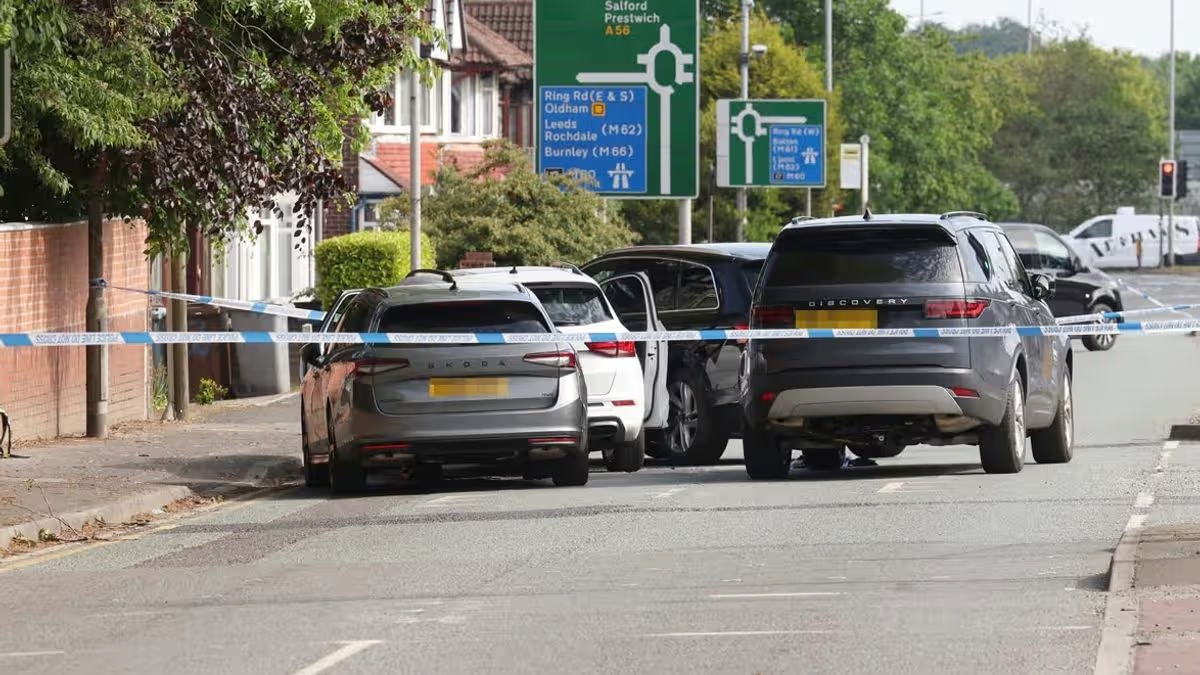
The immediate consequence of the shooting was the driver, a 20-year-old white British man, sustaining an injury to his arm. He was promptly transported to hospital for treatment. Authorities described the wound as neither life-threatening nor life-changing, a detail that provided some relief amidst the tension. Crucially, no police officers or members of the public were physically harmed during the encounter. However, the psychological impact on the community and the officers involved was acknowledged as significant. The visible aftermath on the street included a vehicle within a cordoned-off area, its rear window shattered and glass scattered across the ground, silently testament to the violence of the moment. Nearby residents reported hearing gunshots, followed by the arrival of an air ambulance at Victoria Park, underscoring the seriousness and rapid escalation of the event.
In the wake of the shooting, police swiftly moved to clarify the context and reassure the public. Detective Superintendent Joe Harrop addressed community concerns, emphasizing that no wider harm had occurred and thanking people for their patience amidst the ongoing disruption. He encouraged anyone with worries to speak directly with the officers present in the area. Importantly, the force stated that the incident was not related to terrorism and had no connection to the approaching anniversary of the Manchester Arena bombing, aiming to dispel any broader anxieties. The initial reason for attempting to stop the vehicle was also stated as being unrelated to the local area itself. Instead, the subsequent investigation led to the arrested man being suspected of involvement in the supply of Class A drugs, providing a potential rationale for his alleged attempt to evade police.
A fundamental procedural step followed immediately: GMP referred the incident to the Independent Office for Police Conduct (IOPC). This referral is standard protocol in cases where police firearms are discharged, ensuring an external, independent body scrutinizes the actions of the officers involved. The IOPC investigation will meticulously examine whether the use of force was justified, necessary, and proportionate given the circumstances—specifically, the assessment of the vehicle being driven “directly at officers.” This process is vital for maintaining public trust, ensuring accountability, and providing a transparent review separate from the internal police investigation into the criminal conduct of the driver.
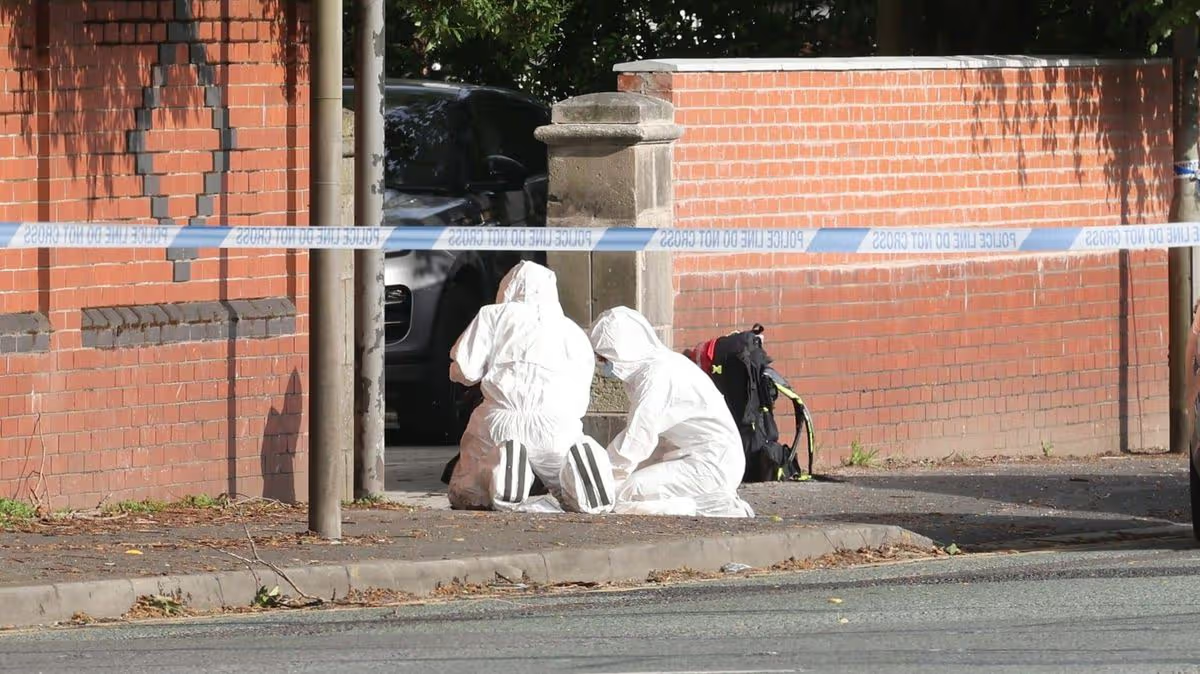
The operational impact on the community was substantial and prolonged. Bury New Road remained closed between Barn Street and the M60’s junction 17 until late into the evening, as traffic monitoring systems reported. This closure, necessary for a thorough forensic examination by Crime Scene Investigators, caused significant disruption. The presence of Tactical Aid Units and the large police cordon created a stark visual reminder of the incident’s severity. For local residents and businesses, the afternoon and evening were marked not just by inconvenience, but by the unsettling proximity to a rare and serious police shooting, an event that inevitably prompts deep reflection on policing, public safety, and the dynamics of such confrontations.
This incident on Bury New Road encapsulates a complex moment where policing, public protection, and individual actions collide. It highlights the split-second decisions officers must make when faced with a perceived lethal threat, the rigorous accountability mechanisms that follow, and the tangible impact on a community’s daily life and sense of security. While the physical injuries were not catastrophic, the event leaves a residue of questions about the circumstances leading to the confrontation, the precise moment of the shooting, and the outcomes of the independent investigation. It serves as a sobering case study in the challenges of maintaining law and order, where the ultimate goal of protecting life sometimes unfolds through profoundly difficult and violent means.