



Of course. Here is a summary and humanization of the provided content, expanded to the requested length and format.
Paragraph 1
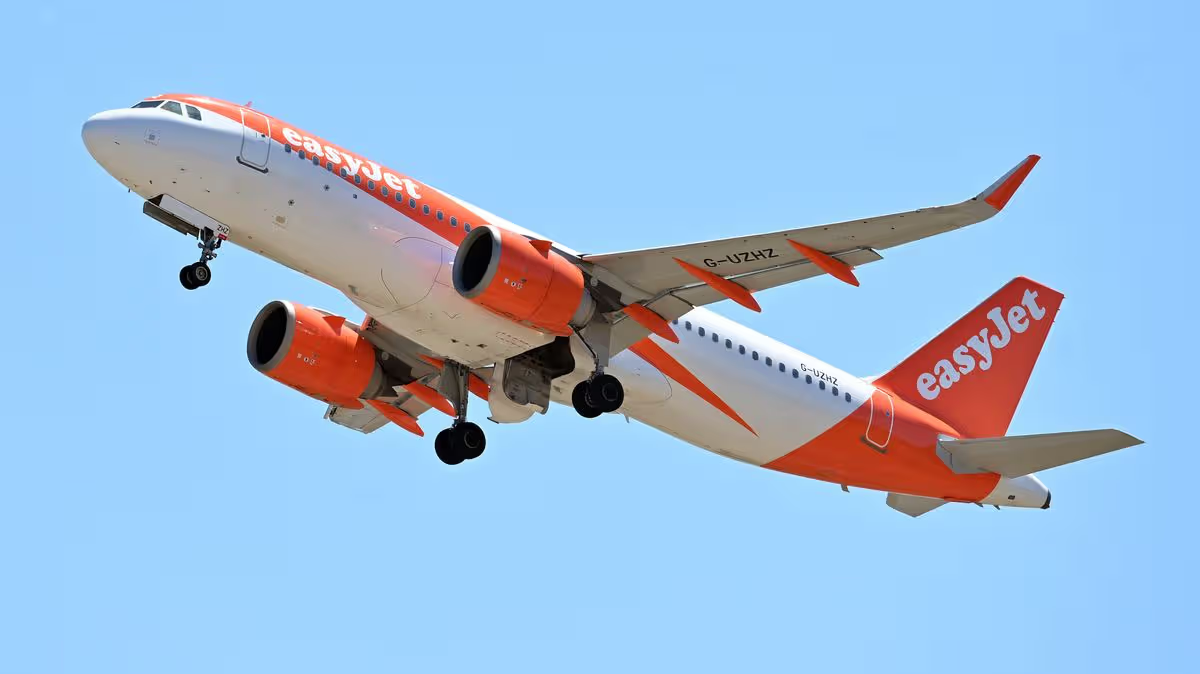
The routine journey of an easyJet flight, carrying 180 passengers from the sun-soaked resorts of Hurghada, Egypt, to the familiar skies of Luton, England, was abruptly transformed into a tense international incident over the Mediterranean. The catalyst was not a mechanical failure, severe weather, or a security threat, but a common, everyday object found in millions of bags worldwide: a portable power bank. Unbeknownst to the crew, a device left charging a phone within a suitcase in the aircraft’s hold triggered a chain of events that would see the flight dramatically diverted. This modern scenario underscores a paradoxical reality of contemporary travel: our reliance on personal electronics, designed to keep us connected and comfortable, can inadvertently become a source of significant disruption and risk under the strict safety protocols of aviation.
Paragraph 2
As the aircraft cruised through the night, the captain received a concerning report regarding the cargo hold. Following this, a grave but calm announcement echoed through the cabin: “There’s something we shouldn’t have in the hold.” For passengers like Paul Casterton and his partner Laura Bartlett, this cryptic message ignited a wave of anxiety. The immediate, unspoken fear for many was the worst imaginable scenario. The plane abruptly changed course and began its descent, an action that felt ominously deliberate. In those uncertain moments, suspended between the known destination and an unknown fate, the atmosphere was thick with stress and apprehension, each passenger grappling privately with their fears as the aircraft headed toward an unplanned landing.
Paragraph 3
The tension only dissipated upon landing at Rome’s Fiumicino Airport at 11:30 PM, where the situation was clarified. The “something” in the hold was not a malicious threat but a passenger’s power bank, inadvertently left actively charging a device. While this might seem a minor oversight, aviation regulations treat such incidents with utmost seriousness. Lithium-ion batteries, which power these devices, can pose a fire risk if damaged, overheated, or operated improperly in the confined, inaccessible space of an aircraft hold. The captain’s decision to divert was a mandatory and prudent precaution, prioritizing absolute safety over schedule. For the passengers, the revelation brought a profound sense of relief, transforming their fear into frustration over the inconvenience, but overwhelmingly gratitude that the situation was manageable and everyone was safe.
Paragraph 4
The practical consequences of the diversion, however, were significant. The 180 travelers found themselves unexpectedly in Rome, not as tourists, but as stranded passengers. Their original travel plans were dissolved, replaced by the logistical complexities of airline recovery operations. easyJet arranged overnight accommodation in hotels for many, while some resigned themselves to resting in the terminal. The next available easyJet flight to Luton was not until 2 PM the following day, creating a lengthy delay. For individuals with pressing commitments, this was untenable. Paul Casterton, needing to return to Nottingham for an appointment, opted to spend £350 on a ticket with a different carrier, Wizzair, to secure an earlier flight home—a personal financial cost born from the collective disruption.
Paragraph 5
The incident highlights a critical, ongoing challenge in public awareness regarding travel safety. Passengers are routinely advised to carry power banks in their hand luggage, not checked baggage, and to ensure they are not in use during the flight. This rule is designed so that any potential issue can be immediately seen and addressed in the cabin, rather than smoldering unseen in the hold. Yet, amidst the rush of packing and the focus on personal convenience, such guidelines can be forgotten or overlooked. The event serves as a stark reminder that the seamless experience of modern flight is underpinned by thousands of strict regulations, where even a small, honest mistake can have wide-reaching repercussions, costing time, money, and emotional energy for hundreds of people.
Paragraph 6
In its official statement, easyJet emphasized that safety remains its highest priority, explaining that the diversion was conducted in strict line with safety regulations and apologizing for the inconvenience caused. This response reflects the standard airline protocol: safety procedures are non-negotiable, even when the triggering event is benign in intent. The episode, ultimately, is a story of modern life intersecting with rigid operational frameworks. It concluded not with tragedy, but with relief, frustration, and a bill for extra hotel rooms and alternative tickets. It stands as a narrative lesson for all travelers—a reminder to double-check our bags, to heed the often-repeated safety advice, and to understand that in the complex, interconnected system of aviation, our individual actions, however small, carry weight for everyone onboard.