



Nigel Farage’s Reform UK is being funded overwhelmingly by a small circle of wealthy individuals with significant offshore financial links, raising profound questions about political influence and transparency in British democracy. According to a detailed analysis of Electoral Commission records, a staggering 80 percent of the party’s £18.6 million in registered donations during 2025—almost £15 million—came from just 18 donors connected to offshore tax havens. This financial dependency paints a picture of a party bankrolled not by a grassroots membership, but by millionaires and billionaires who have structured their wealth and, in some cases, their residencies, outside the UK’s domestic tax and transparency jurisdictions. The scale of this offshore-linked funding places Reform in a unique and controversial position within the UK political landscape, where the sources of its financial lifeblood are geographically and legally distant from the everyday voters it seeks to represent.
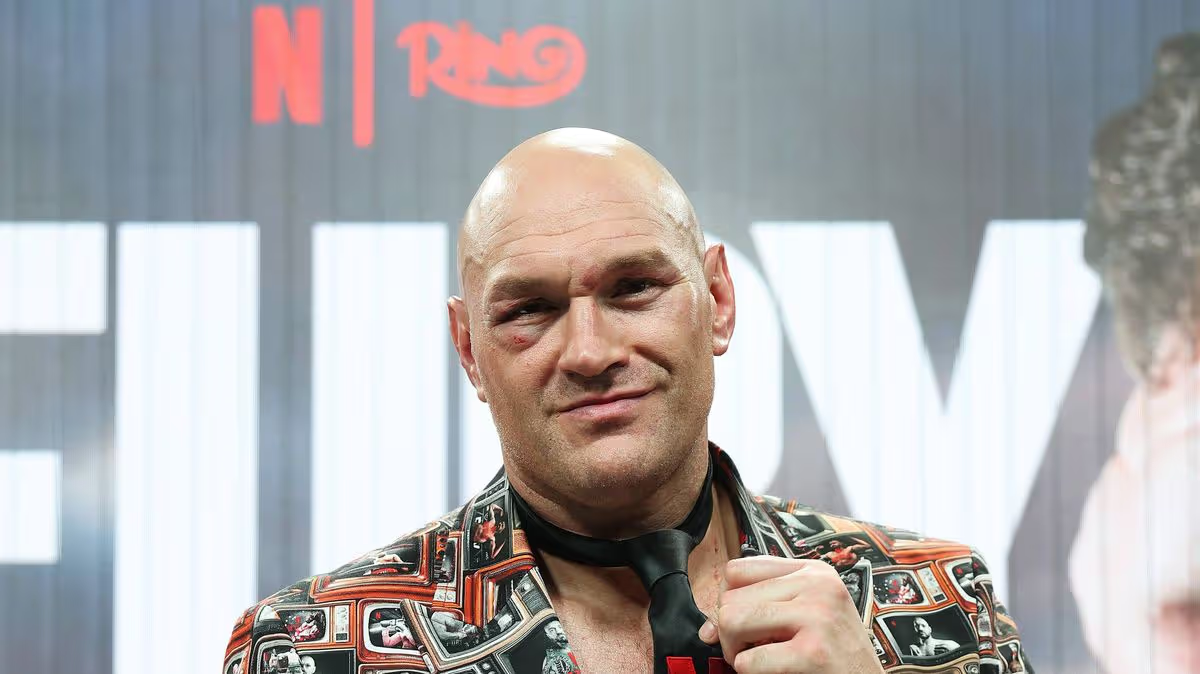
The lion’s share of this funding originates from a mere four individuals, all former Conservative donors. The most prominent is Christopher Harborne, a Thailand-based cryptocurrency investor who single-handedly provided Reform with £12 million, including a record-breaking £9 million donation. Harborne’s relationship with Farage extends beyond the party, as it was separately revealed he gave the Reform leader a £5 million personal “gift” ahead of the last general election—a sum Farage described as a “reward for campaigning for Brexit” and for his “lifetime security.” The second-largest donor is party treasurer Nick Candy, a property magnate whose empire includes companies based in Luxembourg and Guernsey, who donated £990,000. Deputy leader Richard Tice contributed £613,000 through his company, alongside previously holding an offshore family trust in Jersey. Completing the quartet is businessman Bassim Haidar, who donated £355,000 after relocating from Britain to Dubai, citing concerns over Labour’s changes to non-dom tax rules and inheritance tax. Together, these four men—two now living abroad—supplied Reform with nearly £14 million, cementing a financial model deeply tied to global capital and offshore structures.
The network of offshore-linked support extends further into a constellation of other wealthy backers. An additional 14 donors with similar connections contributed sums ranging from £25,000 to £200,000. This group includes entities like JC Bamford Excavators Ltd, linked to the Bamford family whose business empire has historically utilized Bermudan trusts, and donors connected to the Daily Mail group, which is ultimately controlled through a Jersey-based structure. Other donations were traced to UK-registered companies whose ultimate ownership lies in jurisdictions like the Isle of Man and the British Virgin Islands. The analysis, conducted by Dale Vince’s campaign group Babelfish, further identified that five key donors responsible for 67% of the party’s annual income list overseas addresses with Companies House. This pattern underscores a funding architecture that is deliberately complex and often opaque, making it challenging for the public to fully ascertain the origins and potential influences behind this capital.
There is no suggestion of illegal wrongdoing by the party or its donors, who have operated within the current legal framework. However, the concentration and source of this wealth have ignited a fierce political and ethical debate. Critics argue that such a funding model inherently risks aligning a party’s priorities with the interests of a wealthy, globally-mobile elite rather than the domestic electorate. Anna Turley MP, Labour Party Chair, accused Reform of being “propped up by rich foreign friends and tax haven dwelling billionaires,” contrasting this with Labour’s pledge to support ordinary families and curb overseas influence. Dale Vince of Babelfish warned of the clear danger that “politicians make decisions based on the interests of their donors not the country.” He advocates for a radical solution: a complete ban on political donations to eliminate loopholes and the potential for undue influence, citing the recent emergence of cryptocurrency donations as the latest frontier in an ongoing challenge to regulate political finance.
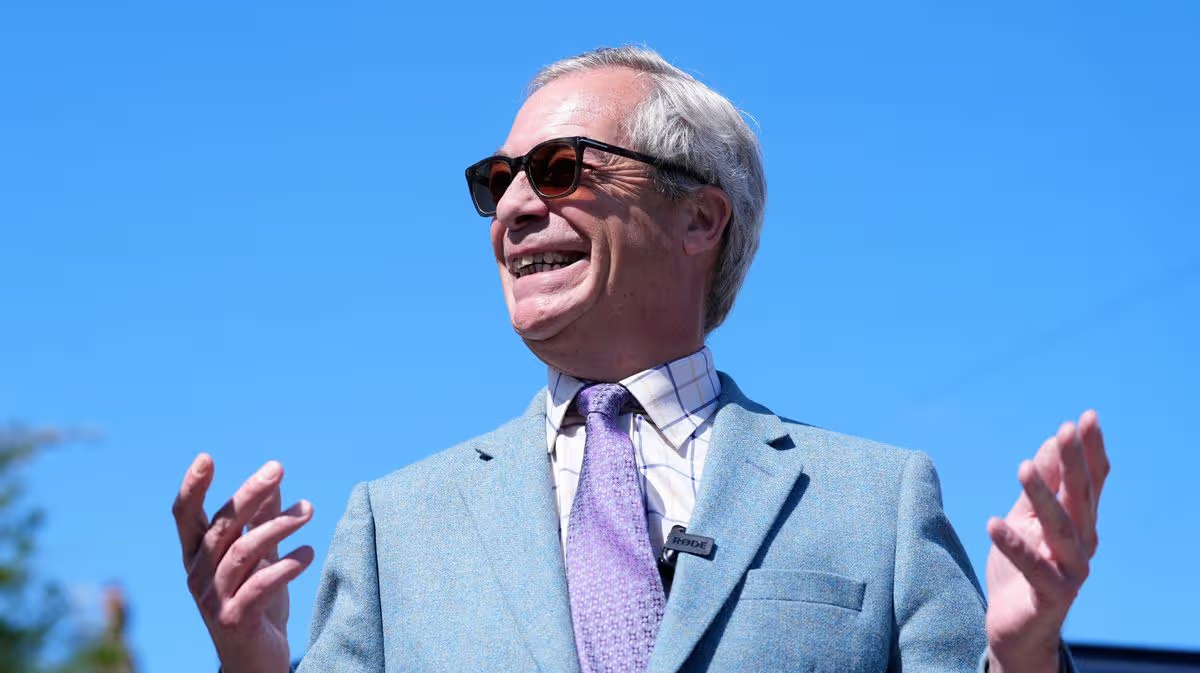
The situation brings into sharp focus the personality and defences of Nigel Farage himself. Farage has consistently dismissed public concern over his personal wealth and donor relationships, stating that voters do not care about his “huge outside earnings.” His characterization of the £5 million from Harborne as a just reward for his Brexit efforts frames such payments not as potential conflicts of interest, but as legitimate spoils from a political battle. This stance, combined with a lifestyle that includes travelling on a donor’s private plane, creates a potent narrative for opponents: that of a political leader financially and socially removed from the economic struggles of the voters he courts. The controversy touches on broader, unresolved tensions in UK politics about transparency, the power of private wealth in public democracy, and the adequacy of laws designed to keep domestic political debate free from disproportionate offshore influence.
Ultimately, the revelation that Reform UK is primarily funded through offshore-linked millions presents a fundamental challenge to its populist branding. The party positions itself as the voice of the overlooked British citizen, yet its financial sustenance flows from a constellation of donors who have, through legal means, placed their assets and sometimes themselves beyond full UK fiscal scrutiny. This dichotomy fuels accusations of hypocrisy and raises enduring questions about who a political party truly answers to. Whether this model represents a shrewd leveraging of a globalized financial system or a dangerous vulnerability for British democracy is a matter of intense political dispute. It ensures that Reform’s funding will remain a central point of contention, symbolizing the wider, increasingly urgent debate over money, power, and transparency in the nation’s political life.