



Of course. Here is a humanized and expanded summary, structured into six paragraphs.
Paragraph 1: The Strategic Commitment
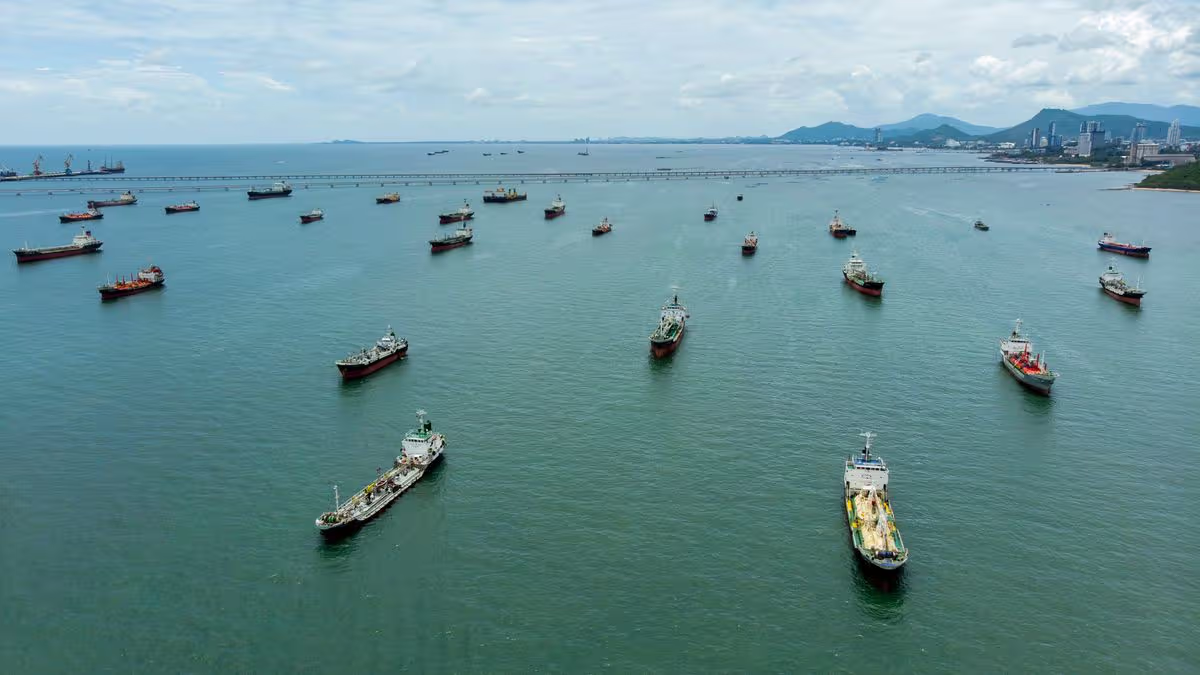
In a significant move underscoring its commitment to global maritime security, the United Kingdom is intensifying its preparations for a potential role in safeguarding one of the world’s most critical waterways: the Strait of Hormuz. Central to this effort are the specialized teams of UK military divers, highly trained in the delicate and dangerous art of mine neutralisation and clearance. These divers are being poised for deployment, not as a direct intervention, but as a ready contingent should their expertise be required. This preparation signals a tangible, boots-on-the-ground contribution to a multinational effort aimed at ensuring the strait’s eventual reopening and securing the free flow of trade through this vital artery.
Paragraph 2: The Diplomatic and Operational Framework
This military readiness is part of a broader, coordinated European initiative, spearheaded by the UK and France following a series of focused meetings in London. The discussions center on a dual objective: preserving the principle of freedom of navigation and alleviating the intense economic pressures that have built since the outbreak of conflict, which have choked this key trade route. The UK’s pledge extends beyond human divers; it includes offering advanced autonomous mine-hunting systems. These unmanned technologies represent a modern approach to clearing hazards, allowing for safer and more efficient operations in treacherous waters. Together, the diver teams and robotic systems form a comprehensive package of support, demonstrating a serious and multi-faceted commitment to the mission.
Paragraph 3: Navigating a Complex Political Landscape
The UK’s stepped-up involvement carries notable political weight, particularly in the context of recent transatlantic discourse. Former US President Donald Trump had publicly dismissed the value of British naval contributions, labelling them as inadequate “toys” and insisting the US did not require European assistance—a sentiment that extended to his criticism of NATO. By now proactively deploying its most skilled personnel and advanced technology, the UK is not only addressing a practical security need but also making a clear statement: it remains a capable and determined sovereign actor in global security, willing to contribute substantively to policing key international passages, irrespective of external commentary.
Paragraph 4: The Strait’s Precarious Status
The fate of the Strait of Hormuz remains profoundly uncertain and is a central piece in the fragile geopolitical puzzle. While a ceasefire currently holds, the strait itself remains functionally closed, casting a long shadow over global energy markets and trade. The situation was further complicated by Iran’s firm stance that it will not re-enter negotiations until a US-led blockade on the strait is lifted, a condition precipitated by earlier seizures of vessels. This creates a tense stalemate where humanitarian pauses exist alongside economic paralysis. The indefinite extension of the ceasefire announced by Trump adds another layer of complexity, leaving the strategic passage in a state of suspended animation—peaceful yet impassable, with its future hinging on unresolved diplomatic breakthroughs.
Paragraph 5: From Consideration to Concrete Action
The current plans mark a clear escalation from earlier, more tentative considerations. Last month, UK involvement was contemplated as possibly sending a single Royal Navy ship or a commercial vessel equipped with mine-hunting systems. The transition to actively preparing specialist divers and formally pledging autonomous systems represents a decisive step up. It moves the UK’s role from a theoretical option to an operational reality, positioning British forces as an integral component of the coalition’s on-site capability. This evolution reflects a recognition of the prolonged and potentially volatile nature of the situation, requiring ready and robust resources rather than symbolic presence.
Paragraph 6: The Human Element at the Core
Ultimately, beyond the autonomous systems and diplomatic meetings, the most poignant element of this commitment is the human one. The UK military divers, training for a mission in one of the world’s most tense and potentially hazardous environments, embody the on-the-ground reality of international security. Their skills in methodically and safely rendering mines inert will be crucial if the strait’s channels are to be physically cleared for safe passage. They stand as the final, human link in a chain of strategy, diplomacy, and technology—a reminder that ensuring global trade and stability often rests on the courage and expertise of individuals operating in the deep, shadowy waters of geopolitical fault lines.