



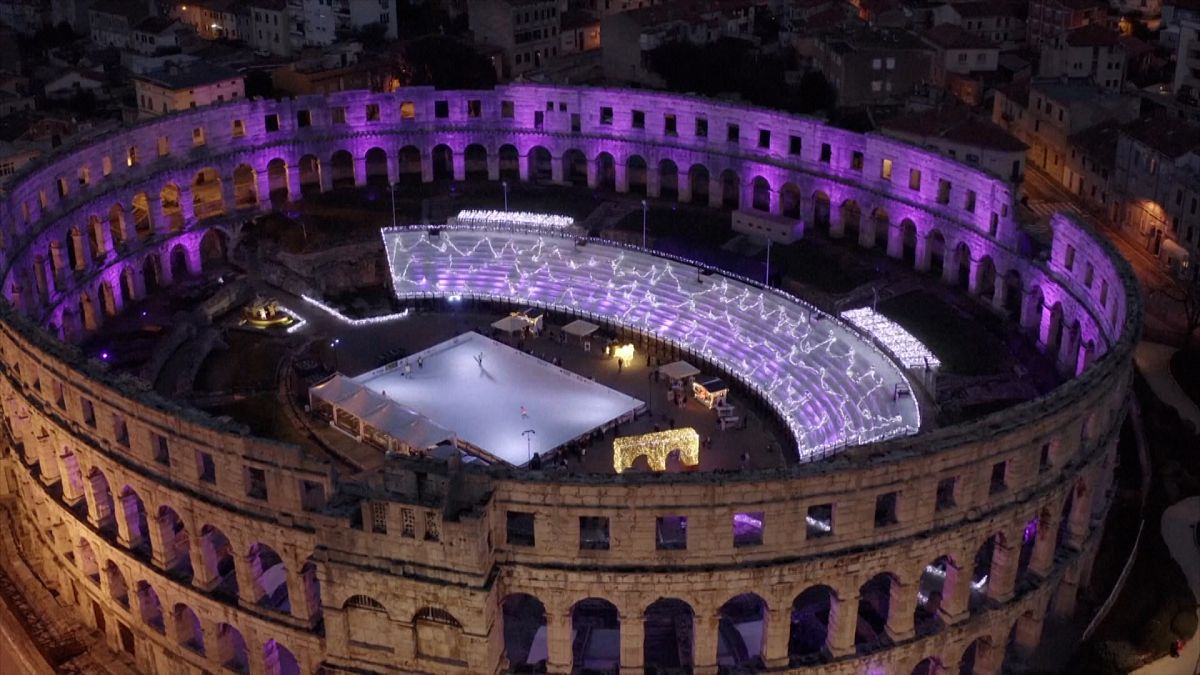
The Pula Arena, a magnificent testament to Roman engineering and architectural prowess, stands as one of the largest surviving Roman amphitheatres and a prominent landmark in Croatia. Constructed in the 1st century AD, this elliptical structure has witnessed centuries of history, evolving from a venue for gladiatorial contests and public spectacles to a cherished cultural hub that hosts a variety of events throughout the year. Its imposing presence, characterized by massive stone blocks and arched entrances, evokes a sense of awe and wonder, transporting visitors back to a time of Roman grandeur and spectacle.
Originally built using local limestone, the Pula Arena’s exterior features a series of superimposed arches, creating a rhythmic pattern that encircles the structure. The amphitheatre’s elliptical shape, a defining characteristic of Roman amphitheatres, optimized visibility for spectators, allowing them to witness the events unfolding in the central arena. The interior, once filled with the roar of the crowd and the clash of gladiators, now provides a serene and evocative setting for concerts, performances, and various cultural gatherings. The arena’s historical significance and architectural beauty combine to create a unique and captivating experience for visitors.
Throughout its long history, the Pula Arena has served a variety of purposes, reflecting the changing times and cultural contexts. In Roman times, it hosted gladiatorial combats, animal hunts, and public executions, providing entertainment for the masses. During the Middle Ages, the arena was repurposed for various activities, including knightly tournaments and livestock fairs. In later centuries, it served as a military storage facility and even a quarry for building materials. Today, the Pula Arena has been restored and transformed into a vibrant cultural venue, hosting concerts, film festivals, and other events, ensuring its continued relevance and appreciation.
The transition of the Pula Arena from an exclusive summer venue to a welcoming winter destination reflects a shift in its cultural programming and accessibility. Traditionally, the arena primarily hosted events during the summer months, catering to tourists and visitors seeking outdoor entertainment. However, in recent years, there has been a growing effort to utilize the space throughout the year, offering a diverse range of events that appeal to a broader audience. This includes embracing the winter season and creating a festive atmosphere that encourages community engagement and cultural celebration.
The decision to open the arena to winter festivities demonstrates a commitment to inclusivity and community spirit. By offering events and activities during the colder months, the venue becomes accessible to a wider segment of the population, including locals and those who may not have been able to attend during the peak tourist season. This fosters a sense of shared experience and reinforces the arena’s role as a central gathering place for the community. The winter programming offers a unique opportunity to experience the arena in a different light, enhancing its appeal and ensuring its continued relevance in the cultural landscape.
The Pula Arena’s enduring legacy lies not only in its architectural magnificence but also in its adaptability and continued relevance throughout the centuries. From its origins as a Roman amphitheatre to its current role as a vibrant cultural center, the arena has continuously evolved to meet the changing needs and interests of the community. Its ability to embrace new uses while preserving its historical significance ensures that the Pula Arena will continue to inspire and captivate visitors for generations to come. The arena stands as a powerful symbol of continuity and resilience, a testament to human ingenuity and the enduring power of shared cultural experiences.