




A High-Stakes Legal Battle Over Reputation and Power
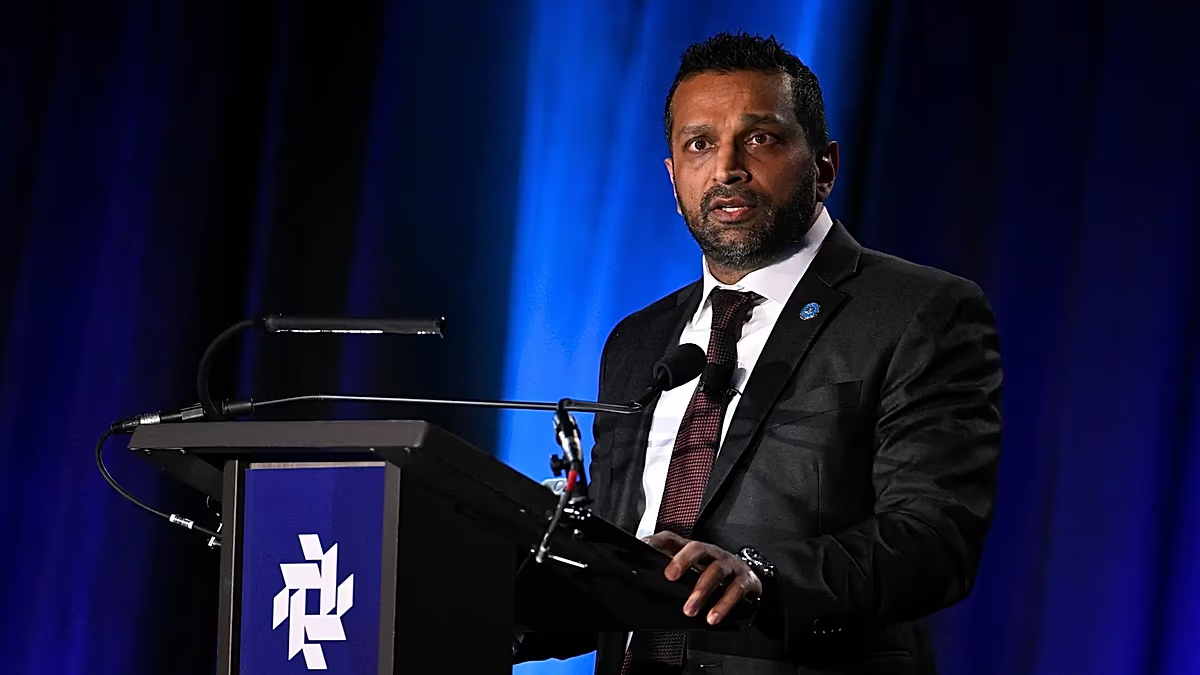
In a dramatic escalation of the ongoing tensions between America’s media institutions and its political figures, FBI Director Kash Patel has launched a formidable legal offensive. On April 20, 2026, Patel filed a defamation lawsuit in a Washington, D.C., federal court against The Atlantic magazine and journalist Sarah Fitzpatrick, seeking a staggering $250 million in damages. The suit stems from an article that painted a portrait of a director in crisis, alleging his position was imperiled due to “bouts of excessive drinking” and “unexplained absences.” For Patel, this was not mere criticism but a deliberate character assassination. His complaint decries the piece as a “sweeping, malicious, and defamatory hit piece” designed not just to critique his leadership, but to utterly destroy his reputation and force him from the office he holds. This lawsuit immediately frames the conflict not as a simple disagreement over facts, but as a fundamental battle over truth, motive, and the very integrity of the nation’s top law enforcement post.
The Core of the Allegations and the Defense of Journalism
The Atlantic’s reporting, as referenced in the lawsuit, presented a narrative of an FBI director under internal scrutiny. The central claims suggested that Patel’s professional standing was weakening, with his alleged personal conduct being a significant factor. These are grave assertions for any public servant, but especially for the head of an agency whose effectiveness relies on unimpeachable public trust and disciplined leadership. However, Patel’s legal filing attacks the very foundation of these allegations. He zeroes in on the magazine’ s reliance on anonymous sources, arguing that Fitzpatrick failed to secure a single on-the-record account to support what he calls “outrageous allegations.” Instead, the suit claims, she depended entirely on unnamed individuals described as “highly partisan with an axe to grind.” This, for Patel, transforms the story from journalism into a politically motivated vendetta, using the shield of anonymity to launch attacks without accountability.
The Legal Crucible: “Actual Malice” and Pre-Publication Warnings
The lawsuit moves beyond disputing facts to alleging a knowing disregard for the truth—a critical legal threshold for public figures in defamation cases. Patel’s complaint asserts that The Atlantic and Fitzpatrick acted with “actual malice,” meaning they either knew the claims were false or recklessly disregarded their truth or falsity. To bolster this, the filing reveals a crucial detail: that the defendants were “expressly warned, hours before publication, that the central allegations were categorically false.” This allegation of a last-minute warning, ignored, is the emotional and legal heart of Patel’s case. It suggests a deliberate choice to publish a damaging narrative despite being directly confronted with denials, potentially elevating the episode from potential negligence to alleged calculated harm. This sets the stage for a complex courtroom discovery process, where internal editorial communications and the identities of sources may become fiercely contested evidence.
The Atlantic Digs In: A Vigorous Defense of Its Reporting
Facing a quarter-billion-dollar lawsuit, The Atlantic did not retreat. On the same day the suit was filed, the magazine issued a resolute statement, creating a clear line in the sand. “We stand by our reporting on Kash Patel,” the declaration read, “and we will vigorously defend The Atlantic and our journalists against this meritless lawsuit.” This response is classic journalistic defiance, framing the legal action not as a legitimate grievance but as an attempt to intimidate and silence a watchdog institution. It promises a bitter and protracted fight, where the magazine will likely argue its reporting was responsibly sourced, involved significant fact-checking, and served the public interest in scrutinizing a powerful official. The stage is thus set for a monumental clash between two powerful forces: the media’s First Amendment rights to investigate and report, and an individual’s right to protect his name from what he claims is false destruction.
The Broader Political Backdrop: Purges and Partisanship
This legal drama cannot be separated from the highly charged political context that surrounds Kash Patel’s tenure. The lawsuit itself hints at this, referencing the “highly partisan” nature of the anonymous sources. Furthermore, the article and surrounding reports note that since his appointment, Patel has been accused of “carrying out a purge of agents perceived as being disloyal to President Donald Trump,” including those who worked on post-presidency criminal cases against Trump. This backdrop infuses the lawsuit with deeper significance. Is this a straightforward case of defamation, or is it the latest volley in a longer war over the control and ideology of the FBI? Patel’s suit attempts to frame the article as part of this ongoing partisan conflict—a weaponized narrative from his opponents. The Atlantic would likely argue it is reporting on the consequential results of that very conflict, including the instability and allegations now plaguing the director’s office.
A Societal Bellwether for Truth, Trust, and Power
Ultimately, this $250 million lawsuit transcends the personal fortunes of Kash Patel or the editorial fortunes of The Atlantic. It has become a bellwether for several fractures in contemporary American society: the eroding trust in media, the contentious nature of political appointments, and the blurred lines between legitimate scrutiny and character attack. The court will be tasked with dissecting anonymous sourcing, editorial judgment, and political motive. Its findings will resonate far beyond the courtroom, potentially influencing how aggressively journalists report on powerful figures and how those figures can fight back. Whether the article was a hard-hitting expose or a “hit piece,” and whether the lawsuit is a righteous defense or a tool of intimidation, are questions the legal process will now labor to answer. The outcome will deliver a verdict not just on one article or one official, but on the rules of engagement in an era where reputation, power, and truth are perpetually at war.