



The Evolving Geopolitical Landscape in Post-Assad Syria: Russia’s Continued Presence Amidst Shifting Alliances and Uncertainties
The recent visit of a high-level Russian delegation to Damascus marks a significant turning point in the complex and evolving relationship between Russia and Syria in the post-Assad era. This visit, the first official contact since the ousting of former President Bashar al-Assad in December, underscores the delicate balance Moscow is attempting to strike as it navigates the shifting political sands of a nation grappling with a transition of power. While Russia’s military footprint remains firmly planted in Syria, particularly at the Khmeimim air base and the Tartus naval facility, the cancellation of certain agreements, such as the Tartus port modernization project, signals a recalibration of the bilateral relationship under the new Syrian leadership.
The delegation, comprising key figures like Deputy Foreign Minister Mikhail Bogdanov and President Putin’s special envoy for Syria, Alexander Lavrentyev, held meetings with interim leader Ahmad al-Sharaa and the foreign minister. These discussions likely centered around the future of Russian-Syrian relations, focusing on how Moscow can safeguard its strategic interests in the region while adapting to the new political realities in Damascus. The visit itself signifies a tacit acknowledgment of the new interim government by Moscow, a crucial step in maintaining its influence in Syria. However, the cancellation of the Tartus port project suggests a degree of caution on both sides as they redefine the parameters of their cooperation.
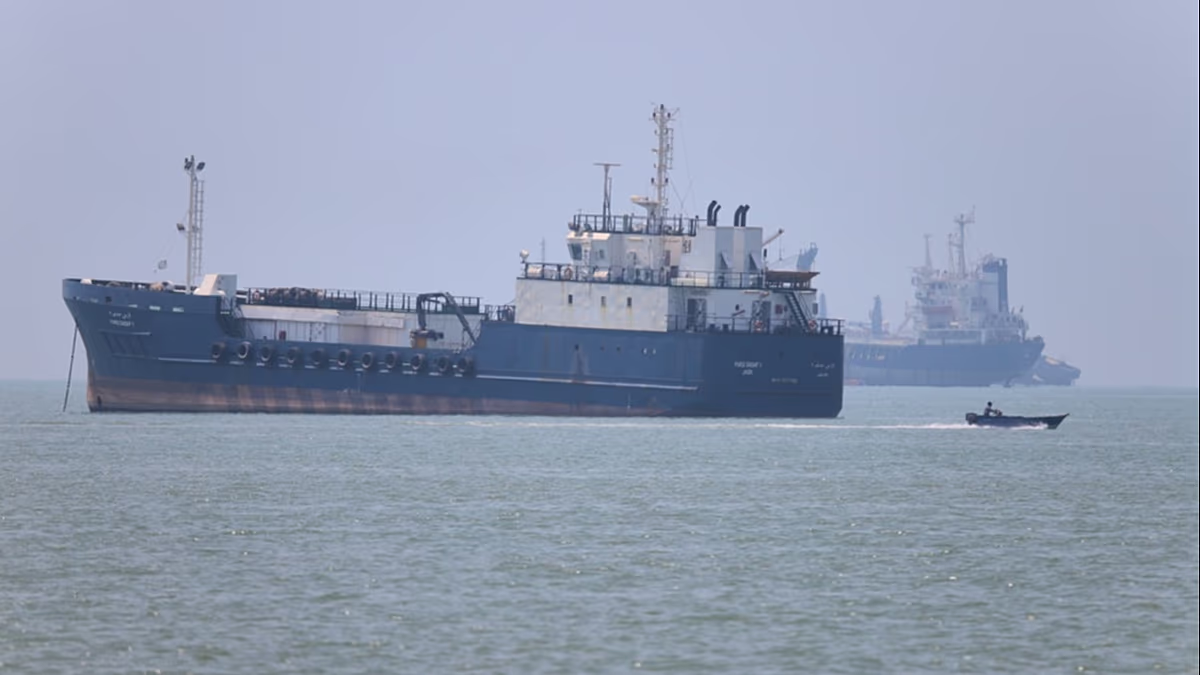
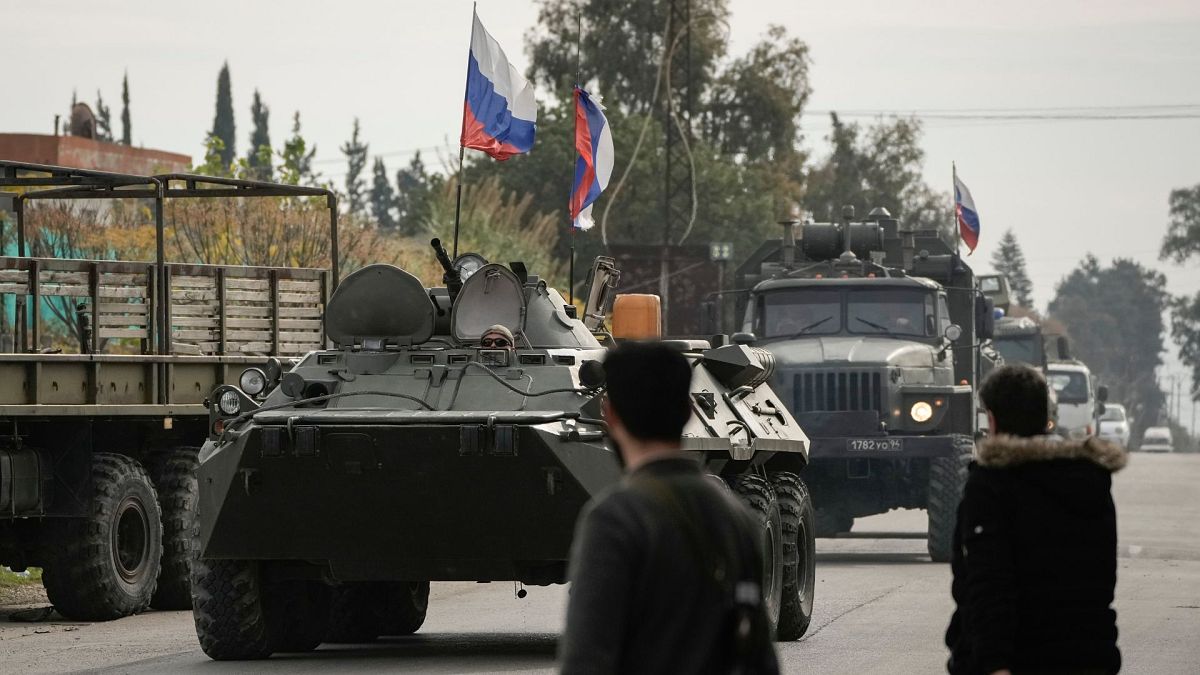
Russia’s intervention in the Syrian civil war was pivotal in bolstering the Assad regime and shaping the trajectory of the conflict. Moscow’s military might proved instrumental in turning the tide against the rebel forces and solidifying Assad’s grip on power. This enduring military presence, even after Assad’s departure, signifies Russia’s continued strategic interests in the region, which include maintaining access to warm-water ports and projecting power in the Middle East. The Khmeimim air base and the Tartus naval facility serve as critical linchpins in Russia’s regional strategy, providing logistical support and a platform for power projection. While the cancellation of the commercial port project raises questions about the scope of future economic cooperation, Russia’s commitment to maintaining its military presence remains unwavering.
The evolving dynamics between Russia and the new Syrian government are further underscored by the simultaneous visit of a Palestinian Authority delegation led by Prime Minister Mohammad Mustafa. This visit highlights the multifaceted nature of the Syrian crisis and the interconnectedness of regional actors. The Palestinian refugee population in Syria, numbering approximately 450,000, faces an uncertain future under the new government. Their status, coupled with the historical tensions and complex relationship between the Palestinian Authority and various Syrian regimes, adds another layer of complexity to the ongoing transition. The discussions between the Palestinian delegation and the Syrian interim leadership likely focused on the humanitarian situation of Palestinian refugees and the potential for future cooperation.
The fate of the Palestinian refugee population in Syria represents a significant humanitarian challenge. Having lived for decades without full citizenship rights, ostensibly to preserve their claim to a right of return to their ancestral lands, they now face an uncertain future under a new government. The Syrian conflict has taken a heavy toll on this vulnerable population, with thousands killed, displaced, and subjected to human rights abuses. The Palestinian Authority’s engagement with the interim Syrian government represents an attempt to advocate for the rights and protection of these refugees and to secure their well-being amidst the ongoing political transition.
In conclusion, the recent visits by Russian and Palestinian delegations to Damascus mark a new chapter in Syria’s post-Assad era. While Russia’s strategic interests in Syria remain paramount, evidenced by its continued military presence, the evolving political landscape necessitates a recalibration of its relationship with the new Syrian leadership. The cancellation of the Tartus port project, while a setback for economic cooperation, does not diminish the strategic significance of Russia’s military bases. Concurrently, the Palestinian Authority’s visit underscores the complex humanitarian challenges facing Palestinian refugees in Syria and the need for regional cooperation to address their needs. The ongoing transition in Syria presents both opportunities and challenges for all involved, and the evolving dynamics between Russia, Syria, and the Palestinian Authority will undoubtedly play a critical role in shaping the future of the region.