


Tensions in the Persian Gulf have escalated dramatically, casting a grave shadow over fragile peace talks and the global economy. On Monday, U.S. President Donald Trump declared that the United States would maintain its naval blockade of Iranian ports until Tehran agrees to a formal peace deal to end the ongoing war, which began with a U.S.-Israeli offensive on February 28th. In a social media post, Trump asserted that the blockade is “absolutely destroying Iran,” claiming the country is losing an unsustainable $500 million per day. This hardline stance comes amidst a dangerous standoff in the Strait of Hormuz, a critical maritime chokepoint, where both nations have imposed separate blockades, bringing commercial traffic to a near halt.
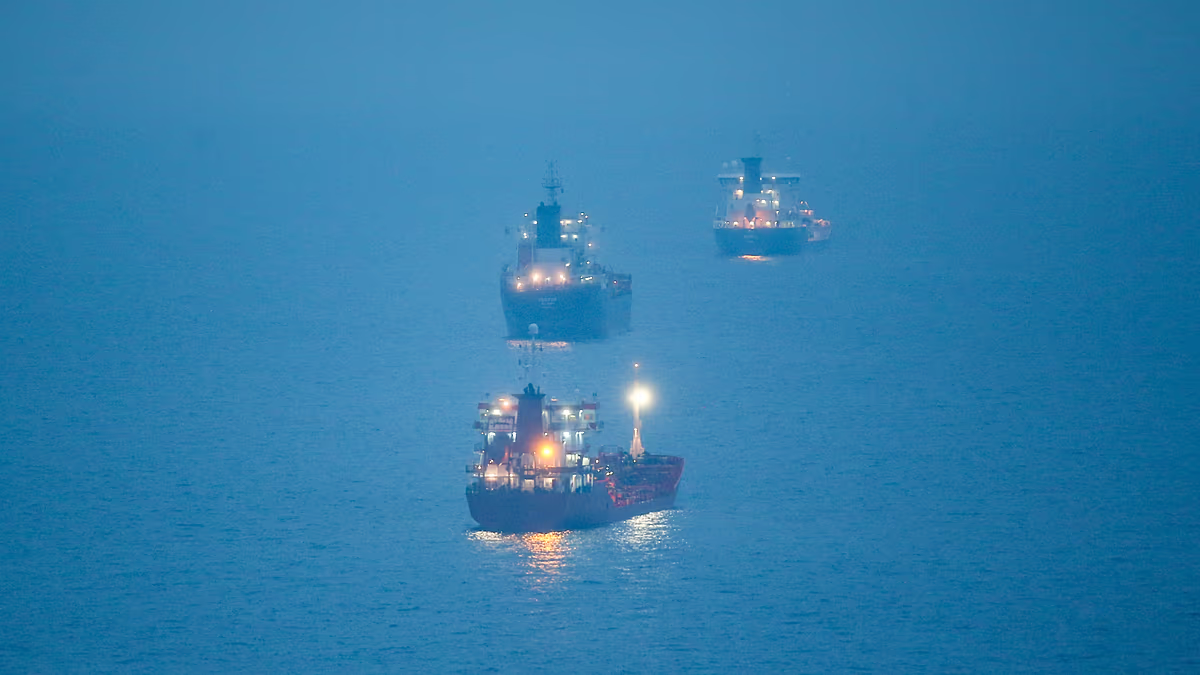
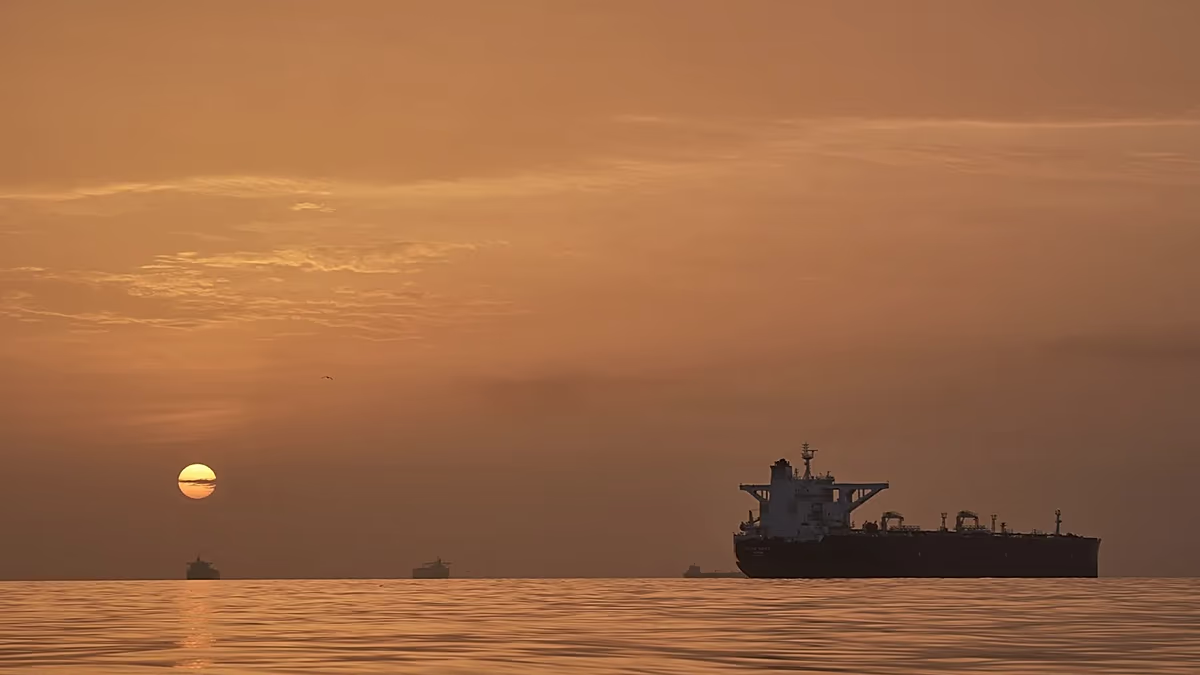
The immediate trigger for this latest crisis was a confrontational incident at sea. On Sunday, a U.S. Navy guided missile destroyer intercepted an Iranian-flagged cargo vessel, the Touska, near the Strait. According to President Trump, after repeated warnings, the ship was stopped “right in their tracks by blowing a hole in the engine room.” U.S. Marines boarded and took custody of the vessel, which was under U.S. sanctions, to inspect its cargo. Iran condemned the armed boarding as a blatant “act of piracy” and a severe violation of the existing, fragile ceasefire. Tehran’s joint military command vowed a response, throwing the entire truce into jeopardy just days before it was set to expire.
In retaliation for the ship seizure, Iran announced it would not send a delegation to the second round of high-stakes peace talks scheduled for Monday in Islamabad, Pakistan. This move directly undermines diplomatic efforts to end the conflict. Minutes after the seizure was announced, Iranian state media reported on a call between President Masoud Pezeshkian and Pakistani Prime Minister Shehbaz Sharif. Pezeshkian expressed deep suspicion, arguing that Washington’s “bullying and unreasonable behaviour” suggests it may repeat past patterns and “betray diplomacy.” This withdrawal from talks creates a significant roadblock, leaving the war’s fate in limbo and raising the specter of renewed large-scale hostilities.
The repercussions of this clash extend far beyond the Gulf’s waters, sending shockwaves through the global energy market. The immediate aftermath saw oil prices spike, exacerbating a pre-existing and severe global energy crisis. The international benchmark, Brent crude, opened trading on Monday at $95 a barrel, a sharp increase from the $91-92 range it had maintained during the ceasefire. This surge highlights the world economy’s acute vulnerability to instability in this region, which channels a substantial portion of the planet’s seaborne oil. The threat of prolonged disruption promises higher costs for fuel, transportation, and goods worldwide, adding economic pressure on nations already grappling with inflation.
President Trump’s recent actions now starkly contradict his own optimistic statements from recent days, in which he repeatedly claimed the war was “close to over.” His current insistence on maintaining a crushing blockade as a precondition for talks, coupled with the aggressive seizure of a ship, appears to be a strategy of applying maximum economic and military pressure to force Iranian capitulation. However, this approach has instead galvanized Iranian defiance, damaged critical diplomatic channels, and created a cycle of action and retaliation that is rapidly eroding the thin layer of trust necessary for any peaceful resolution.
We are now at a perilous crossroads. The interception of the Touska is not an isolated event but a dangerous escalation in a deliberate campaign of coercion. With the ceasefire crumbling, peace talks suspended, and military forces on high alert, the risk of a miscalculation triggering a broader confrontation is alarmingly high. The path forward requires a de-escalation that neither side seems currently willing to initiate. The world watches nervously, facing the dual prospect of a expanding war in the Middle East and the deepening of an economic crisis, all hinging on the volatile standoff in the strategic waters of the Hormuz Strait.