



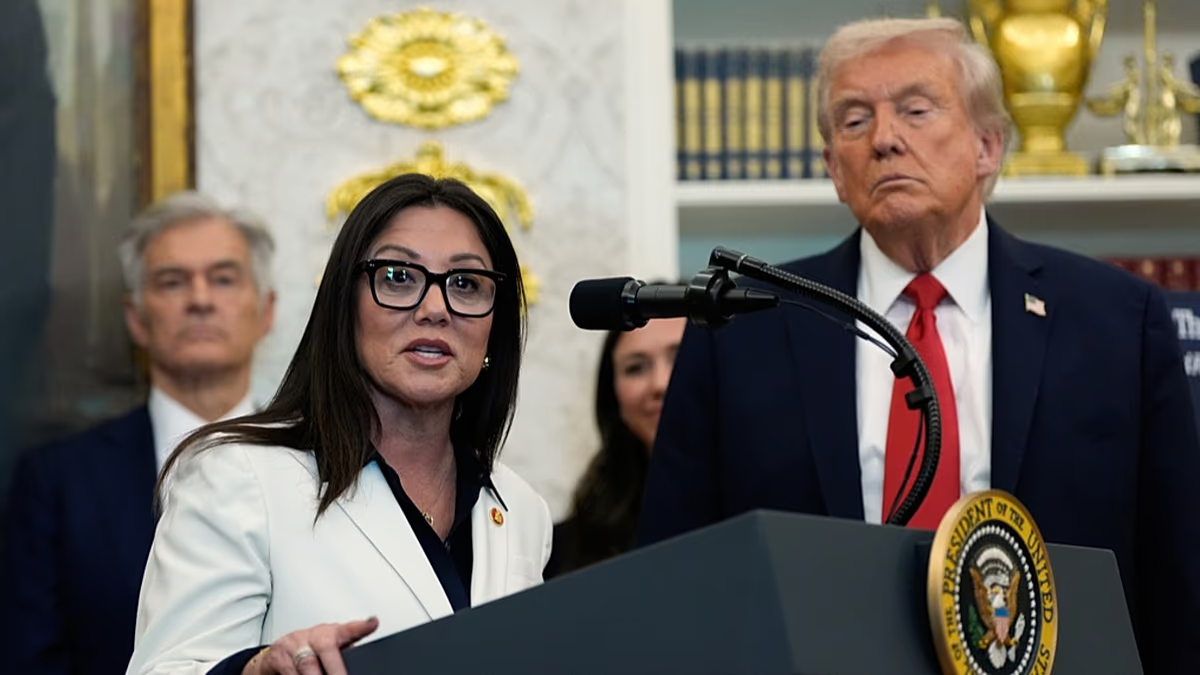
The departure of U.S. Labor Secretary Lori Chavez-DeRemer from the Trump Administration marks another significant shift within the president’s cabinet, ending a tenure that became increasingly clouded by controversy. Unlike the highly publicized firings of other officials, her exit was announced not by the President himself, but through a statement from White House Communications Director Steven Cheung. In this announcement, the departure was framed as a voluntary transition to the private sector, with Cheung praising Chavez-DeRemer for her “phenomenal job” in protecting workers and enacting fair labor practices. However, this official narrative stands in stark contrast to the allegations of misconduct that had been swirling around the Secretary for months, creating a complex picture of a cabinet member who was simultaneously credited with advancing key administration policies while being investigated for serious ethical breaches.
The circumstances surrounding her resignation are inextricably linked to a series of damaging reports, primarily from The New York Times, which detailed multiple investigations into her conduct. These reports alleged that Chavez-DeRemer had fostered an inappropriate professional environment, including accusations of an affair with a subordinate member of her security detail. Furthermore, the investigation scrutinized the unusual access and influence granted to her family, with reports that her husband and father exchanged text messages with young female staffers. Some aides were allegedly instructed to “pay attention” to these personal requests from the Secretary’s family, blurring the lines between official duties and private affairs. These revelations pointed to a pattern of behavior that critics argued abused the power of her high office.
In response to these allegations, Chavez-DeRemer mounted a vigorous defense, casting herself as a victim of political warfare. In her resignation statement, she did not directly address the specific claims but instead accused “high-ranked deep state actors” of coordinating with a “one-sided news media” to undermine both her and President Trump’s mission. This rhetoric echoed the administration’s frequent clashes with federal institutions and the press. Initially, both the White House and the Labor Department dismissed the reports as baseless, but their defenses became notably less emphatic as the investigation progressed and more details emerged. The internal fallout was tangible, with at least four department officials, including her chief and deputy chief of staff, being forced out as the inquiry continued.
Despite the scandal, Chavez-DeRemer’s tenure was not without substantive policy action, particularly in service of the administration’s deregulatory agenda. As Labor Secretary, she oversaw efforts to rewrite or repeal over 60 workplace regulations deemed obsolete by the administration. These rollbacks included minimum wage requirements for home health care workers and individuals with disabilities, as well as rules governing exposure to harmful substances and safety protocols in mines. While applauded by business groups, these moves drew sharp condemnation from union leaders and workplace safety advocates, who argued they jeopardized worker protections and economic security. In this sense, her legacy is a deeply polarized one, defined by a steadfast commitment to a pro-business regulatory approach even as her personal stewardship of the department came under intense scrutiny.
Her departure continues a trend of turbulence within President Trump’s cabinet, making her the third high-profile official to leave in recent months following the ousters of Homeland Security Secretary Kristi Noem and Attorney General Pam Bondi. However, the manner of her exit—announced by an aide and framed as a private-sector move—sets it apart, suggesting a negotiated or less confrontational separation compared to the outright firings of her colleagues. Keith Sonderling, the incumbent deputy labor secretary, will step into the role in an acting capacity, ensuring the department’s continued operation amidst the leadership transition. This change occurs against a backdrop of persistent questions about the ethical climate within the administration and the durability of its appointed officials.
In conclusion, Lori Chavez-DeRemer’s resignation encapsulates the competing narratives that so often define modern political departures: official praise for professional accomplishments juxtaposed with unofficial reports of personal misconduct. She leaves proclaiming pride in her work to “bridge the gap between business and labour” and vowing to continue fighting for American workers, even as she exits under the shadow of inspector general investigations into abuse of power. Her story is thus one of dualities—policy achievements versus ethical lapses, presidential missions versus “deep state” conspiracies. It underscores how personal conduct and political function remain inextricably linked, with her final chapter in office serving as a potent reminder that the credibility of a public institution is built not only on its regulatory output but on the integrity of its leadership.