



The Rising Tide: Inflation Returns to Haunt Europe’s Powerhouse
As spring arrived in April 2026, Germany, the bedrock of the European economy, received an unwelcome reminder of a past specter: inflation. Preliminary figures revealed that prices had climbed by 2.9% compared to the same month last year, marking the highest rate since early 2024. This wasn’t a gentle uptick but a significant surge, signaling that the era of comfortably low inflation was coming to an abrupt end for Europe’s largest economy. The news immediately shifted the economic mood, transforming quiet confidence into palpable concern. This headline number, however, was just the surface of a deeper and more complex story, one driven by forces far beyond Germany’s borders and control.
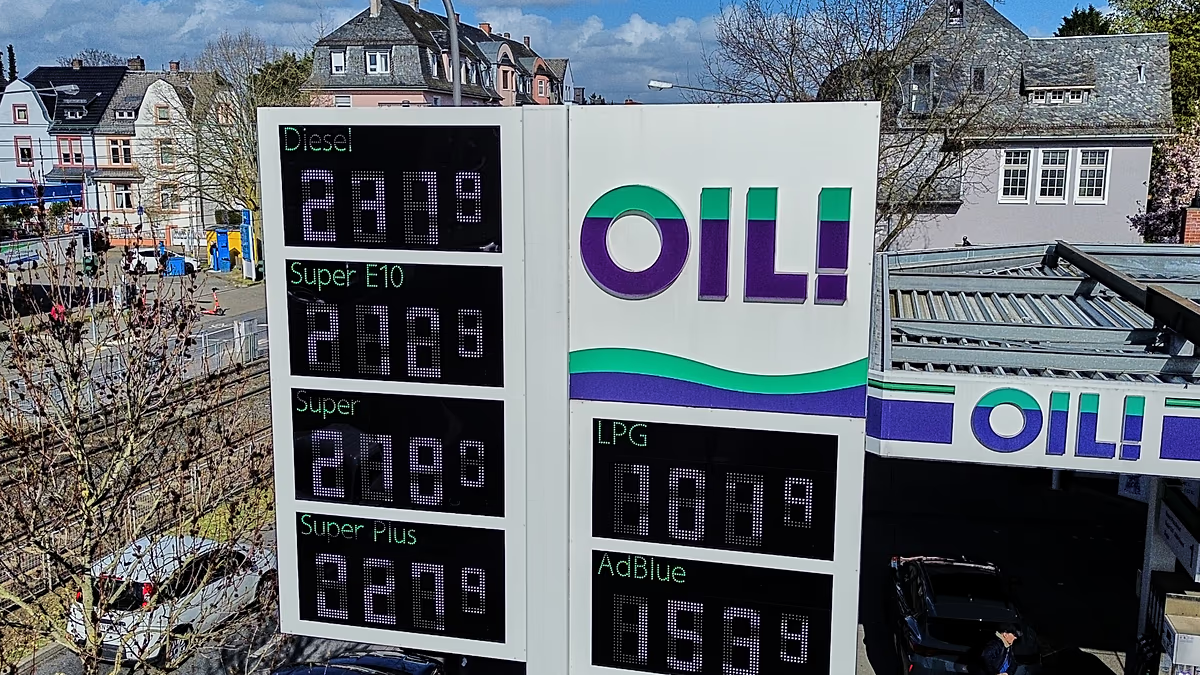
The detailed breakdown of the data painted a clear, troubling picture. The primary engine of this inflation was energy. Costs for energy skyrocketed by more than 10% year-on-year, a jarring increase that sent shockwaves through the entire price index. The root cause was geopolitical turmoil, specifically the ongoing and escalating conflict in the Middle East. The report pointed directly to disruption in global energy markets following the closure of the Strait of Hormuz—a vital artery for oil shipments—after US-Israeli strikes. This single event illustrated how distant conflicts could directly throttle the energy supply to European homes and factories. While core inflation, which strips out volatile food and energy prices, actually fell to a reassuring 2.3%, the overall figure was hostage to these uncontrollable external shocks. Even domestic food prices edged higher, and while service inflation eased slightly, the overarching narrative was dominated by the skyrocketing cost of powering a modern society.
Germany’s story was not isolated. On the same day, Spain released its own troubling figures. Its harmonized inflation rate, the benchmark used for European comparison, accelerated to 3.5%, reaching its highest point in nearly two years. Spain’s monthly increase also exceeded expectations. The Spanish government, sensing the gathering storm, had already acted at the end of March by approving a broad package of 80 measures designed to shield consumers, including a cut in VAT on fuel. This action showed a tangible effect, with non-harmonized data showing a fall in electricity prices. Yet, the fight was uneven; the price of fuel and lubricants for personal vehicles continued its stubborn climb. The contrast between the two nations was instructive: Germany, heavily impacted by raw energy costs, and Spain, actively deploying policy tools in a battle against a global tide, yet still seeing key consumer expenses rise.
Together, these twin reports from two of Europe’s major economies crystallized a growing, region-wide anxiety. The concern was that the Middle East crisis was not a temporary shock but a sustained force placing the entire eurozone’s inflation on a new, elevated trajectory. This fear set the stage for a crucial week in European finance. The European Central Bank (ECB), the guardian of monetary stability for the bloc, was due to meet in Frankfurt just days later to decide the future path of interest rates. The data from Germany and Spain served as a stark, last-minute briefing, suggesting that the battle against inflation was reigniting. Further data from France and Italy, alongside the aggregated eurozone figure expected to hit 3%, would provide the final pieces of the puzzle before the ECB’s fateful decision.
The expected eurozone inflation rate of 3%—a full percentage point above the ECB’s target—represented more than a mere statistical overshoot. It symbolized a potential policy turning point. For months, the discourse had centered on stabilizing or even cautiously lowering rates. Now, the conversation pivoted dramatically toward the possibility of further rate hikes. The central bank’s primary tool for containing price growth is to increase the cost of borrowing, cooling economic activity and demand. Such a move, however, carries its own risks, potentially stifling growth and increasing pressure on businesses and households with loans. The ECB was thus poised on a razor’s edge, forced to weigh the immediate threat of resurgent inflation against the longer-term dangers of over-tightening the economic reins.
Ultimately, the April 2026 reports from Germany and Spain humanized a complex economic phenomenon. They translated abstract market “disruption” into a tangible 10% jump in energy bills for German families. They showed how a conflict in the Middle East could lead a Spanish government to scramble, crafting 80 measures to protect its citizens from rising costs. The numbers foretold not just a change in prices, but a change in daily life—higher costs at the pump, more expensive groceries, and the renewed sting of monthly utility bills. They also framed the immense responsibility resting on the shoulders of the ECB’s decision-makers in Frankfurt. Their upcoming choice would ripple through the economy, influencing mortgages, business investments, and the financial well-being of millions across Europe, all in response to a crisis ignited far from European shores. The story of inflation had returned, and it was a story of global interconnection, political conflict, and profound local consequence.