



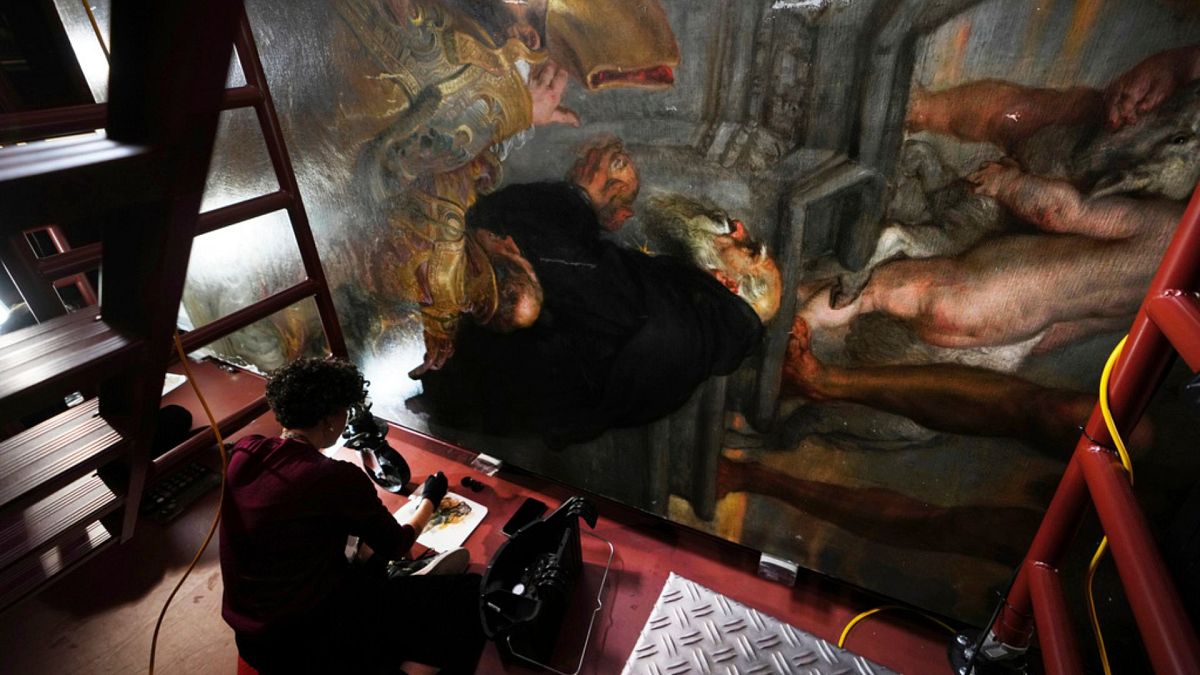
Peter Paul Rubens’s monumental altarpiece, “The Adoration of the Magi,” a sprawling canvas measuring over 14 feet high and 12 feet wide, is undergoing a meticulous restoration at the Royal Museum of Fine Arts Antwerp (KMSKA). This ambitious project, undertaken in full public view within the museum itself, offers a rare glimpse into the intricate processes involved in revitalizing a masterpiece of such scale and historical significance. The public-facing nature of the restoration provides not only a unique educational opportunity but also a fascinating narrative of artistic rediscovery, unveiling the layers of history embedded within the artwork.
The decision to restore “The Adoration of the Magi” stemmed from its precarious condition. Centuries of exposure to environmental factors, including fluctuating humidity and temperature, along with previous restoration attempts, had left the painting veiled beneath layers of discolored varnish and overpaint. These interventions, while intended to protect the artwork, obscured Rubens’s vibrant palette, subtle brushstrokes, and the nuanced interplay of light and shadow that characterized his dynamic style. The painting’s large size and complex composition further compounded the challenges of restoration, requiring a team of highly skilled conservators to develop a phased approach, meticulously documenting each step of the process. Before the actual restoration began, a comprehensive examination was conducted, utilizing advanced imaging techniques such as infrared reflectography and X-radiography to analyze the painting’s underlying structure, identify areas of damage, and understand Rubens’s original artistic intentions. This painstaking preliminary research formed the foundation for the subsequent restoration strategy.
The restoration process itself is a delicate dance between preservation and intervention. The first phase focused on the meticulous removal of the aged varnish and overpaint, revealing the original vibrancy of Rubens’s colors and the intricate details of his brushwork. This process, carried out with specialized solvents and tools under microscopic precision, is painstakingly slow and requires immense patience and expertise. As layers of varnish are carefully lifted, the painting gradually emerges from its obscured state, revealing the brilliance of Rubens’s palette and the dynamic energy of his composition. The conservators are acutely aware of the ethical considerations involved, striving to maintain a balance between restoring the painting to its former glory and respecting the historical integrity of the artwork, including the traces of its past interventions.
Beyond the technical challenges, the public-facing nature of the restoration project adds another layer of complexity and opportunity. Visitors to the KMSKA can witness the conservators at work, observing the intricate procedures and gaining insight into the meticulous craftsmanship involved in restoring a masterpiece. This transparency fosters a deeper understanding and appreciation of the artwork, transforming the restoration process into a dynamic educational experience. The museum has also incorporated interactive displays, workshops, and lectures to further engage the public and provide context to the ongoing restoration. This open approach not only demystifies the restoration process but also invites the public to become active participants in the artwork’s journey back to life.
The restoration of “The Adoration of the Magi” also presents a unique opportunity for art historical research. As the layers of varnish and overpaint are removed, previously hidden details emerge, providing fresh insights into Rubens’s working methods and artistic choices. The examination of the underlying layers reveals the artist’s initial compositional sketches, changes in perspective, and adjustments to the figures, offering a glimpse into his creative process. These discoveries shed new light on Rubens’s artistic genius and contribute to a deeper understanding of his artistic evolution. The restoration project is further enriched by collaborations with art historians, scientists, and other specialists, creating a multidisciplinary approach that combines scientific analysis with art historical interpretation.
The ongoing restoration of Rubens’s “The Adoration of the Magi” at the KMSKA is more than just a technical endeavor. It is a public spectacle, an educational opportunity, and a testament to the enduring power of art. By unveiling the layers of history embedded within the artwork, the restoration process connects the past with the present, inviting viewers to appreciate the artistry of Rubens anew. This transparent approach fosters a deeper understanding of the complexities of art conservation, transforming the restoration project into a dynamic and engaging experience. The revitalized masterpiece, once completed, will stand as a testament to the collaborative efforts of conservators, art historians, and the public, ensuring that Rubens’s artistic legacy continues to inspire and captivate audiences for generations to come.