

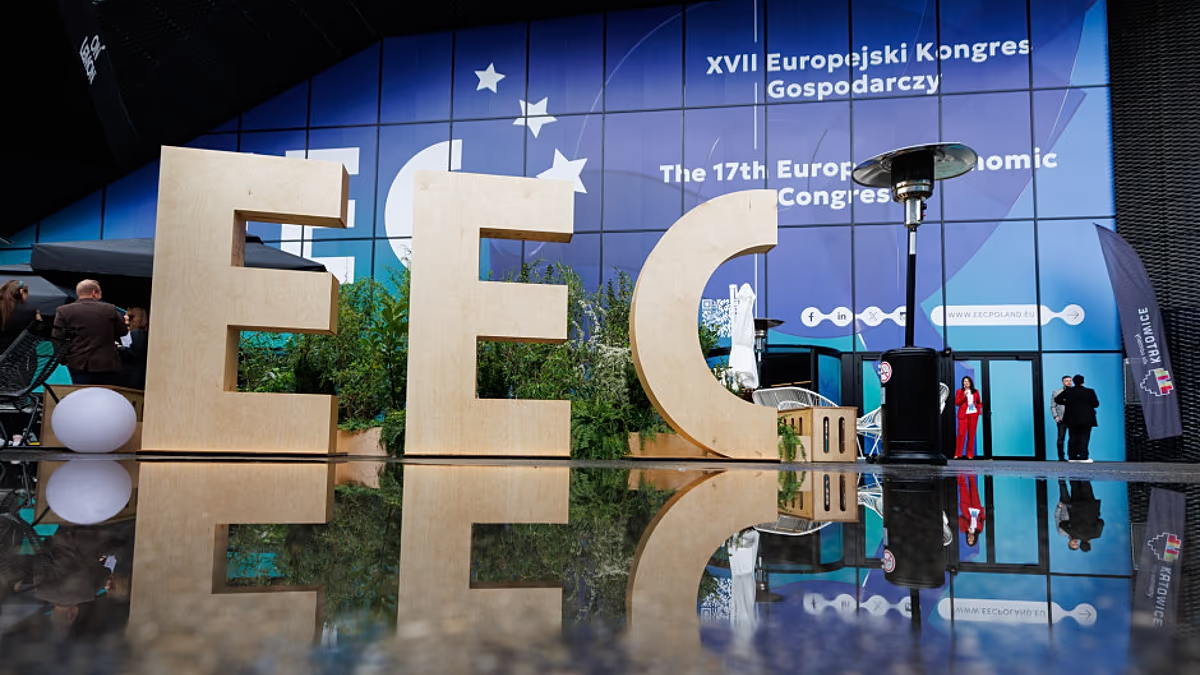
In the heart of Upper Silesia, a profound transformation is underway. Katowice, a city once synonymous with soot, coal, and heavy industry, now stands as a striking symbol of renewal. Its skyline, where the monumental, spaceship-like form of the Spodek arena meets sleek modern architecture, visually narrates a journey from the past to the future. It is against this evocative backdrop, from April 22nd to 24th, 2026, that the 18th European Economic Congress (EEC) will unfold, bridging the city’s industrial heritage with the complex economic and technological frontiers of today. For nearly two decades, this gathering has grown into one of Central Europe’s most significant economic forums, not merely as a conference but as a dynamic engine for dialogue where abstract ideas are forged into tangible initiatives that shape development across Poland and the broader European continent.
The upcoming Congress promises three days of intensive and vital discourse, structured around the most pressing challenges defining our era. The formal agenda is meticulously crafted to address the interconnected webs of geopolitics, sovereignty, and European competitiveness, recognizing that economic resilience cannot be separated from political reality. Parallel threads will dive deep into the practicalities of the great energy transition—a theme felt personally in a region undergoing its own metamorphosis—alongside critical conversations on mobilizing investment and harnessing the power of digitalization and emerging technologies. The scale is immense, with expectations to match previous editions that brought together over 1,300 speakers and 13,500 participants across more than 200 debates. Yet, the true heartbeat of the EEC often lies beyond the official schedule, in the thousands of informal meetings and conversations that occur in its corridors, forging the personal connections that turn vision into actionable partnership.
This reflects a fundamental shift in the very philosophy of development, championed by a new generation of leaders and thinkers. For them, progress is no longer a narrow metric of GDP growth but a multidimensional pursuit integrating social responsibility, environmental stewardship, and technological empowerment. The energy and digital transitions are seen not as burdens but as essential pathways to a sustainable and equitable future. This renewed, holistic approach to sustainability will permeate the discussions, suggesting that the Congress itself is evolving to meet the deeper demands of our time, where economic policy is increasingly inseparable from climate policy, social policy, and ethical governance.
The participants who will steer these conversations constitute a powerful cross-section of European leadership. The roster bridges political legacy and fresh perspective, featuring figures like Jerzy Buzek, former Prime Minister of Poland and former President of the European Parliament, whose experience provides deep historical context. They are joined by current government stewards such as Deputy Prime Minister Krzysztof Gawkowski (Digitalisation), Minister Katarzyna Pełczyńska-Nałęcz (Funds and Regional Policy), and Minister Katarzyna Kotula (Equality), who are actively shaping policy. The business world is represented by visionary CEOs like Rafał Brzoska of InPost and financiers such as Michał Bolesławski of ING Bank Śląski and international investor Sebastian Kulczyk, whose capital and innovation drive change. This blend is further enriched by international voices like Professor Guy Standing, an expert on social justice, and Mark Brzeziński, former U.S. Ambassador to Poland, ensuring the dialogue transcends national borders.
Beyond the main stage, the Congress ecosystem includes significant accompanying events that highlight practical outcomes. The Investor Without Borders 2026 Gala serves as a celebration of global economic interconnectedness, honoring both foreign investors who choose Poland and Polish companies expanding their reach abroad. Similarly, the TOP Investment 2026 Gala shifts focus to the local level, showcasing innovative and inspirational projects spearheaded by local governments, proving that transformative ideas flourish at all levels of governance. These galas are more than ceremonies; they are integral parts of the Congress’s mission, providing concrete examples of the partnerships and projects born from the forum’s dialogue, and reminding attendees that theory must ultimately yield to practice.
Organized by the PTWP Group, a specialist in industry congresses and publishing, the European Economic Congress in Katowice is more than an annual meeting. It is a manifestation of a region—and a continent—in deliberate transition. By placing this high-stakes conversation in a city that has physically and economically remade itself, the event carries a potent, symbolic weight. It argues that change, however daunting, is possible. As leaders converge among the architectural landmarks of Katowice’s rebirth, they are tasked with channeling that same spirit of transformation into actionable blueprints for a European future that is prosperous, sustainable, sovereign, and just—a future being written, in part, in the vibrant heart of Silesia.