

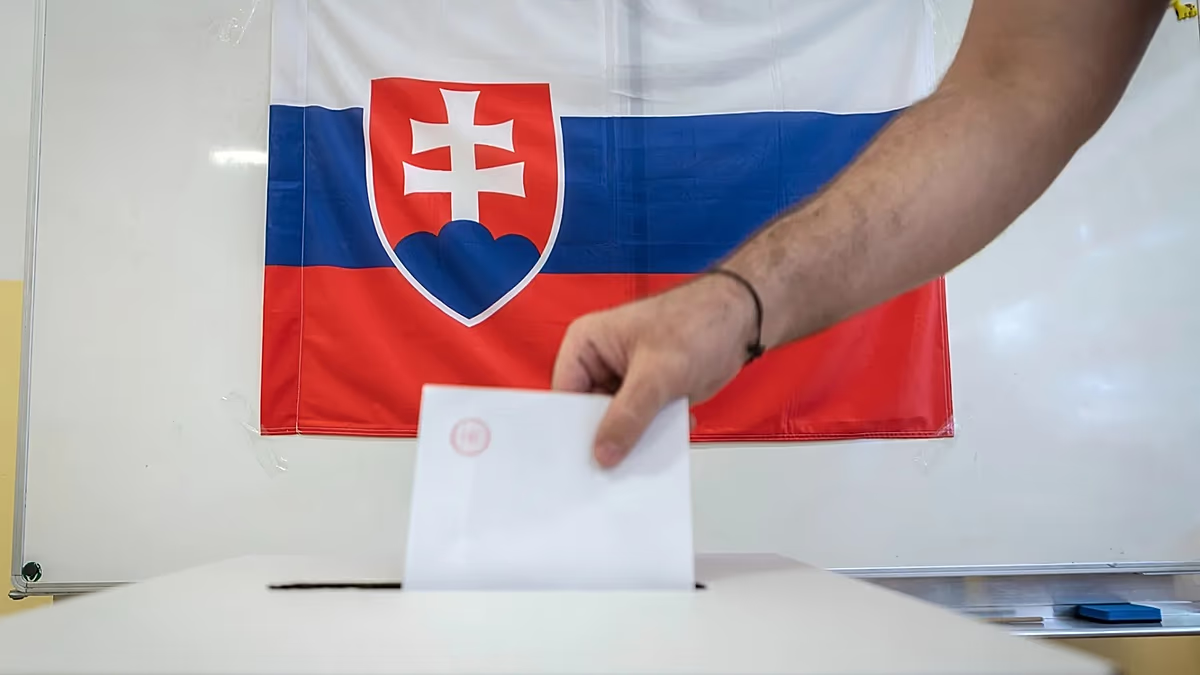
In the summer of 2026, Slovakia will turn to its citizens to decide on two highly charged political questions that have sharply divided the nation. President Peter Pellegrini announced that a referendum will be held on July 4th, initiated by a massive public petition that garnered over 350,000 signatures. At its heart, the vote will ask Slovaks whether to abolish a controversial system of lifelong financial payments for former prime ministers and parliamentary speakers, and whether to reinstate a special prosecutor’s office dedicated to fighting high-level corruption and organized crime. This direct democratic exercise represents a significant moment for Slovak society, reflecting deep-seated public frustration with the political establishment and a desire for accountability.
The first and most symbolically potent question concerns the lifelong payments granted to top politicians. This benefit, which provides a monthly salary equal to that of a sitting lawmaker, was established in the traumatic aftermath of the 2024 assassination attempt on Prime Minister Robert Fico. While framed as a necessary security measure for leaders after leaving office, it has been widely perceived by critics as an unjustifiable privilege that burdens public finances. The referendum will essentially allow citizens to judge whether this measure, born from a national crisis, has outlived its purpose or represents an unfair entitlement for the political elite.
The second referendum question delves into an even more contentious area: the rule of law and the fight against corruption. It seeks to overturn a 2024 decision by Fico’s coalition government to dismantle the Special Prosecutor’s Office. This office had been instrumental in investigating serious crimes, including graft and political corruption, and its abolition triggered widespread domestic protests and serious concern from the European Union. Critics argued the move was designed to shield Fico’s political allies from ongoing prosecutions and to weaken judicial independence. For many Slovaks, this vote is a clear-cut choice between strengthening or undermining the country’s anti-corruption framework.
This referendum did not emerge in a vacuum. It is the product of a sustained civic effort led by the pro-Western opposition Democrats party, channeling widespread public discontent into direct action. However, the scope of the vote was also shaped by legal boundaries. President Pellegrini clarified that, following a Constitutional Court ruling, the referendum could not include a question on triggering early parliamentary elections—a key demand of many protesters. This limitation focuses the ballot squarely on specific institutional and ethical issues, rather than serving as a direct vote of no confidence in the sitting government.
Historically, referendums in Slovakia have a high bar for success, requiring not just a majority of votes but also a majority of eligible voters to participate—a threshold that has only been met once, during the 2003 vote on EU accession. This presents a significant challenge for proponents of change, as past initiatives have failed due to voter apathy or boycotts. The upcoming vote will thus test not only the public’s opinion on these specific issues but also their willingness to engage in the democratic process to enforce that opinion, setting the stage for intense campaigning from both sides to mobilize their bases.
Ultimately, the July referendum is a stark reflection of the deep political and social fractures within Slovakia. It pits public demands for transparency and fiscal responsibility against a government that has often portrayed itself as a defender of national sovereignty against foreign interference. The outcome will send a powerful signal about the direction of the country, influencing its domestic governance and its standing within the European Union. Whether it passes or fails, this referendum marks a pivotal chapter in Slovakia’s ongoing struggle to define its political character and uphold the principles of accountability in public life.