
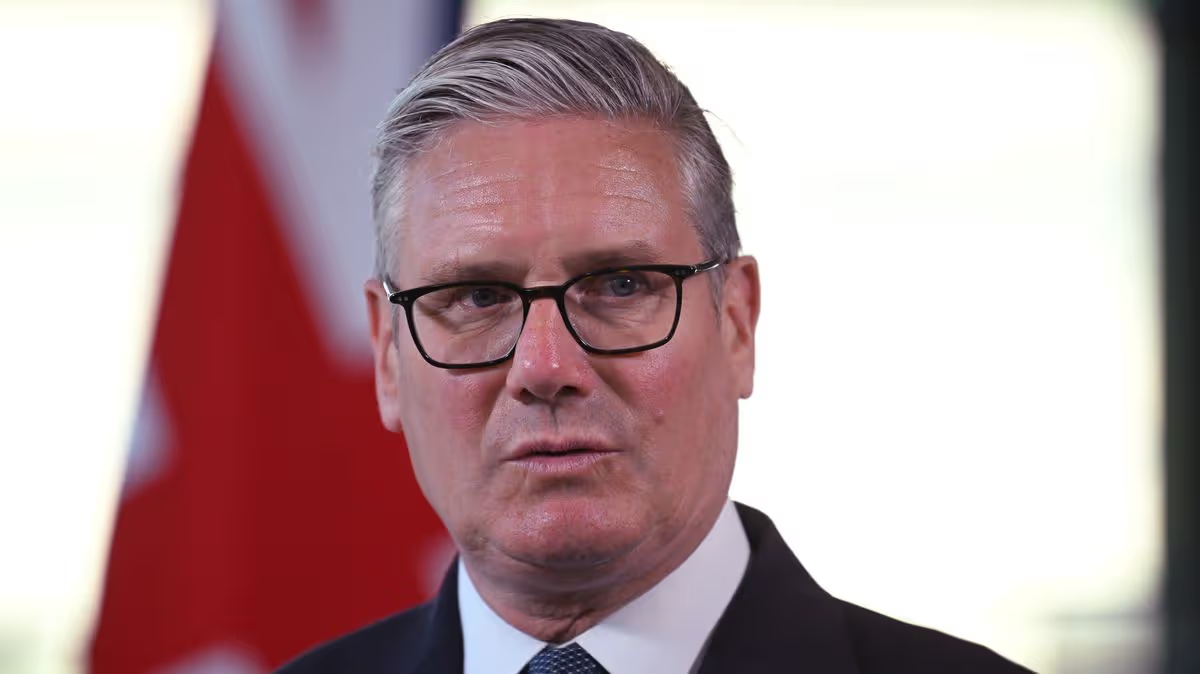


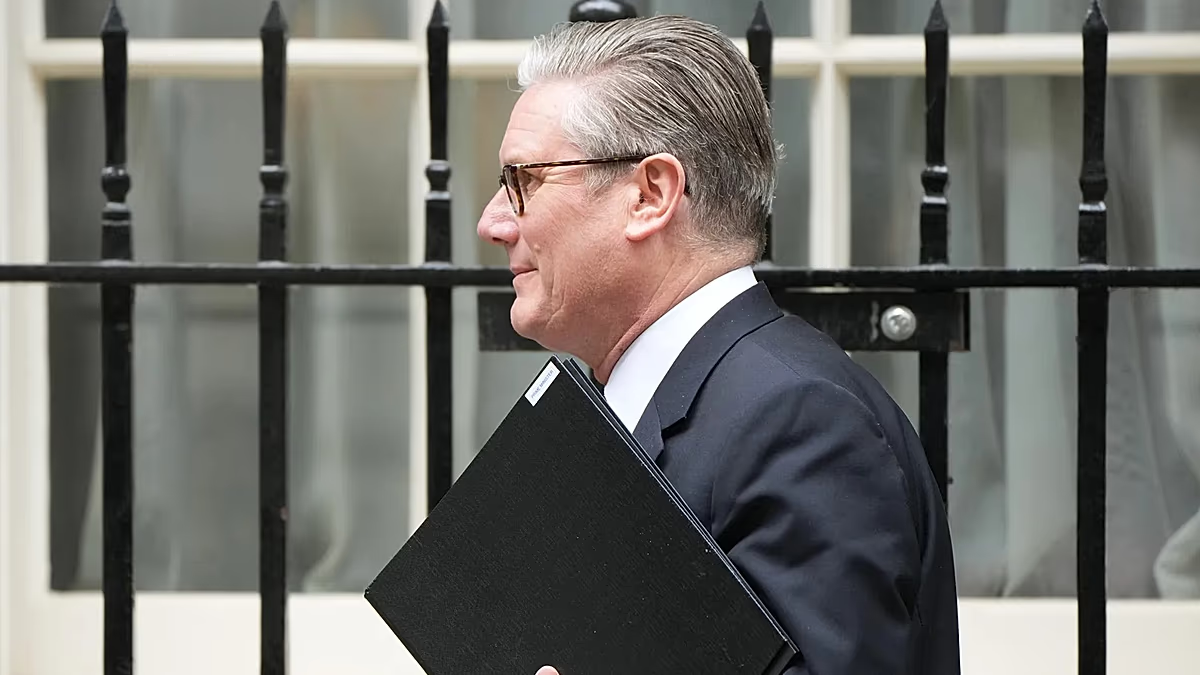
In a striking admission before Parliament, British Prime Minister Keir Starmer sought to contain a spiraling political scandal by stating a simple, yet damaging, truth: “I made a judgment that was wrong.” The judgment in question was his 2024 appointment of veteran Labour politician Peter Mandelson as Britain’s ambassador to Washington. This confession was an attempt to quell a firestorm threatening his leadership, ignited by the revelation that Mandelson had, in fact, failed a critical national security vetting process before his posting. The controversy is deeply intertwined with Mandelson’s long-known association with the late convicted sex offender and financier Jeffrey Epstein, adding a layer of grave moral and ethical concern to what is already a severe crisis of governmental competence and transparency.
The core of the scandal lies in a profound breakdown of communication and process within the highest levels of the UK government. Prime Minister Starmer insisted to MPs that neither he nor his most senior ministers were informed that an independent security panel had recommended denying Mandelson “developed vetting” clearance—the highest level of background check—due to undisclosed concerns. “It beggars belief,” Starmer stated, that Foreign Office officials withheld this pivotal information. He asserted unequivocally that had he known, the appointment would never have proceeded. This defense, however, has done little to placate opponents, who accuse the Prime Minister of either staggering incompetence in managing his own government or of deliberately misleading Parliament when he claimed earlier this year that “full due process” had been followed.
In response to the escalating crisis, Starmer has taken decisive, if controversial, administrative action. He dismissed the Foreign Office’s top civil servant, Olly Robbins, citing a failure of procedure and initiating a review of the entire vetting system for senior appointments. This move, however, has been criticized by some former officials as an act of scapegoating, shifting blame onto the civil service while deflecting from ministerial responsibility. Robbins is scheduled to present his own account to a parliamentary committee, setting the stage for a potentially explosive clash of narratives. Meanwhile, Downing Street took the unusual step of releasing an internal memo to bolster the timeline of events, stressing that the Prime Minister’s knowledge of the vetting failure only came last Tuesday, well after Mandelson’s tenure had ended.
The political fallout has been immediate and severe, with opposition leaders amplifying calls for Starmer to resign. They frame the scandal not as a simple error but as a fundamental failure of leadership, accusing the government of compromising national security and public trust. Within this maelstrom, some of Starmer’s ministers have offered a political rationale for the original flawed decision, suggesting Mandelson was seen as an “unconventional” ambassador who could navigate the complexities of a potential second Trump administration. This justification has been widely dismissed, and even its proponents, like Scotland Secretary Douglas Alexander, now concede the judgment was mistaken. Other allies plead for stability, arguing that Starmer must remain at the helm to guide the nation through global instability, including the war in Iran and delicate post-Brexit negotiations with the European Union.
Complicating the picture further are the serious personal controversies surrounding Peter Mandelson himself. The former envoy was removed from his post in September 2025, not directly due to the vetting scandal, but as new details emerged about the extent of his ties to Jeffrey Epstein. Furthermore, Mandelson is currently under investigation by UK police for separate, historical allegations of misconduct in public office during his time as a minister over fifteen years ago. He was arrested and released in February and denies any wrongdoing. These concurrent legal and ethical clouds severely damage the credibility of the original appointment and intensify public perception of a government making grievous errors in judgment, both in terms of character assessment and national security protocol.
As Prime Minister Starmer fights for his political survival, the landscape ahead looks increasingly treacherous. Opinion polls already mark him as one of Britain’s most unpopular prime ministers in modern history, and his Labour Party faces a daunting set of local and devolved elections next month. The Mandelson affair has crystallized existing public doubts about Starmer’s administration into a potent narrative of crisis and mismanagement. Whether he can weather this storm will depend not only on the findings of ongoing reviews and investigations but on his ability to restore a shattered sense of integrity and control within a government that appears, for the moment, to be dangerously adrift.