


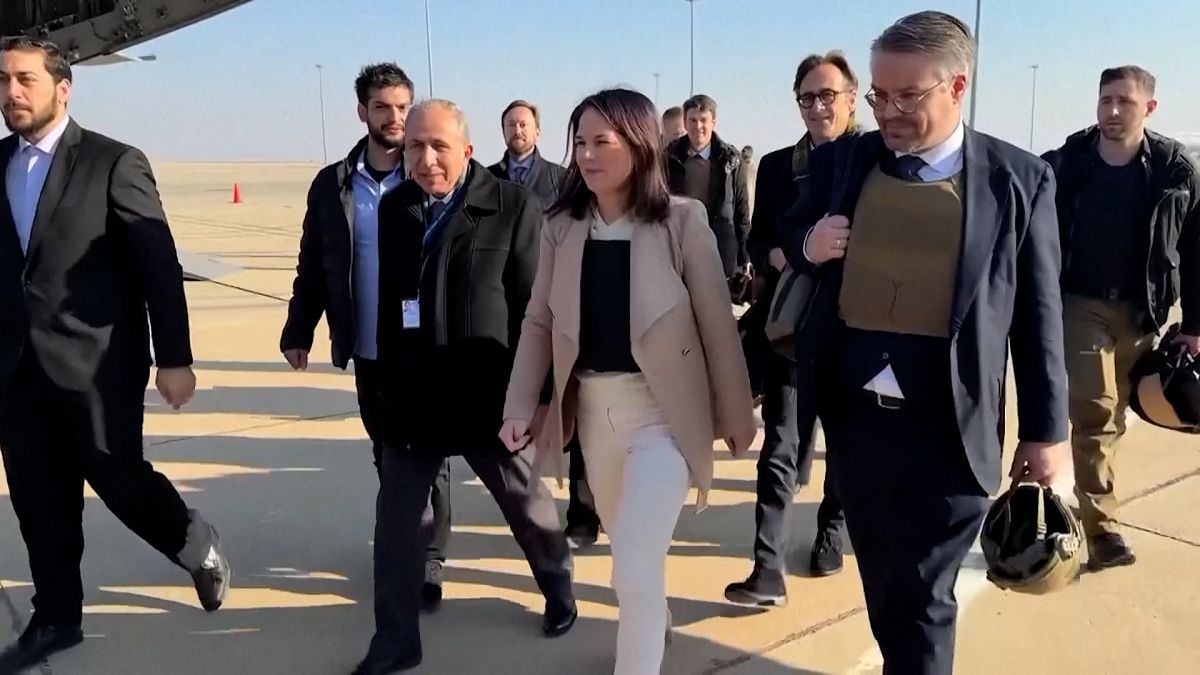
The recent visit to Damascus by German Foreign Minister Annalena Baerbock and French Foreign Minister Jean-Noël Barrot marks a significant shift in European engagement with Syria. This first official visit by top EU diplomats since the fall of Bashar al-Assad signifies a tentative exploration of a “new beginning” in the relationship between Europe and Syria, a relationship fractured by over a decade of brutal civil war. While the visit signals a potential thaw in relations, it also underscores the complex challenges that lie ahead in rebuilding Syria and reintegrating it into the international community. The ministers’ presence emphasizes the EU’s interest in fostering a peaceful transition and promoting stability in a region deeply impacted by the Syrian conflict.
The core message of the visit revolves around the possibility of a fresh start, predicated on the establishment of an inclusive and representative Syrian society. Baerbock stressed that this new beginning hinges on the guarantee of fundamental rights and protections for all Syrians, irrespective of their ethnic or religious background. She emphasized the importance of a political process that embraces diversity and avoids marginalization. Crucially, Baerbock also highlighted the need to prevent the “Islamification” of the justice and education systems, a clear indication of concerns regarding the influence of extremist ideologies in shaping the future of Syria. This concern is further underscored by her insistence on preventing acts of revenge against specific population groups and the rejection of extremism in any form.
The visit also highlights the complexities surrounding the future political landscape of Syria. The planned meeting with Ahmad al-Sharaa, the leader of Hayat Tahrir al-Sham (HTS), the group that overthrew al-Assad, underscores the delicate balance Europe must strike. While engaging with HTS, a group with a complex history and considered a terrorist organization by some, is crucial to understanding the dynamics on the ground and potentially influencing the trajectory of the transition, it also carries significant risks. This engagement needs to be carefully calibrated to avoid legitimizing groups that have engaged in violent extremism while simultaneously recognizing their current influence within Syria. The ministers’ meetings with representatives of Syrian civil society further demonstrate the EU’s commitment to a broad-based approach to rebuilding Syria, one that goes beyond engaging solely with political actors and acknowledges the vital role of civil society in shaping a more democratic and inclusive future.
The backdrop to this diplomatic initiative is a flurry of visits to Damascus from both Arab and Western countries, signaling a gradual shift in the international community’s approach toward Syria. These visits reflect a growing recognition that complete isolation may not be a productive strategy for fostering stability and addressing the humanitarian crisis that continues to grip the country. However, the visit by the European foreign ministers also underscores the cautious approach adopted by Western nations. Existing sanctions imposed on Syria under the Assad regime remain in place, and the designation of HTS as a terrorist group has not been lifted. These factors highlight the difficult balancing act facing the international community: engaging with the current power structures in Syria to promote stability and address pressing humanitarian needs while upholding principles of accountability and human rights.
The symbolic reopening of the French embassy in Damascus after 13 years of closure further emphasizes the evolving diplomatic landscape. This move represents a concrete step towards re-establishing diplomatic ties and facilitating communication and cooperation between France and Syria. It also reflects a broader trend of increased engagement from countries that had previously distanced themselves from the Syrian government. However, this renewed engagement must be accompanied by continued pressure for meaningful reforms and accountability for past atrocities. The road to normalization remains long and arduous, with significant obstacles to overcome.
The visit by Baerbock and Barrot serves as a crucial first step in exploring the potential for a new chapter in the relationship between Europe and Syria. It signifies a willingness to engage with the new realities on the ground while emphasizing the importance of a transition based on inclusivity, respect for human rights, and the rejection of extremism. The success of this tentative “new beginning” will depend on the willingness of all parties to engage in constructive dialogue, address the legacy of the past, and work towards a future that guarantees peace, stability, and a truly representative government for all Syrians. The challenges are immense, and the path forward remains uncertain, but the visit by the European foreign ministers offers a glimmer of hope for a more peaceful and prosperous future for Syria.