



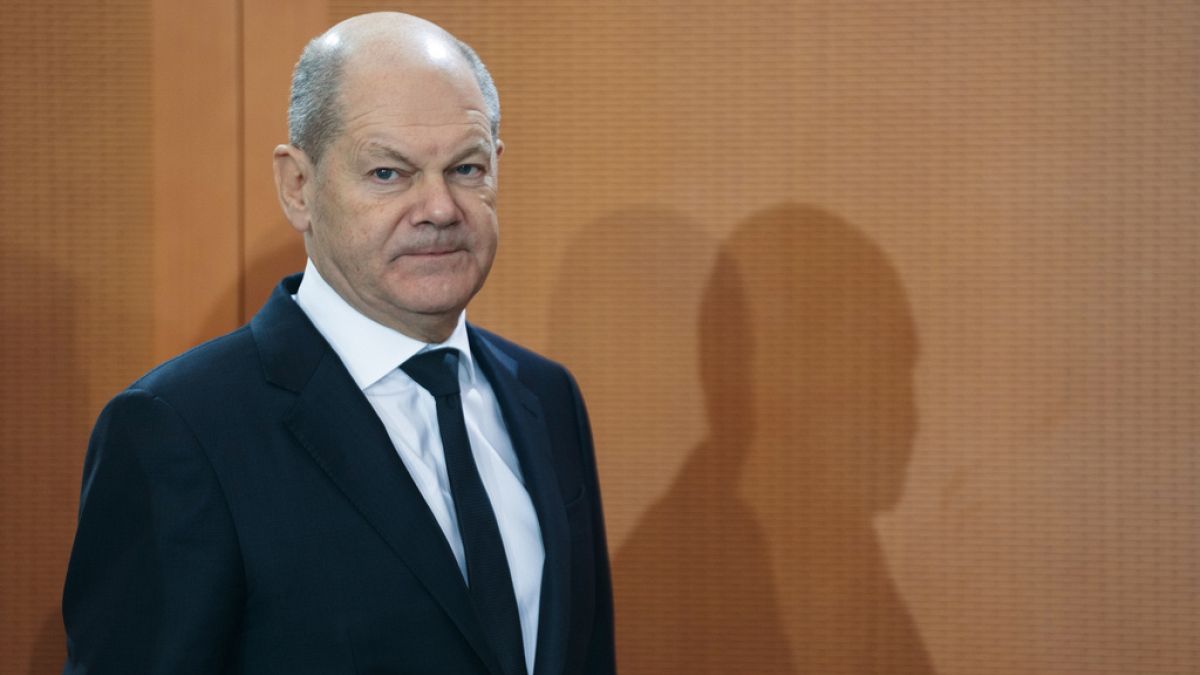
German Chancellor Olaf Scholz has initiated a vote of no confidence in the Bundestag, Germany’s parliament, scheduled for December 16th. This strategic maneuver, while expected to result in his defeat, paves the way for a potential snap election, marking a significant political development in Germany’s recent history. The move comes in the wake of the collapse of the “traffic light” coalition government, a tripartite alliance between Scholz’s Social Democrats (SPD), the Free Democratic Party (FDP), and the Greens. The coalition’s unraveling stems from irreconcilable differences and escalating tensions, primarily between Scholz and FDP leader Christian Lindner, who served as Finance Minister.
The breakdown of the coalition, precipitated by Scholz’s dismissal of Lindner, has left the government without a parliamentary majority. This precarious position severely hampers the government’s ability to effectively govern and pass legislation, requiring reliance on the unpredictable support of opposition parties. Scholz’s call for a vote of no confidence, while seemingly paradoxical, is a calculated political gamble designed to address this impasse and potentially regain a stronger mandate through a fresh election.
The impending vote of no confidence carries significant constitutional and political implications. According to Article 68 of the German Basic Law, if the Chancellor loses the confidence vote, which is widely anticipated, he can request the Federal President, Frank-Walter Steinmeier, to dissolve the parliament. Steinmeier has already indicated his inclination to do so, paving the way for a snap election. While the timing of Steinmeier’s decision remains uncertain, the legal framework mandates that new elections must be held within 60 days of the Bundestag’s dissolution, with a tentative date already set for February 23, 2025.
This unfolding political drama evokes memories of a similar scenario in 2005, when then-Chancellor Gerhard Schröder orchestrated a vote of no confidence to trigger an early election. Schröder’s tactical maneuver, while ultimately resulting in his defeat, bears striking resemblance to Scholz’s current strategy. Both chancellors, facing precarious parliamentary situations and dwindling public support, sought to reset the political landscape and regain a firmer footing through fresh elections. The outcome of Schröder’s gamble, a narrow victory for Angela Merkel and the center-right, serves as a cautionary tale and a reminder of the inherent risks involved in such high-stakes political maneuvering.
The underlying reasons for the coalition’s collapse are multifaceted, reflecting the inherent challenges of managing a politically diverse coalition. The “traffic light” coalition, so named due to the parties’ respective colors (red for SPD, yellow for FDP, and green for the Greens), faced persistent internal disagreements on a range of policy issues, from economic policies to environmental regulations. These divisions, coupled with personality clashes and growing mistrust between Scholz and Lindner, ultimately proved insurmountable, leading to the coalition’s demise and the current political uncertainty.
Scholz’s decision to initiate a vote of no confidence is a bold, albeit risky, attempt to navigate the current political quagmire. He is essentially betting on the potential for a snap election to provide him with a stronger mandate and a more stable governing coalition. The outcome of this gamble, however, remains uncertain. Public opinion polls paint a mixed picture, with no clear indication of which party or coalition would emerge victorious in a snap election. The German electorate, facing economic uncertainties and geopolitical challenges, will have the final say in determining the country’s political future. The impending vote of no confidence and the potential snap election mark a crucial juncture in German politics, with significant implications for the country’s domestic and foreign policy trajectory.