


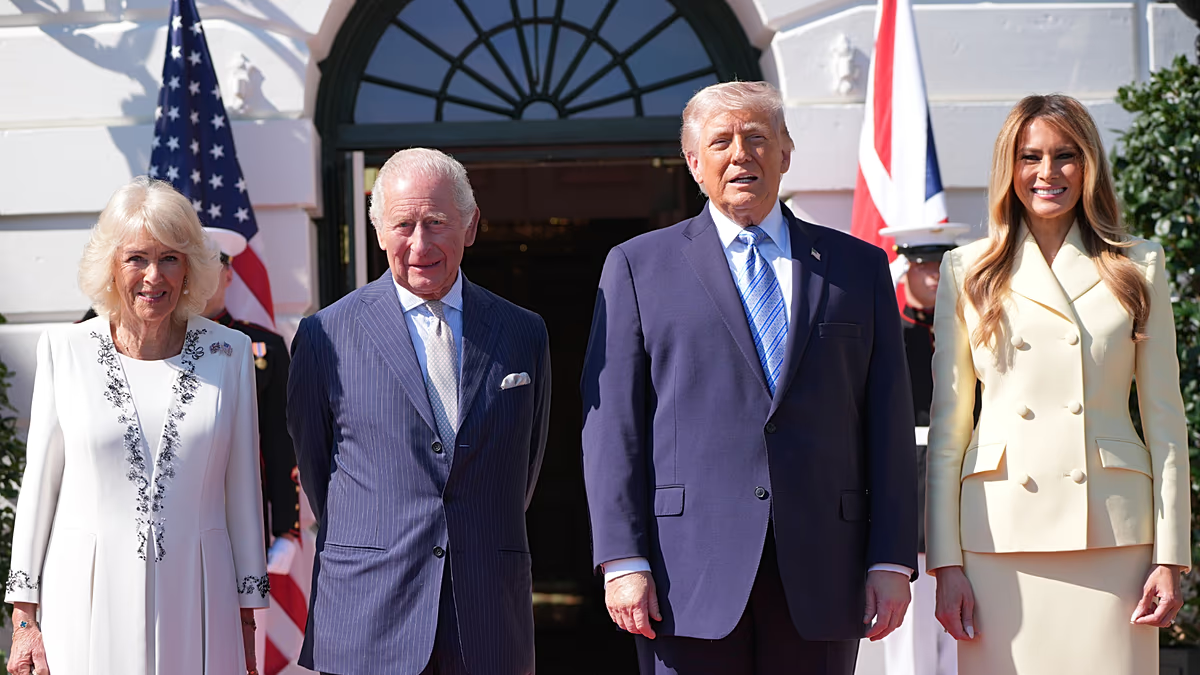
King Charles III and Queen Camilla arrived at the White House on Monday for a state visit rich in symbolic pageantry yet conducted against a backdrop of significant diplomatic strain. This visit, marking the 250th anniversary of American independence from British rule, is Charles’s first as monarch and comes at a delicate moment for the fabled “special relationship.” While President Trump and First Lady Melania Trump offered a warm welcome—complete with photographs and tea in the Green Room—the cordiality at the personal level contrasted sharply with the political friction emanating from the Trump administration. The choice to commemorate the anniversary with a royal visit underscored a shared history, but current events threatened to overshadow the ceremonial gestures, highlighting the complex dance between timeless tradition and contemporary political realities.
The lighter moments of the visit served as a deliberate display of common ground. A notable highlight was the tour of a new White House beehive, installed by the First Lady and presented to the royal couple, both avid beekeepers. This shared interest in sustainability and environmental stewardship—Charles maintains several hives at his private residence—provided a neutral, personal topic of connection amidst larger tensions. Following the White House engagement, the royals attended a garden party at the British Embassy, continuing the visit’s theme of soft diplomacy. These carefully curated interactions demonstrated how modern monarchy operates as a tool of soft power, using shared interests and ceremonial goodwill to foster a sense of partnership and mutual respect on a human level, separate from the day’s political headlines.
However, the serene imagery of beekeeping and garden parties belied the substantial political undercurrents. A primary source of tension was President Trump’s repeated and public criticism of UK Prime Minister Keir Starmer, particularly over Britain’s reluctance to join potential U.S. military action against Iran. Trump’s dismissive rhetoric, contrasting Starmer unfavorably with wartime leader Winston Churchill—who coined the term “special relationship”—signaled an unprecedented public rift between the American administration and a sitting British government. Furthermore, a leaked Pentagon email suggesting a potential reassessment of U.S. support for British sovereignty over the Falkland Islands introduced another layer of diplomatic uncertainty. This context framed the royal visit not merely as a celebration, but as a potential stabilizing mission to reinforce bilateral ties strained by executive branch disagreements.
Interestingly, President Trump carefully distinguished between his political criticisms and his personal regard for the monarchy. He has consistently praised King Charles, a relationship fortified during Trump’s own lavish state visit to the UK the previous September. The White House emphasized this distinction in statements ahead of the visit, expressing great respect for the King and anticipation for the week’s events. This separation underscores the unique role of constitutional monarchy: the Crown serves as a symbol of the nation-state, theoretically above the political fray, allowing it to maintain relationships and project continuity even when elected governments clash. The royal visit thus became a channel for positive diplomacy that the political leaders themselves seemed unable to directly conduct.
Beyond immediate geopolitical strife, the visit was shadowed by a domestic British scandal: the ongoing fallout from the Jeffrey Epstein case and its entanglement with the King’s brother, Prince Andrew. Stripped of his royal duties and under investigation, Andrew’s association with the convicted sex offender presented a reputational challenge. Victims’ groups urged the King to meet with survivors during his trip, raising questions about whether the monarchy would address this uncomfortable legacy while on the world stage. This issue highlighted the dual pressures on the modern royal family: to act as dignified statespersons on the global scene while simultaneously managing profound institutional crises that threaten their standing and moral authority at home.
The visit’s substantive program reflected both its commemorative purpose and King Charles’s personal passions. In addition to a formal state dinner, the itinerary included a solemn visit to the September 11th memorial in New York and a 250th-anniversary celebration in Virginia, where Charles planned to meet with Indigenous leaders involved in conservation—a cause central to his life’s work. The pinnacle of the diplomatic agenda was his scheduled address to a joint meeting of the U.S. Congress, only the second ever by a British monarch after his mother, Queen Elizabeth II, in 1991. This speech presented a pivotal opportunity for the King to articulate a vision for the enduring alliance, emphasizing shared democratic values and future cooperation, aiming to rise above the transient political disputes and reaffirm the foundational bonds that have long defined the UK-US relationship.