



The Crimean Map Controversy: FIFA’s Apology and Ukraine’s Stance
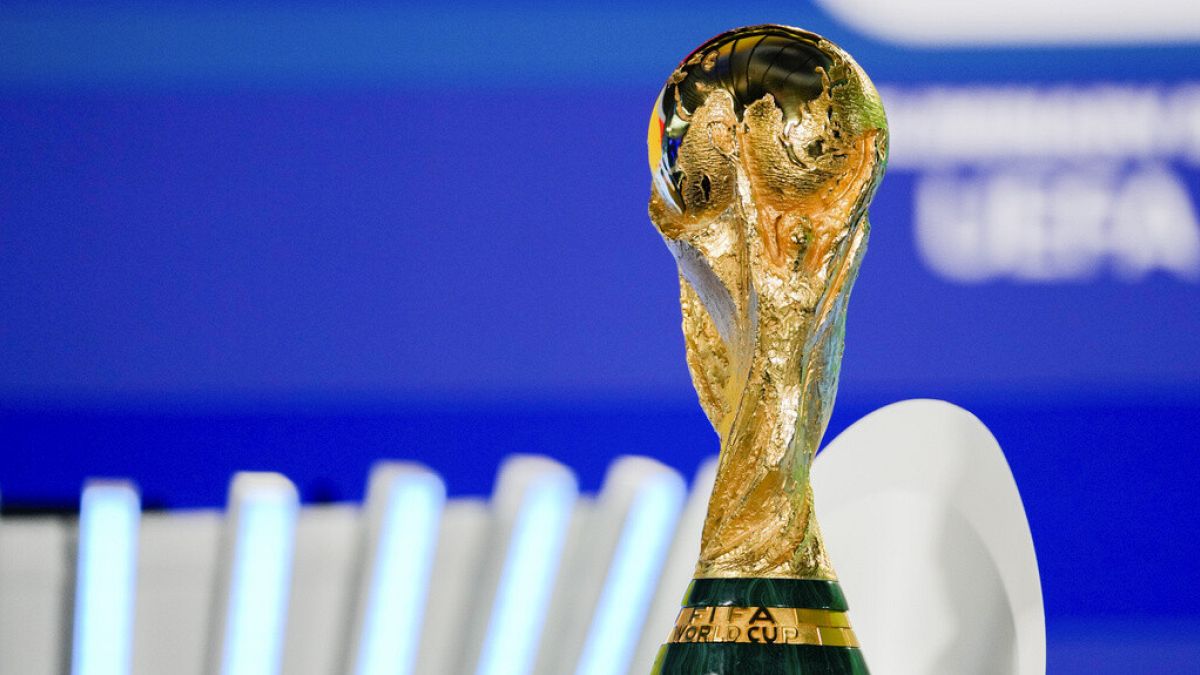
The world of football found itself embroiled in political controversy during the qualifying draw for the 2026 World Cup when FIFA, football’s governing body, displayed a map that excluded Crimea from Ukrainian territory. This seemingly minor cartographic detail sparked outrage in Ukraine, prompting calls for an apology and highlighting the sensitive geopolitical landscape surrounding the annexed peninsula.
The incident occurred during the draw, where FIFA presented a map illustrating countries that could not be drawn against each other due to geopolitical reasons. Examples included Spain and Gibraltar, Kosovo and either Bosnia and Herzegovina or Serbia, and Ukraine and Belarus. While Ukraine was highlighted on the map, Crimea, a peninsula annexed by Russia in 2014, was conspicuously absent. This omission, perceived as an acknowledgment of Russia’s claim to the territory, was met with immediate condemnation from Ukrainian officials.
Ukraine’s foreign ministry spokesman, Heorhii Tykhyi, demanded a public apology from FIFA, while the Ukrainian Football Association (UFA) lodged a formal complaint, characterizing the omission as an "unacceptable error." The international community largely recognizes Crimea as Ukrainian territory, with Russia’s annexation widely denounced as illegal. This context amplified the significance of FIFA’s map, transforming a seemingly technical detail into a politically charged statement.
FIFA responded swiftly, removing the map and initiating an internal review. In a letter to the UFA, FIFA expressed regret for any concern caused by the "unintentional" incident, acknowledging the "delicate sensitivity" of the issue. The apology, however, did little to quell the underlying tensions and anxieties surrounding the status of Crimea.
The controversy surrounding the map underscores the complex political backdrop against which international sporting events often unfold. FIFA’s unintentional error became a lightning rod for Ukrainian anxieties about the international community’s recognition of its territorial integrity, reminding the world of the ongoing conflict and raising questions about Russia’s influence on the global stage.
Beyond the immediate fallout of the map incident, the larger issue of Crimea’s status remains a point of contention. Ukrainian President Volodymyr Zelenskyy has consistently maintained that Crimea must be returned to Ukraine, emphasizing that his country cannot legally recognize any occupied Ukrainian territory as Russian. While favoring diplomatic solutions, Zelenskyy’s firm stance underscores the unwavering commitment to reclaiming the annexed territory. The incident serves as a stark reminder of the ongoing geopolitical tensions and the delicate balance required to navigate the intersection of sports and politics.
Furthermore, the incident serves as a microcosm of the broader information war surrounding the conflict. The depiction of Crimea on a map, a seemingly neutral act, became a battleground for competing narratives. Ukraine viewed the omission as a symbolic erasure of its sovereignty, while Russia’s annexation remains a point of contention in the international community.
The 2026 World Cup, set to be hosted across the US, Canada, and Mexico, now carries an added layer of complexity. Ukraine’s participation in the qualifying rounds, alongside Iceland, Azerbaijan, and the winners of the France vs Croatia Nations League quarter-final, will undoubtedly be watched closely, with the Crimean map incident serving as a reminder of the unresolved political tensions that permeate the world of sports.
The incident also highlights the tightrope that international organizations like FIFA must walk. While striving to maintain neutrality, they often find themselves entangled in political disputes, forced to navigate complex geopolitical landscapes. The Crimean map controversy underscores the need for heightened sensitivity and meticulous attention to detail, particularly when dealing with issues of territorial integrity and international recognition.
Moreover, the incident casts a shadow over the spirit of international sporting competition. The ideal of sports as a unifying force, transcending political divisions, is challenged when geopolitical disputes spill onto the playing field. The Crimean map controversy serves as a stark reminder that even in the world of sports, political realities cannot be ignored.
Finally, the incident underscores the importance of clear and consistent communication in international relations. A simple cartographic error, seemingly innocuous, can escalate into a diplomatic incident, highlighting the need for precise language and careful consideration of the potential political ramifications of seemingly neutral actions. The Crimean map controversy serves as a cautionary tale, reminding us that even the smallest details can carry significant political weight.