



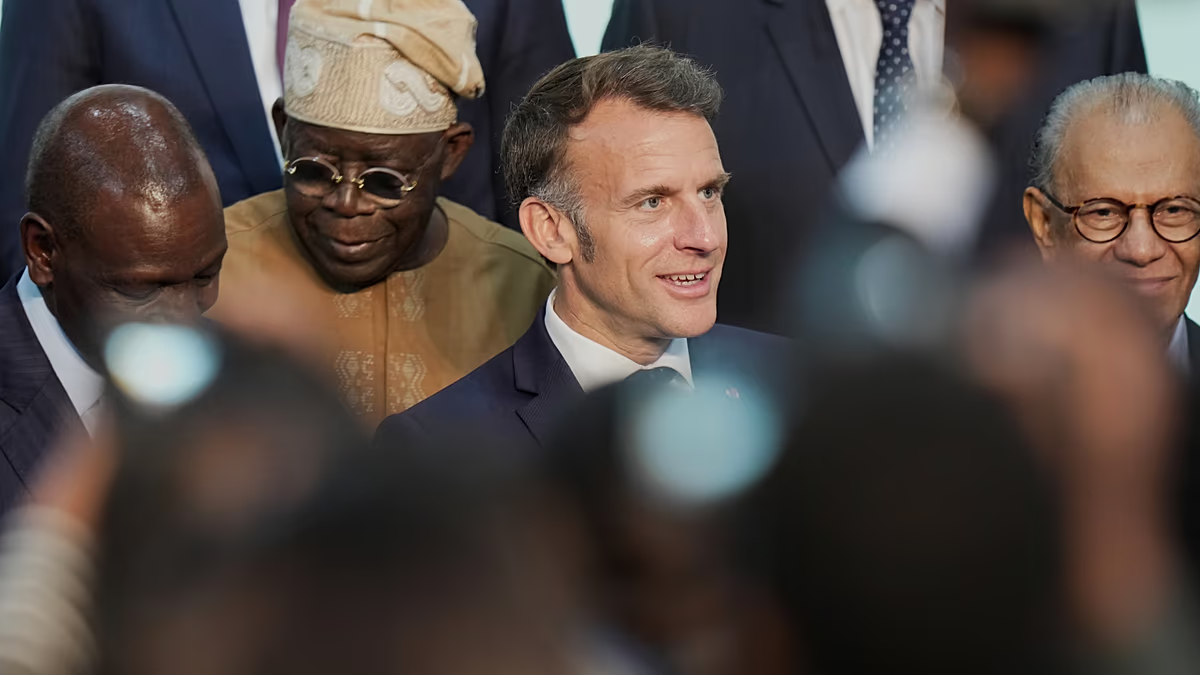
In a recent statement aimed at reassuring both the French public and the international community, President Emmanuel Macron declared that the situation regarding the hantavirus is firmly “under control” within France. Speaking from Nairobi at the conclusion of the Africa Forward summit, Macron credited the government’s decisive actions and the unwavering dedication of healthcare workers for this controlled state. He emphasized that France, alongside Spain and a handful of other nations, had implemented what he described as “one of the most stringent protocols,” based heavily on expert recommendations and lessons learned from past public health crises. However, Macron’s message extended beyond national borders, as he issued a clear call for robust European coordination. He argued that to effectively contain the virus, all member states must align their health protocols with the highest and most demanding standards established in the initial response. Furthermore, he stressed the critical role of the World Health Organisation in properly coordinating these international efforts in the coming stages, framing the outbreak as a challenge requiring a unified global response.
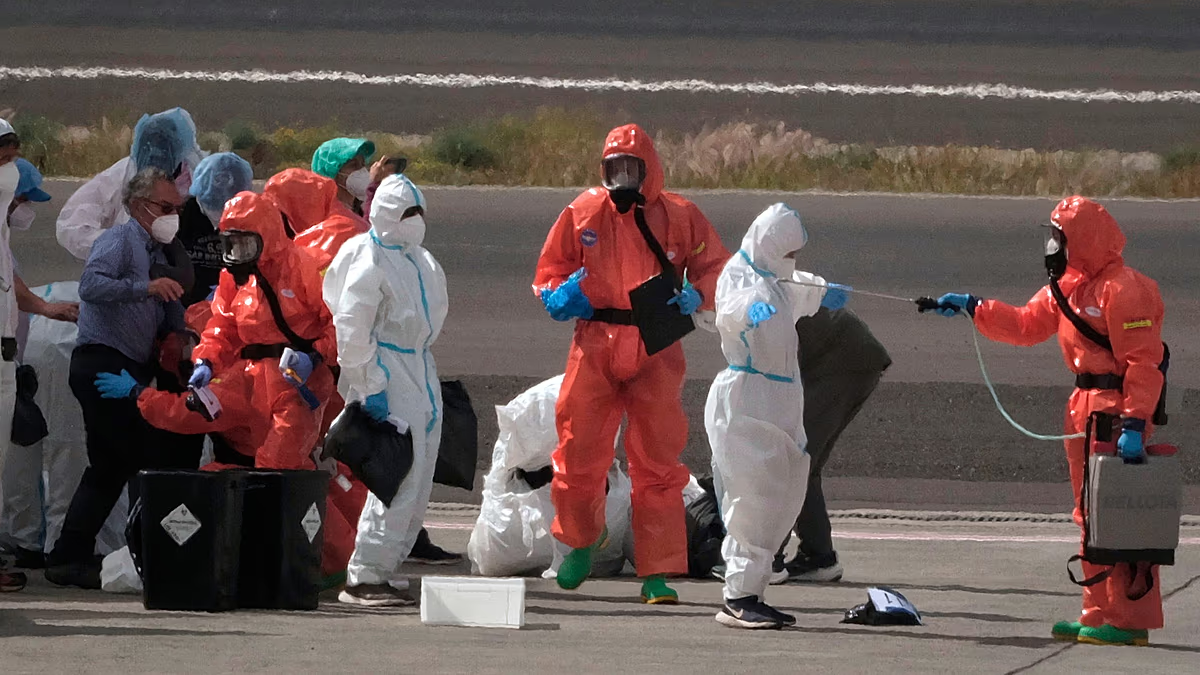
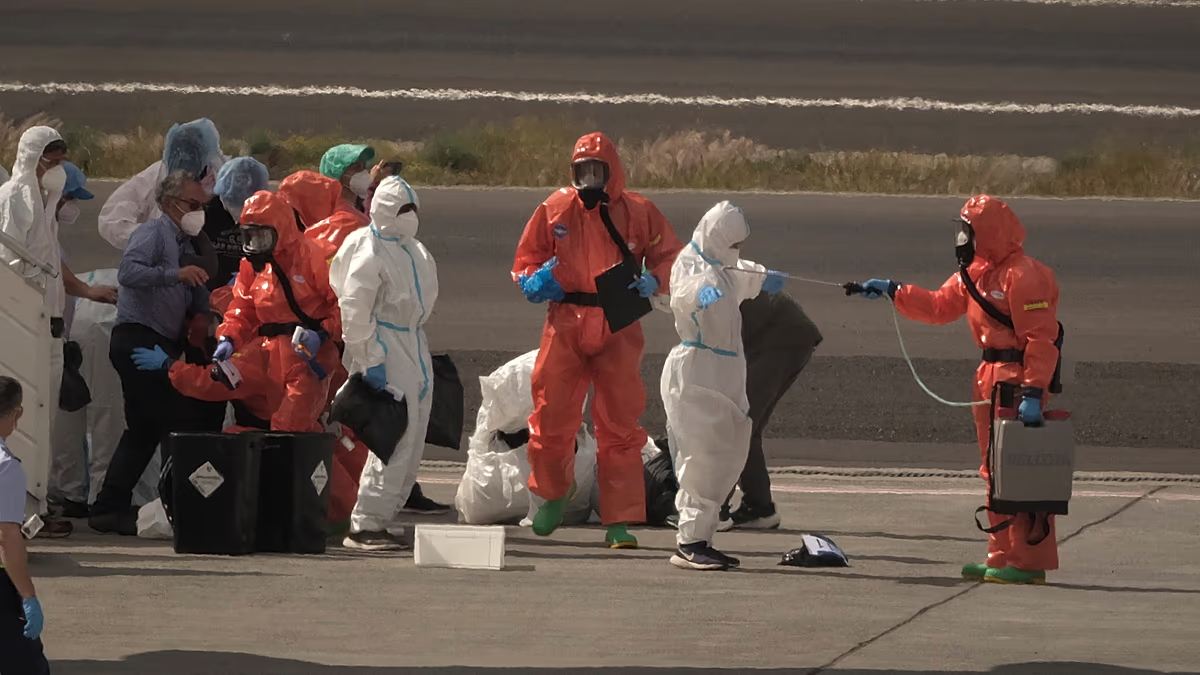
This reassurance from the President was echoed in the halls of the French National Assembly, where Health Minister Stéphanie Rist provided detailed updates to lawmakers. Minister Rist sought to alleviate fears of a widespread domestic outbreak by stating there was “no evidence” of the Andes strain of the hantavirus circulating freely on French territory. She added that officials were relatively confident the virus had not mutated into a more dangerous form. Importantly, Rist clarified that all positive cases identified within France were linked exclusively to passengers from the now-notorious cruise ship outbreak. The national containment strategy appears focused on rigorous contact tracing; all 22 identified contacts within France have been located, tested, and either hospitalized or are in the process of being hospitalized. This meticulous approach underscores the government’s strategy of isolation and containment to prevent community transmission.
Despite these systemic controls, the human toll of the outbreak remains starkly visible in individual cases. One French woman, infected during the cruise ship outbreak, is fighting for her life in a Paris hospital. She is suffering from a severe form of the disease that has led to life-threatening lung and heart complications. Dr. Xavier Lescure, an infectious disease specialist at Bichat Hospital, explained the gravity of her condition, revealing that she is dependent on an advanced life-support device. This machine acts as an artificial lung, oxygenating her blood outside her body before returning it—a last-resort intervention for the most critical respiratory failures. Her precarious situation serves as a sobering reminder of the virus’s potential severity, even as officials speak of a controlled overall scenario.
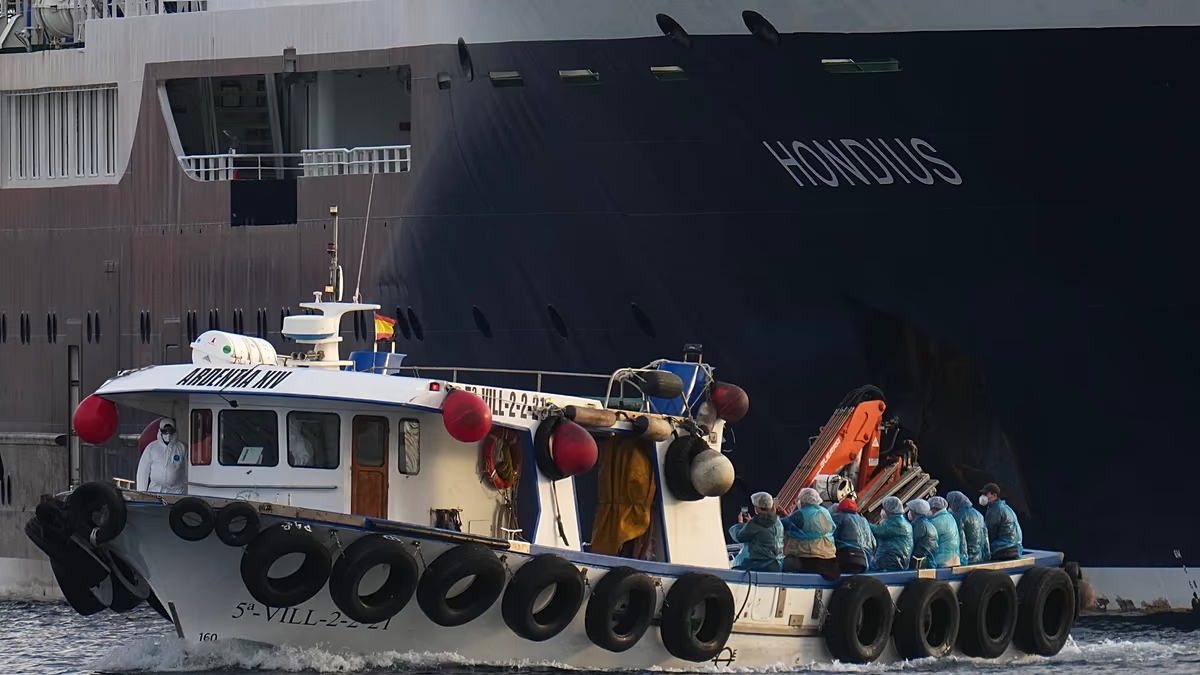
The unusual nature of this outbreak has not gone unnoticed by scientific observers. Epidemiologist Antoine Flahault characterized the situation as “quite unusual and unprecedented,” which he explains is precisely why health authorities are enacting such forceful measures. Historically, viruses like hantavirus have often emerged from remote regions with limited health surveillance, making initial detection and containment difficult. In contrast, this incident originated on “a ship carrying 147 people,” a controlled environment where positive cases can be swiftly identified and contacts meticulously traced. This unique point of origin paradoxically creates both a challenge and an opportunity; while it triggered a high-profile international incident, it also allowed for a rapid and targeted public health response that might be impossible in a diffuse geographical outbreak.
Professor Flahault further contextualized the pathogen by labeling it a “neglected tropical disease.” This classification highlights a global health disparity: certain diseases, often endemic to poorer, tropical regions, receive less research funding and public health attention than those affecting wealthier nations. The hantavirus, typically spread to humans from rodents, fits this pattern, with cases usually sporadic and localized. Its dramatic emergence on a cruise ship—a symbol of global mobility and leisure—has thrust it into an international spotlight it seldom receives. This incident underscores how globalization can transform a localized “neglected” disease into a global health security concern, exposing gaps in preparedness for pathogens that exist outside the usual spectrum of monitored threats.
In conclusion, the French government’s message is one of cautious confidence, built on swift action and a strategy of extreme vigilance. While President Macron assures citizens that the national situation is managed, his urgent push for European alignment and WHO coordination reveals an understanding that borders are porous to microbes. The serious illness of the hospitalized woman embodies the very real human risk, even amidst controlled protocols. Meanwhile, experts like Flahault point to the broader lessons: this outbreak is a case study in how modern travel patterns can suddenly elevate a neglected pathogen to a pressing international incident. The response moving forward will test not only France’s healthcare resilience but also the European Union’s ability to harmonize its public health defenses against an unpredictable and interconnected world’s emerging threats.