


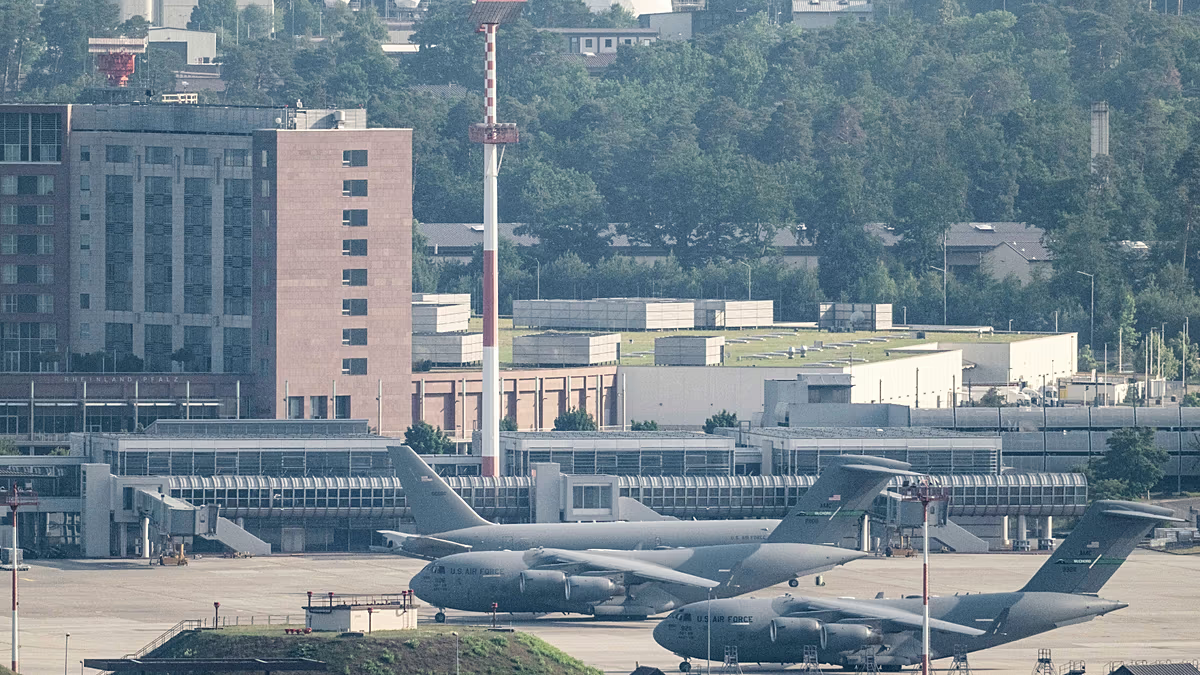
The United States has initiated a significant shift in its European military posture with the Pentagon’s announcement of a planned withdrawal of approximately 5,000 troops from Germany. This reduction, representing about 14% of the current 36,000-strong U.S. force in the country, includes the cancellation of a planned deployment of a brigade combat team and a long-range fires battalion. The move immediately raised questions about the future of U.S. and NATO security architecture in Europe, which has long relied on key German hubs like Ramstein Air Base—a vital command, logistics, and medical center. While framed by Pentagon spokesperson Sean Parnell as the result of a “thorough review” of force posture, the decision carries clear political weight, echoing threats made by former President Donald Trump, who has recently suggested even deeper cuts.
This strategic pullback is not occurring in a vacuum; it is layered with a complex political history and legal constraints. In 2020, the Trump administration unveiled a more drastic plan to withdraw nearly 9,500 troops, a proposal halted by the incoming Biden administration after bipartisan Congressional criticism. The current announcement, therefore, revives a contentious debate. However, analysts point to a significant new hurdle: the 2026 National Defense Authorization Act. This law restricts the Pentagon from reducing troop levels in Europe below 76,000 for extended periods without first certifying the cuts serve U.S. national security, consulting NATO allies, and reporting to Congress. This legislative guardrail reflects deep-seated institutional support for the transatlantic alliance within the U.S. defense establishment.
Beyond the political and legal frameworks, the practical challenges of a large-scale withdrawal are immense. U.S. forces in Germany are not isolated units but are deeply embedded in intricate, global command and logistical networks. As noted by analyst Liana Fix of the Council on Foreign Relations, relocating these forces is a logistically complex and astronomically expensive endeavor that could create dangerous gaps in military readiness and intelligence-sharing. The infrastructure, from housing to specialized training facilities, represents decades of investment. Simply put, dismantling this presence is far more complicated than moving pieces on a map, with potential long-term costs that could undermine the very security and efficiency the withdrawal ostensibly seeks to achieve.
The reaction from German officials to the immediate news has been notably measured, suggesting a degree of expected recalibration. Defense Minister Boris Pistorius described the move as “foreseeable” and used the moment to reiterate a call for greater European responsibility for its own defense. Chancellor Friedrich Merz similarly projected calm, noting that global troop redeployments are routine. This tempered public response underscores a broader European strategic direction toward “strategic autonomy,” even as it acknowledges continued reliance on the U.S. nuclear umbrella. However, beneath this official composure lies a more profound concern not fully addressed by the troop numbers alone.
This deeper anxiety centers on high-end military capabilities, symbolized by the reported threat to not station new Tomahawk missiles on German soil. As critics and politicians have pointed out, the withdrawal of a few thousand troops may be manageable, but a “missile gap” represents a far more serious strategic deficit. Advanced missile systems provide a critical layer of deterrence that European nations cannot quickly or independently replicate. Their potential removal strikes at the heart of extended nuclear and conventional deterrence, leaving European allies exposed to a higher level of risk and forcing a urgent—and potentially divisive—conversation about how to fill that capability void without full American partnership.
Ultimately, the proposed withdrawal from Germany is a multifaceted development, intertwining domestic U.S. politics, alliance management, and hard strategic realities. While the immediate reduction of 5,000 troops is significant, the more consequential story may be the precedent it sets and the pressures it exposes. It tests the resilience of NATO’s integrated military structure, accelerates European discussions on self-reliance, and highlights the tension between political declarations and the entrenched, costly realities of global military posture. The coming months will reveal whether this move is a limited adjustment or the first step in a more fundamental transformation of America’s role as Europe’s primary security guarantor, with lasting implications for the balance of power on the continent.