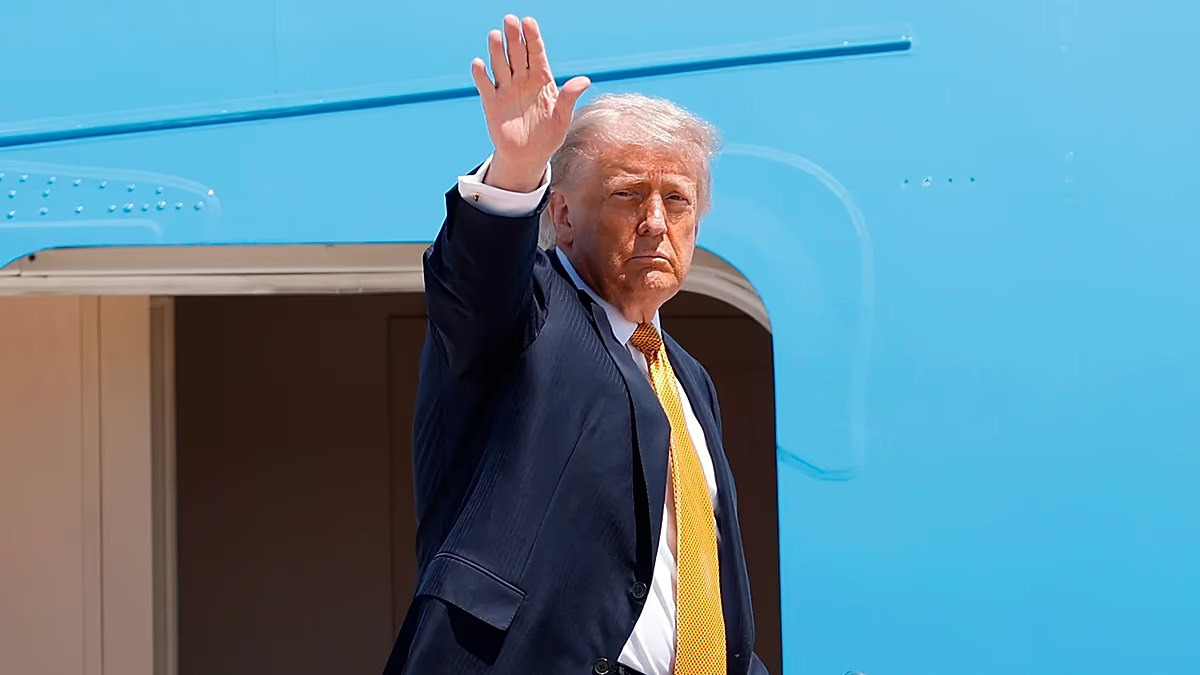



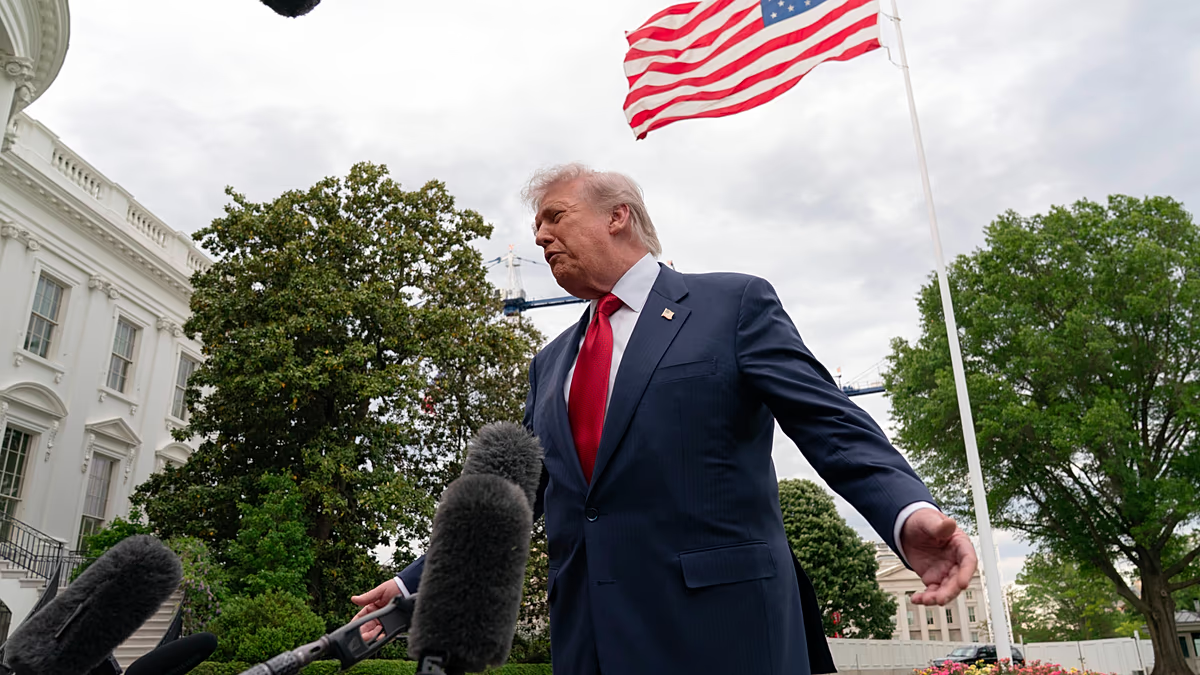
In a recent statement that has reignited discussions about the future of NATO’s European defenses, U.S. President Donald Trump confirmed he is actively considering a significant strategic shift. Speaking to journalists at the White House, Trump acknowledged the possibility of relocating some American troops, who are slated to be withdrawn from Germany, to Poland. This remark is not made in isolation; it forms a central part of an ongoing and heated debate regarding the security architecture of Central and Eastern Europe. By openly floating this idea, Trump has placed a spotlight on the evolving dynamics within the Atlantic alliance, where traditional basing arrangements are being reevaluated against contemporary geopolitical pressures and bilateral relationships.
The President’s comments were notably personal and underscored his administration’s close ties with Warsaw. When questioned about the potential move, Trump responded, “It’s possible,” immediately praising the “excellent relations” with Poland. He specifically highlighted his rapport with Polish President Karol Nawrocki, recounting, “I endorsed him, and he won – even though he was trailing badly, he still won. He’s a great fighter, a terrific guy, I like him a lot, so it’s possible… I might do it.” This personal endorsement and the framing of the decision around bilateral chemistry reveal a diplomatic style where individual relationships between leaders can heavily influence broader strategic and military planning. For Poland, this perceived special relationship is a coveted asset in its long-standing pursuit of a permanent and substantial U.S. military presence on its soil.
This consideration follows reports that the U.S. administration plans to withdraw approximately 5,000 troops from Germany over the coming year, a number Trump has suggested could grow. Currently, between 35,000 and 37,000 U.S. service members are stationed in Germany, a foundational presence dating back to the Cold War. The planned reduction is deeply intertwined with long-simmering tensions between Trump and Berlin. Since his first term, the President has repeatedly criticized Germany for failing to meet NATO’s defense spending target of 2% of GDP, framing the troop presence as a costly burden on American taxpayers for the defense of a wealthy ally he views as not paying its fair share. While a similar withdrawal plan was floated in 2020 only to be paused, the current announcement suggests a renewed and perhaps more decisive push to translate criticism into action.
For Poland, this potential American pivot is seen as a historic opportunity and a strategic necessity. President Nawrocki has publicly stated that Poland is not only willing but fully prepared to host forces redeployed from Germany, emphasizing that the necessary military infrastructure is already in place. “We already have the infrastructure in place, and it is in the interests of Poland, Lithuania and the Baltic states for as many American troops as possible to be stationed here,” Nawrocki asserted. From Warsaw’s perspective, an enhanced U.S. troop presence represents the ultimate security guarantee and a tangible reinforcement of NATO’s eastern flank, which feels particularly exposed to an increasingly assertive Russia. Hosting these forces is viewed as a direct answer to Poland’s persistent calls for a more equitable distribution of alliance assets and risks.
However, the proposed shift is far more than a simple change of address for military units; it carries profound symbolic and strategic weight. As experts caution, the issue transcends raw numbers. Tomasz Szatkowski, a former Polish ambassador to NATO, notes the dual significance of the U.S. footprint in Germany: “The US forces in Germany have their military importance, and an even greater political and historical significance.” Their presence is a bedrock of post-war transatlantic solidarity. Therefore, a reduction is seen by many as a symbolic blow to U.S.-German relations. Yet, from a Polish and regional security standpoint, Szatkowski argues that if the withdrawal proceeds, “we should be making a strong case for those troops to be moved to Poland.” This encapsulates the delicate balancing act: while supporting the overall alliance cohesion, individual nations will understandably advocate for their own security interests.
Ultimately, President Trump’s “possible” redeployment idea opens a chapter of significant consequence for European security. It highlights a U.S. foreign policy approach that prioritizes bilateral transactions and burden-sharing complaints, potentially at the expense of longstanding multilateral frameworks. While Poland eagerly anticipates a deeper military partnership, other European allies may view the move as a further strain on NATO unity, potentially creating new geopolitical fissures. The coming months will reveal whether this consideration solidifies into a formal plan, shaping not just the map of American bases, but the very political contours of trust, deterrence, and shared responsibility across the European continent. The decision will resonate far beyond troop counts, speaking to the future character of the Atlantic alliance in an era of renewed great power competition.