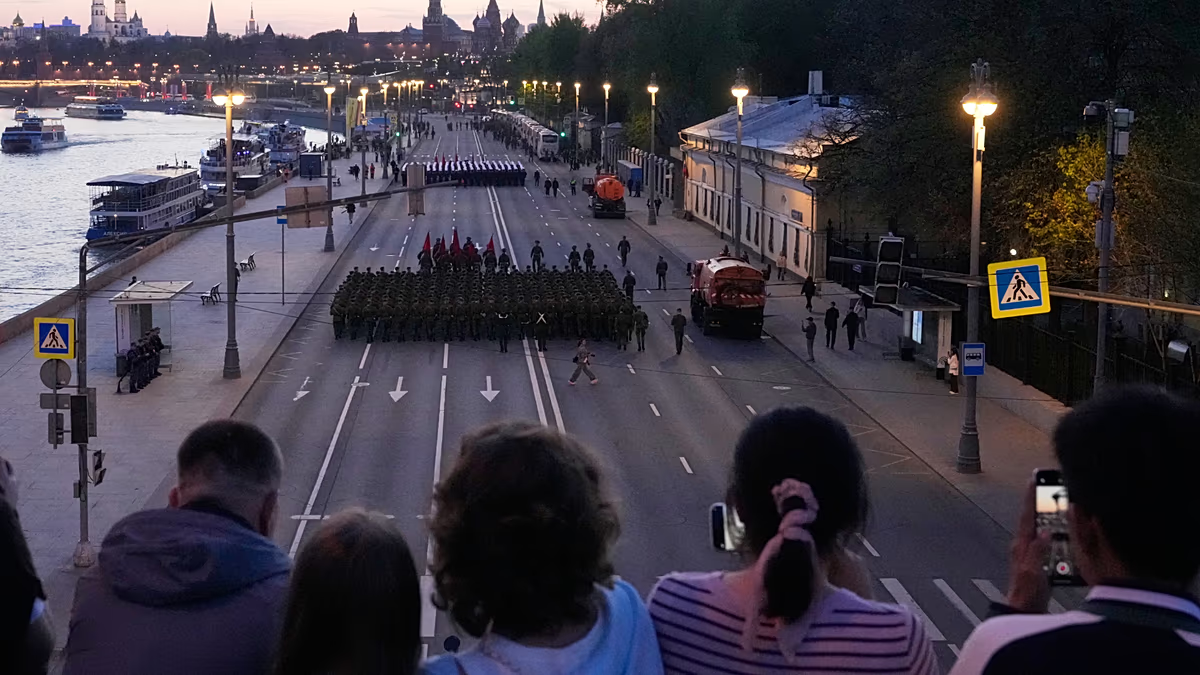


The grandeur of Russia’s Victory Day parade, a once-unmissable display of military might and international prestige on Moscow’s Red Square, has steadily diminished. What was historically a powerful symbol of Soviet triumph and, later, a stage for Russian global diplomacy, is now transforming into a sparse and isolated gathering. This year’s event, marked by the absence of military vehicles and cadets due to the Kremlin’s citing of the “current operational situation,” will also see a starkly reduced guest list. The parade has become a mirror reflecting Russia’s profound alienation on the world stage, its military vulnerabilities, and a pervasive atmosphere of fear, all stemming from its ongoing war in Ukraine.
The contrast with past parades is particularly striking. During periods of warmer relations with the West, the event was a diplomatic highlight. In 1995, U.S. President Bill Clinton stood among the guests; in 2005, President George W. Bush joined leaders from France and Germany; and in 2010, German Chancellor Angela Merkel attended. These appearances signaled a Russia integrated into the international community. However, following the illegal annexation of Crimea in 2014, Western leaders ceased their attendance. The full-scale invasion of Ukraine in 2022 completed this isolation. This year’s official foreign guest list is arguably the shortest in modern Russian history, featuring only the presidents of Laos and Malaysia. The Kremlin’s strained insistence that Slovakia’s Prime Minister Robert Fico would attend—even after he publicly declined—underscores this diplomatic poverty. His potential role as a messenger for Ukrainian President Zelenskyy would be a particularly bitter pill for Moscow to swallow.
Instead, the seats reserved for “foreign leaders” are now filled by figures whose independence and legitimacy are questionable. These include Moscow-appointed occupation authorities from Abkhazia and South Ossetia, regions seized from Georgia, and Belarus’s authoritarian leader, Aliaksandr Lukashenka, whose presidency is not recognized by the EU or U.S. A delegation from Bosnia’s Republika Srpska, led by the sanctioned nationalist Milorad Dodik—a man compared humorously to Lukashenka for his love of tractors—will also attend. These guests represent a sphere of influence built on dependency and contested sovereignty, a stark departure from the respectable international assemblies of the past. Their presence highlights not Russia’s power to attract, but its power to compel loyalty from a narrow circle of clients.
Some absences, however, are more painful than these constrained attendances. The decision by Armenian Prime Nikol Pashinyan, historically a close ally, to skip the parade carries significant symbolic weight. Just days before, Pashinyan successfully hosted a major international summit in Yerevan, drawing dozens of European leaders—a feat Putin cannot currently achieve. Most provocatively, that summit included Ukrainian President Volodymyr Zelenskyy. Russia’s furious reaction, summoning Armenia’s ambassador and accusing the country of hosting a “terrorist,” revealed the depth of Moscow’s anger and sense of betrayal. Pashinyan’s subsequent declaration that Armenia is “not an ally” of Russia in the war against Ukraine, and his focus on domestic elections, marked a clear and public distancing from Moscow’s core agenda, making his empty seat on May 9th a powerful statement.
The Kremlin’s handling of the event’s publicity further betrays anxiety and a desire for control. In a significant move, it revoked the accreditations of international media outlets, granting exclusive access to state-controlled Russian media. Reports suggest the live broadcast may be deliberately delayed—a tactic used to edit out potential security incidents. Furthermore, severe internet restrictions were imposed ahead of the celebrations, aiming to prevent any unauthorized or real-time coverage from reaching the public. This media lockdown transforms the parade from a public spectacle into a tightly curated, almost private, party. It speaks to a government gripped by uncertainty, seeking not to showcase strength, but to meticulously manage the perception of an event it fears could be disrupted or overshadowed by reality.
Ultimately, the shadow over the parade is cast by Ukraine. After rejecting a Ukrainian truce proposal, Moscow issued threats not only to Kyiv but also to European nations, even absurdly urging diplomatic missions to evacuate Kyiv ahead of May 9th. This reflects a palpable fear of Ukrainian retaliation on a symbolic day. President Zelenskyy’s cryptic warning to countries considering sending officials to Moscow—”We don’t recommend it”—added to this climate of dread. The “Ukraine factor” has thus fundamentally reshaped Victory Day. It has emptied the guest list, stripped away the military hardware, silenced independent media, and replaced patriotic confidence with security paranoia. The parade now stands not as a testament to historic victory, but as a symptom of a costly and isolating present war, revealing a nation celebrating alone, behind a veil of restrictions and under a cloud of apprehension.