



The Resurgence of Supersonic Passenger Travel: Boom Supersonic’s Ambitious Endeavor
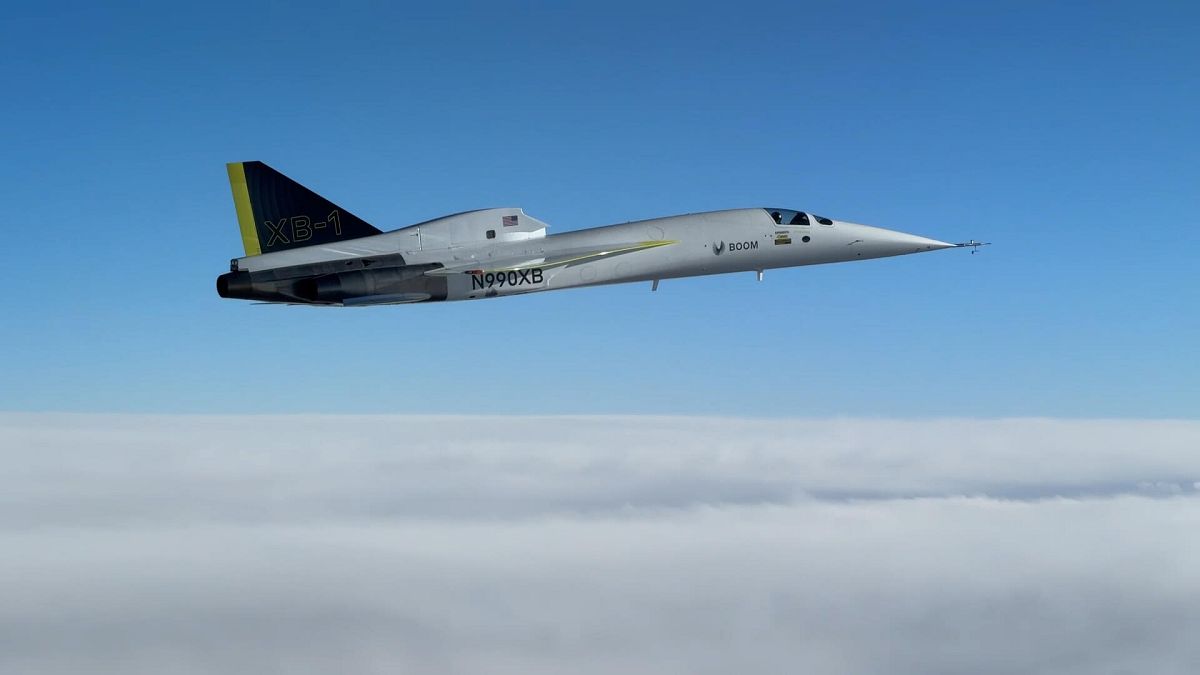
Over two decades have passed since the Concorde’s final flight, marking the end of an era for supersonic passenger travel. However, the dream of faster-than-sound commercial flights has been rekindled by Boom Supersonic, a US-based company determined to overcome the challenges that grounded its predecessor. With the successful test flight of its XB-1 demonstrator aircraft, a smaller-scale prototype, Boom has signaled its commitment to revive this ambitious form of air travel. The XB-1, nicknamed "Baby Boom," achieved supersonic speed, reaching Mach 1.05, proving the viability of the technology Boom intends to employ in its full-scale Overture airliner. This breakthrough represents a significant step towards realizing a future where supersonic travel becomes a mainstream reality.
The history of supersonic passenger planes is marked by both excitement and disappointment. The 1950s witnessed a surge in optimism, fueled by Chuck Yeager’s historic breaking of the sound barrier. Major aircraft manufacturers like Boeing and Lockheed envisioned a future dominated by supersonic commercial aircraft, proposing designs for the 2707 SST and L-2000 respectively. However, these ambitious projects never materialized. Only two supersonic passenger planes ever graced the skies: the Soviet Tupolev Tu-144 and the iconic Concorde. The Tu-144, nicknamed "Concordski," had a short-lived passenger service, operating for only three years. The Concorde, on the other hand, enjoyed a longer run, ferrying passengers across the Atlantic for nearly three decades, from 1976 to 2003. Despite its initial promise, Concorde ultimately faced numerous challenges that led to its demise.
Concorde’s downfall stemmed from a combination of factors, primarily noise, cost, and efficiency. The sonic boom generated by the aircraft, resulting from breaking the sound barrier, proved to be a major obstacle, leading to restrictions on supersonic flight over land due to noise pollution concerns. This severely limited Concorde’s route options, affecting its appeal to airlines. Moreover, Concorde’s fuel consumption was significantly higher compared to subsonic aircraft, making it an expensive option to operate, particularly during periods of economic uncertainty and fluctuating fuel prices. To maintain profitability, airlines were forced to charge exorbitant fares, placing Concorde flights firmly in the luxury travel category, accessible to only a select few.
The Concorde’s high operating costs and limited routes reduced its market appeal, leading to many initial orders being cancelled. Airlines grew increasingly wary of the aircraft’s fuel consumption, particularly in the wake of the 1973 oil crisis. Concorde’s fuel efficiency was significantly lower than that of its subsonic counterparts like the Boeing 747 and Douglas DC-10, making it a less economically viable option in a cost-conscious market. Furthermore, the sonic boom generated by Concorde drew strong opposition from communities located along its flight paths. Reports of broken windows, cracked plaster, and even panicked livestock led to bans on supersonic flight over land, forcing Concorde to fly subsonically until it reached the open ocean. This further restricted its potential routes and reduced its appeal to airlines seeking more versatile aircraft.
Despite the challenges, Concorde managed to operate for almost three decades, largely thanks to the prestige associated with supersonic travel. Air France and British Airways, the only two airlines to operate Concorde, positioned it as a premium service, catering to a niche market of affluent travelers willing to pay a premium for the speed and exclusivity. However, the cramped, noisy cabin and the high ticket prices ultimately limited Concorde’s market appeal. The fatal crash of an Air France Concorde in 2000 dealt a further blow to the aircraft’s reputation and contributed to the decision to retire the fleet in 2003. While officially attributed to high maintenance costs, the combination of economic factors, limited routes, and safety concerns ultimately sealed Concorde’s fate.
Boom Supersonic aims to address the shortcomings of Concorde and usher in a new era of sustainable and accessible supersonic travel. The company is focusing on reducing noise, improving efficiency, and lowering operating costs to make supersonic flight more viable for airlines and passengers alike. Overture’s engines are designed to operate without afterburners, significantly reducing fuel consumption and noise compared to Concorde. Furthermore, the aircraft is planned to run on sustainable aviation fuel, minimizing its environmental impact. Boom also claims that Overture’s advanced aerodynamics will significantly reduce the intensity of the sonic boom, potentially paving the way for supersonic flight over land in the future. By addressing these key challenges, Boom Supersonic hopes to overcome the obstacles that grounded Concorde and make supersonic travel a more mainstream and sustainable mode of transportation.