
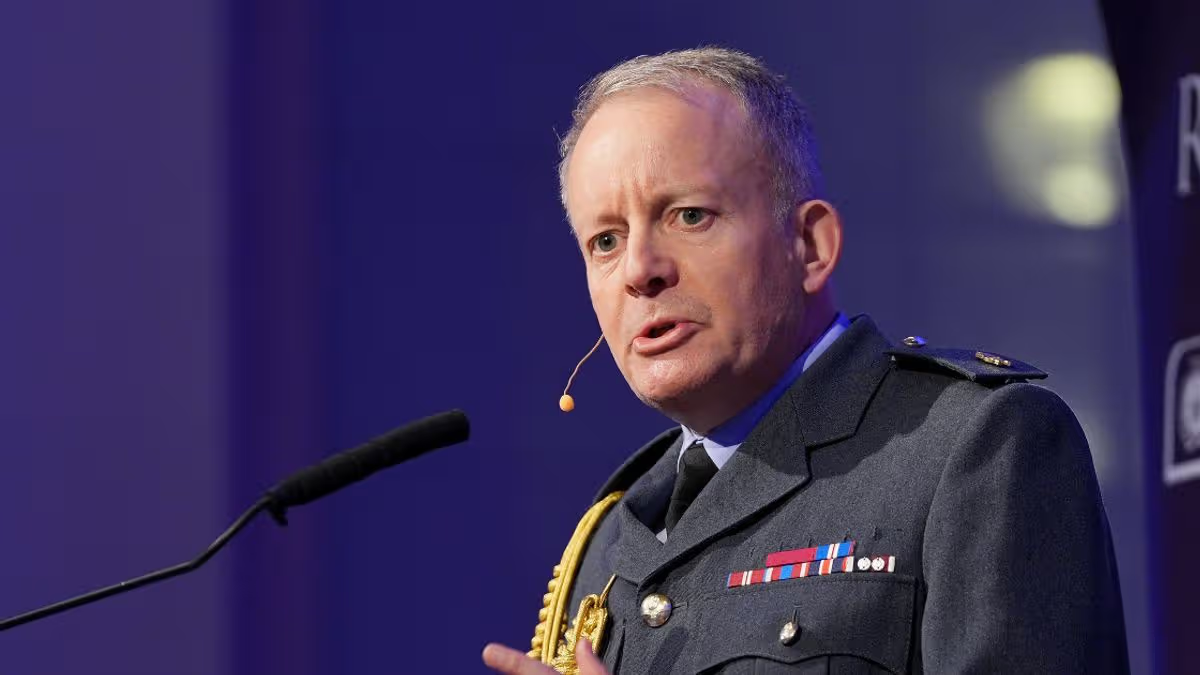


We stand at a pivotal and perilous moment in our national history. The Chief of the Defence Staff, Sir Richard Knighton, has issued a sobering assessment: the United Kingdom now faces its gravest array of threats since the Cold War era concluded. With a distinguished career spanning decades, Sir Richard stated unequivocally that this is the most dangerous period he has known in his working life. The familiar post-Cold War peace dividend, which allowed a focus on shorter, more localised conflicts, has definitively ended. In its place is a new reality of sustained, high-level confrontation, exemplified by the protracted war in Ukraine. Sir Richard framed last year’s Strategic Defence Review not as a bureaucratic exercise, but as a profound “call to arms” for the nation to fundamentally reassess its posture, priorities, and preparedness for a world where prolonged, large-scale conflict is once again a clear and present danger.
The immediacy of this threat is underscored by stark, tangible evidence. Sir Richard revealed that in just the first five months of this year, the Royal Air Force has intercepted as many incursions by Russian strategic aircraft into UK airspace as it did in the entirety of 2025. This dramatic escalation is not merely about aerial posturing; it is a deliberate and persistent testing of Britain’s traditional military defences and readiness. Furthermore, the threat spectrum has expanded far beyond the physical realm. Sir Richard warned that Russia is simultaneously probing and attacking through cyber operations, sabotage, and assassination attempts on British soil. This multi-domain pressure campaign represents a conscious effort to raise the stakes, blur the lines of acceptable behaviour, and identify vulnerabilities. The cumulative message from Moscow is unambiguous: it seeks to challenge and undermine the UK’s security and resolve across every possible front.
This sobering landscape necessitates more than just vigilance; it demands a fundamental transformation in how we conceive of and resource our national defence. Sir Richard’s warnings come ahead of the imminent publication of the government’s Defence Investment Plan, which will outline spending commitments for the coming decade. The central argument, which Sir Richard has advanced alongside allies like Germany’s General Carsten Breuer, is that increased investment is not an option but an urgent imperative. In a powerful joint letter earlier this year, the two military leaders framed this not just as a strategic calculation, but as a moral one. They argued forcefully that rearmament and enhanced preparedness are not acts of warmongering, but the responsible duties of a nation determined to protect its people and preserve peace. The chilling lesson from Ukraine, they noted, is that strength is the ultimate deterrent, while weakness is an open invitation to aggression from adversaries like a Russia that has “shifted decisively westward.”
Adapting to this new era requires a parallel revolution in military capability and thinking. Sir Richard emphasised that the character of warfare itself is rapidly evolving, driven by technological leaps. The battlefields of Ukraine have provided a stark preview of a future where drones, autonomous systems, and cyber capabilities play an increasingly decisive role. Preparing for protracted conflict means not only ensuring robust stockpiles of traditional munitions but also leading in the development and integration of these transformative technologies. It means building armed forces that are digitally agile, resilient to electronic warfare, and capable of sustained high-intensity operations. The goal is to ensure that the UK can not only defend its homeland and interests but also contribute effectively to collective European and NATO security, which forms the bedrock of our own defence.
Critically, Sir Richard’s message extends far beyond the walls of the Ministry of Defence. He stressed that national defence in this complex age cannot be the sole preserve of uniformed personnel. It demands a “whole-of-society” approach and an honest, national conversation about the realities we face. This involves public understanding of the threats, support for necessary investment, and recognition of the role that industry, academia, and every citizen play in national resilience. From bolstering cyber security in our critical infrastructure to fostering a national culture of preparedness, the task is collective. The government, through figures like Work and Pensions Secretary Pat McFadden, has indicated that the detailed blueprint for this investment—the Defence Investment Plan—is nearing publication, setting the stage for this essential public discourse.
In conclusion, the warnings from the UK’s most senior military leader are a clear-eyed and necessary alarm call. The converging threats from state aggression, hybrid attacks, and technological disruption have created a risk environment unparalleled in over three decades. The path forward is challenging: it requires significant long-term investment, a societal commitment to defence, and agile adaptation to new forms of conflict. However, as Sir Richard and his allies assert, this endeavour is fundamentally about safeguarding our future. By confronting these uncomfortable truths with resolve and unity, the nation can build the credible strength that deters conflict and ensures the lasting security and prosperity of the United Kingdom in an increasingly dangerous world. The time for decisive action and clear-eyed preparation is now.