

Paragraph 1
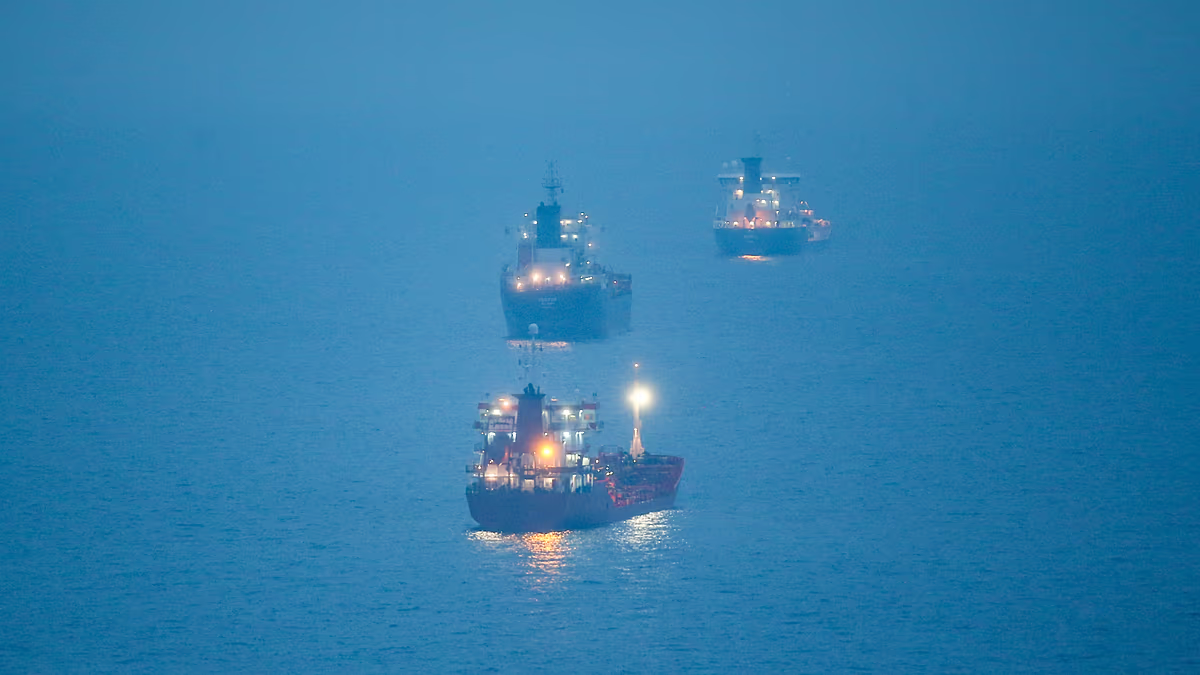
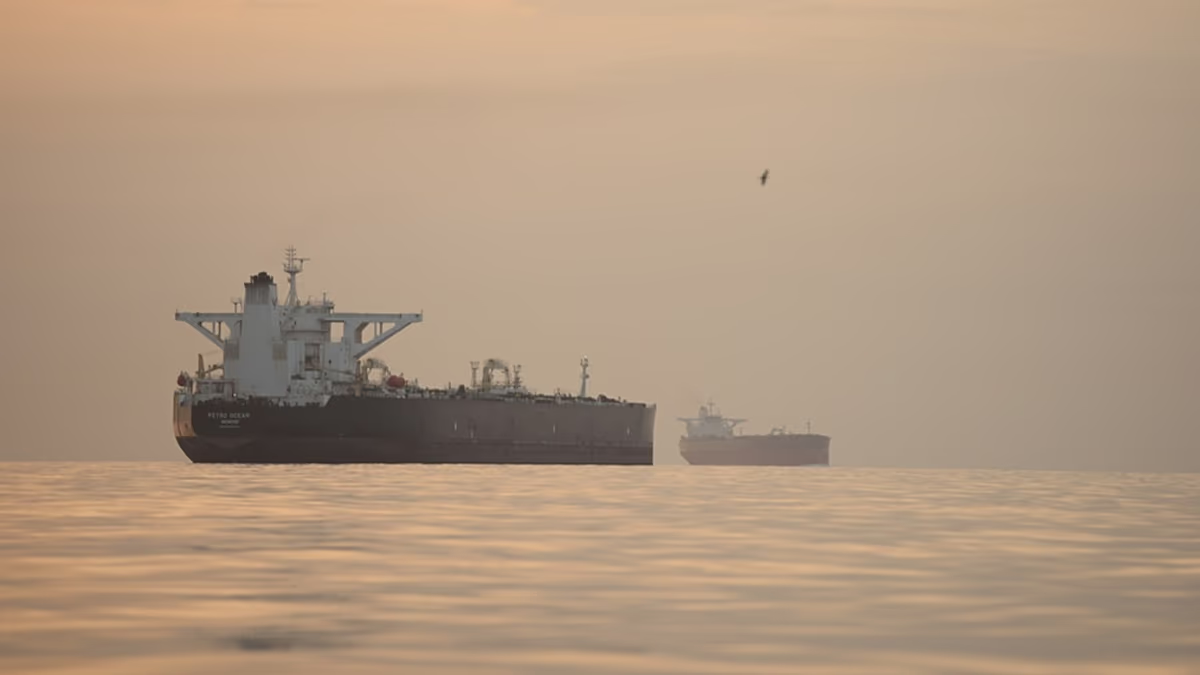
Tensions in the Persian Gulf have erupted into a direct and dangerous confrontation, casting a deep shadow over a fragile ceasefire and the global economy. On Sunday, the United States announced it had attacked and seized an Iranian-flagged cargo ship, the Touska, near the strategic Strait of Hormuz. According to U.S. accounts, the vessel attempted to evade an American naval blockade that was established last week in response to Iran’s own closure of the vital waterway. The incident, described by former President Donald Trump on social media with provocative detail, involved a U.S. Navy destroyer firing upon the ship’s engine room to disable it before U.S. Marines boarded. Iran immediately condemned the action as an act of piracy and a blatant violation of the truce, with its joint military command vowing a response. This dramatic clash on the high seas threatens to unravel delicate diplomatic efforts and plunge the region back into open conflict.
Paragraph 2
The immediate global repercussion was a sharp spike in oil prices, exacerbating an already severe energy crisis. Brent crude jumped to $95 a barrel, reflecting market panic over the security of the world’s most important oil transit chokepoint. The Strait of Hormuz is a lifeline for global energy supplies, normally facilitating about one-fifth of the world’s oil trade, alongside essential shipments of natural gas, fertilizer, and humanitarian aid. With the strait closed and now the scene of military action, the specter of prolonged supply disruption and soaring costs looms over the international community. Iran quickly signaled its capacity to leverage this pain, with a senior official warning that the security of the strait “is not free,” presenting the world with a stark choice: a free market for all or significant economic costs for everyone.
Paragraph 3
This maritime crisis strikes at the heart of uncertain diplomatic maneuvers. Just days prior, former President Trump had announced that a U.S. negotiating team, led by Vice President JD Vance, was en route to Islamabad, Pakistan, for a second round of talks with Iran aimed at achieving a comprehensive agreement to end hostilities. The delegation’s arrival was scheduled for Monday, following what the U.S. described as new proposals exchanged with Tehran. However, the seizure of the Touska has thrown these plans into profound doubt. Trump’s own simultaneous rhetoric further poisoned the well, as he repeated threats to destroy Iranian infrastructure—power plants and bridges—if Iran did not agree to U.S. terms, statements widely criticized as inflammatory and irresponsible.
Paragraph 4
Iran’s response to the proposed talks has been deeply skeptical and now appears fundamentally compromised by the ship seizure. While not officially rejecting the dialogue, Iranian officials and state media, citing President Masoud Pezeshkian and Foreign Minister Abbas Araghchi, framed recent U.S. actions as evidence of “bad intentions,” “bullying,” and a likelihood to “betray diplomacy.” They pointed to the interruption of two previous negotiation attempts by Israeli and U.S. attacks as a pattern of bad faith. From Tehran’s perspective, negotiating under the direct threat of military force and devastating economic sanctions is untenable. The gap between the two sides remains wide, with core issues like Iran’s nuclear program, its regional alliances, and control of the Strait of Hormuz still unresolved.
Paragraph 5
On the ground in Islamabad, a palpable uncertainty took hold. While Pakistan did not officially confirm the talks, security was tightened in the capital, and regional officials indicated that mediators were making last-minute preparations, with U.S. advance security teams already present. This created a surreal juxtaposition: a diplomatic reception potentially being prepared on one side of the city, while on the world’s stage, the two intended parties were engaged in a hostile act of capture and condemnation on the high seas. The event starkly highlighted the contradictory pressures at play—the institutional push for a diplomatic off-ramp versus the escalatory impulses and political posturing that continually undermine trust.
Paragraph 6
The seizure of the Touska is more than an isolated naval incident; it is a microcosm of the cycle of action and reaction that has come to define this conflict. It demonstrates how easily a single military move can overshadow weeks of tentative diplomatic outreach, reaffirming deep-seated suspicions on both sides. For the United States, it represents a show of enforcement and pressure. For Iran, it is proof of American aggression and a justification for both its defensive posture and its own economic leverage. As the fate of the ceasefire hangs by a thread, the world is left to watch a volatile standoff where the pathways to war seem far more clearly paved than the road to peace. The immediate future hinges on whether Iran’s vowed response will be diplomatic, economic, or military, and whether any thread of dialogue can survive this latest rupture in an atmosphere of such profound mistrust and escalating force.