


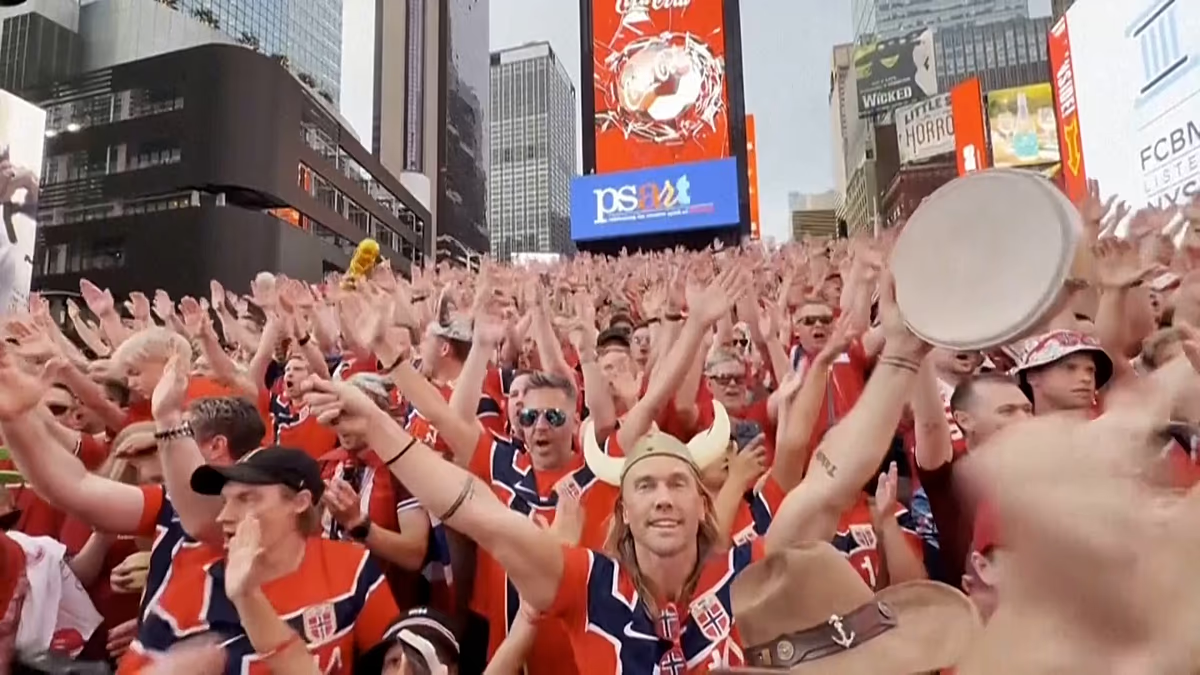
The World Cup, a tournament that binds the globe in a shared passion for football, possesses a unique magic: the ability to transplant the spirit of a nation thousands of miles from home. This was spectacularly evident on a Sunday in New York City, as the iconic expanse of Times Square was transformed not by its usual dazzling digital advertisements, but by a vibrant, pulsing tide of red, white, and blue. Thousands of Norwegian football fans, having journeyed across the Atlantic or residing in the bustling metropolis, converged upon this most famous of crossroads. Their mission was simple yet profound: to build a pocket of Norway in the heart of Manhattan, a rallying point of national pride and collective anticipation ahead of their team’s crucial Group I match against Senegal the following night.
The scene was one of unbridled, organic celebration. The fans, draped in the Norwegian flag and clad in the national team’s kit, did not merely occupy the space; they animated it. The familiar cacophony of city traffic and tourist chatter was drowned out by a new soundtrack—a roaring, rhythmic chorus of Norwegian chants and songs that echoed off the skyscrapers. At the center of this human sea stood a symbolic leader: a fan adorned with a Viking helmet, a nod to the nation’s storied history. With each raise of his arms, he conducted the crowd, a conductor of camaraderie, as they rowed in unison—an evocative gesture mimicking the ancient Norse tradition now repurposed as a modern sporting rallying cry. This was no passive gathering; it was a participatory festival, turning one of the world’s busiest commercial hubs into a stage for heartfelt, communal expression.
This explosion of support was fueled by more than just routine patriotism; it was charged with the specific electricity of a promising campaign. Norway had enjoyed a strong start to the tournament, and the fans in Times Square were there to celebrate that momentum and will their team forward. The gathering was a physical manifestation of hope, a way for the Norwegian diaspora and traveling supporters to feel connected to the action on the pitch, even from afar. In a city celebrated for its diversity, this proud display of Scandinavian identity stood out, a vivid reminder of how football serves as a cultural passport, allowing nations to project their joy, their history, and their collective character onto a global stage. The sea of flags in Times Square was not just about football; it was about belonging.
The spectacle also highlighted the unique role of major tournaments in reshaping urban landscapes. For those afternoons and evenings, familiar city landmarks are temporarily reclaimed, their usual identities softened by the colors and sounds of visiting fans. Times Square, a place synonymous with commercialism and constant motion, was, for a few hours, synonymous with Norwegian jubilation. It became a testament to sport’s power to recontextualize our environments, forging temporary communities and shared memories in the most unexpected of places. Tourists and New Yorkers alike paused not to gaze at the billboards, but to witness this moving display of unity and passion, a human event far more compelling than any digital display.
As the chanting continued under the iconic neon glow, the event transcended mere pre-game festivities. It became a poignant illustration of the global village fostered by international sport. Here were Senegalese fans, likely elsewhere in the city preparing for their own team’s match, while their upcoming opponents created a fortress of noise and color in one of the world’s most recognizable spots. This peaceful, parallel preparation is the beautiful duality of the World Cup: fierce rivalry on the pitch coexists with mutual respect and shared celebration off it. The Norwegian fans were not just building anticipation for their own team; they were contributing to the overarching atmosphere of a world festival, adding their unique voice to the chorus of nations that defines the tournament.
Finally, the gathering in Times Square underscores the deep, human need for connection that football satisfies. In an age of digital isolation, these fans chose to stand shoulder-to-shoulder, to sing until their voices grew hoarse, and to share in the nervous, exhilarating build-up to a game. They were building more than just hype; they were building a memory. For every individual present, from the Viking-helmed chant leader to the family wrapped in a single flag, this would become a story to tell—the time they turned the center of New York into a slice of Norway. It was a powerful reminder that while the beautiful game is decided by goals and saves on the field, its true essence is forged in these moments of collective identity, where strangers become compatriots, and a city square, for a fleeting, magical moment, feels like home.