


Cape Verde’s extraordinary debut on football’s greatest stage has become one of the defining stories of the 2026 World Cup, a testament not just to sporting prowess but to the power of national spirit. On Sunday, that spirit soared as the tiny island nation secured a dramatic 2-2 draw against the footballing titans of Uruguay, a result that resonated far beyond the stadium walls. The match was a rollercoaster of emotion, culminating in a late equalizer that not only earned a precious point but solidified Cape Verde’s claim as a legitimate competitor in the tournament. For a team representing a nation of just over half a million people, sharing a group with former champions like Spain and Uruguay was a monumental challenge in itself. Yet, by holding both giants to draws, the team has transformed from a plucky underdog into a squad with a genuine chance of advancing, capturing the imagination of neutral fans worldwide who are drawn to their skill, tenacity, and joyful approach to the game.
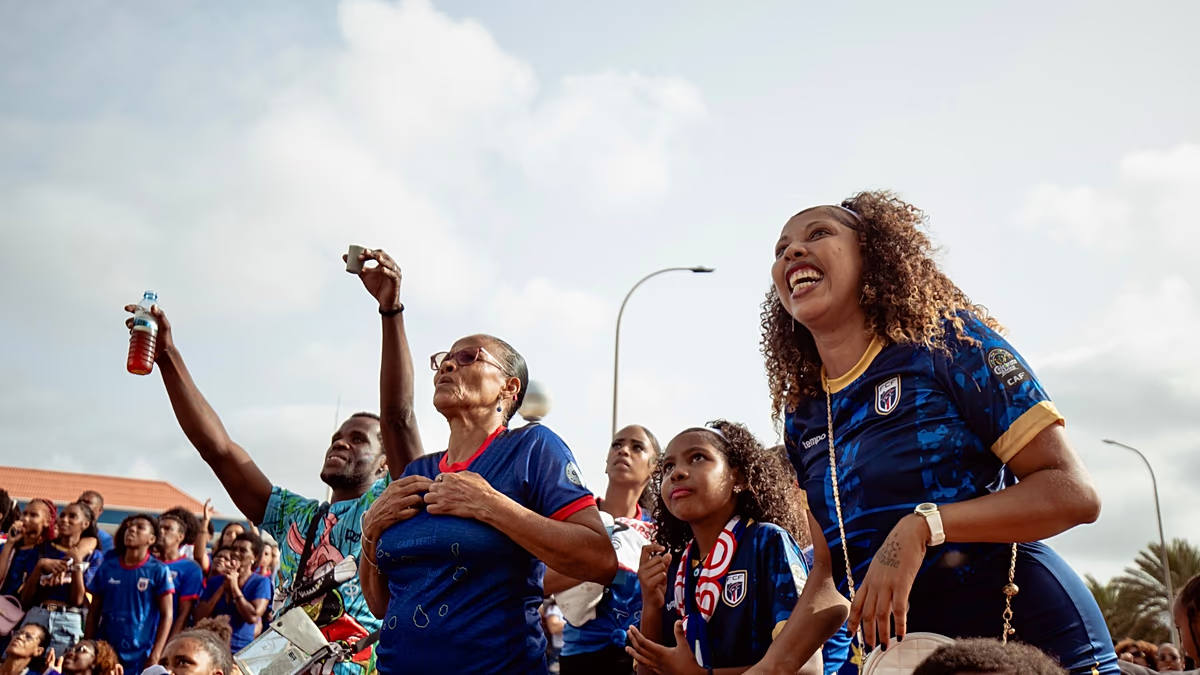
The significance of this moment was felt most profoundly not in the host cities of North America, but in communities oceans away. In Brockton, Massachusetts, home to one of the largest diasporas of Cape Verdeans outside the islands, the matchday atmosphere was electric. Supporters gathered in homes and public venues, their hearts tethered to the screen as they watched their homeland make history. The tension of the match gave way to unbridled jubilation when Kevin Pina’s strike etched Cape Verde’s name onto the World Cup scoresheet for the very first time. That joy, however, was nearly eclipsed by the ecstasy that followed Hélder Varela’s late goal, the equalizer that secured the draw. The final whistle triggered an explosion of national pride on the streets of Brockton, as fans poured out to wave flags, dance, and fill the night air with the sounds of honking car horns and celebratory fireworks, physically manifesting the connection between a scattered people and their team’s historic achievement.
This communal celebration underscores a deeper truth: for Cape Verdeans, both at home and abroad, the team’s journey transcends mere sport. Qualifying for the World Cup was itself a mammoth victory, a moment of global recognition for a nation whose athletes have often overcome immense logistical and financial hurdles. Each successful pass, each resilient defensive stand, and each goal scored is a point of immense collective pride, a symbol of what can be accomplished against the odds. The team carries the hopes and identity of a nation built on resilience, and their performance is a powerful source of unity. Watching their team stand tall against the world’s best provides a profound sense of validation and shared joy, reinforcing cultural bonds for those in the diaspora and strengthening national cohesion at home.
On the pitch, the draw against Uruguay was a masterpiece of tactical discipline and unyielding belief. Facing a squad laden with world-class talent, Cape Verde did not simply park the bus in a defensive shell; they played with organization and daring, creating chances and refusing to be intimidated. After taking the lead, suffering a Uruguayan comeback, and staring down a potential heartbreaking loss, they displayed remarkable mental fortitude to push for a late equalizer. This resilience is the hallmark of their campaign. Having already secured a credible draw against Spain, the team has proven its results are no fluke. They are playing with a confidence that stems from meticulous preparation and a deep-seated trust in one another, demonstrating that team spirit and strategic clarity can level the playing field against nations with far greater footballing pedigrees.
As the group stage nears its climax, Cape Verde now finds itself in a previously unthinkable position: in contention for a place in the knockout rounds. What began as a dream—simply to participate—has evolved into a tangible goal of advancing. This fairytale run has reshaped the narrative of the tournament, providing a compelling counterpoint to the commercialized, often predictable nature of modern elite football. Their story is a reminder that the World Cup’s greatest magic lies in these moments of unexpected triumph, where passion and unity can challenge established hierarchies. For fans globally, Cape Verde has become the team to rally behind, embodying the pure, aspirational joy that football can inspire.
Ultimately, Cape Verde’s journey is more than a sporting achievement; it is a celebration of human potential. It is a story about a nation, and its global family, seeing its identity reflected on the world’s most watched stage and finding that reflection to be strong, skilled, and triumphant. Whether or not they secure the result needed to advance to the next round, their legacy is already secured. They have scored their first goals, earned their first points, and won the hearts of millions. They have proven that giants can be challenged and that history can be written by those who dare to dream the biggest dreams. For Cape Verde, every minute of this World Cup is a victory, and their story is an indelible part of the 2026 tournament’s lore.