


Paragraph 1
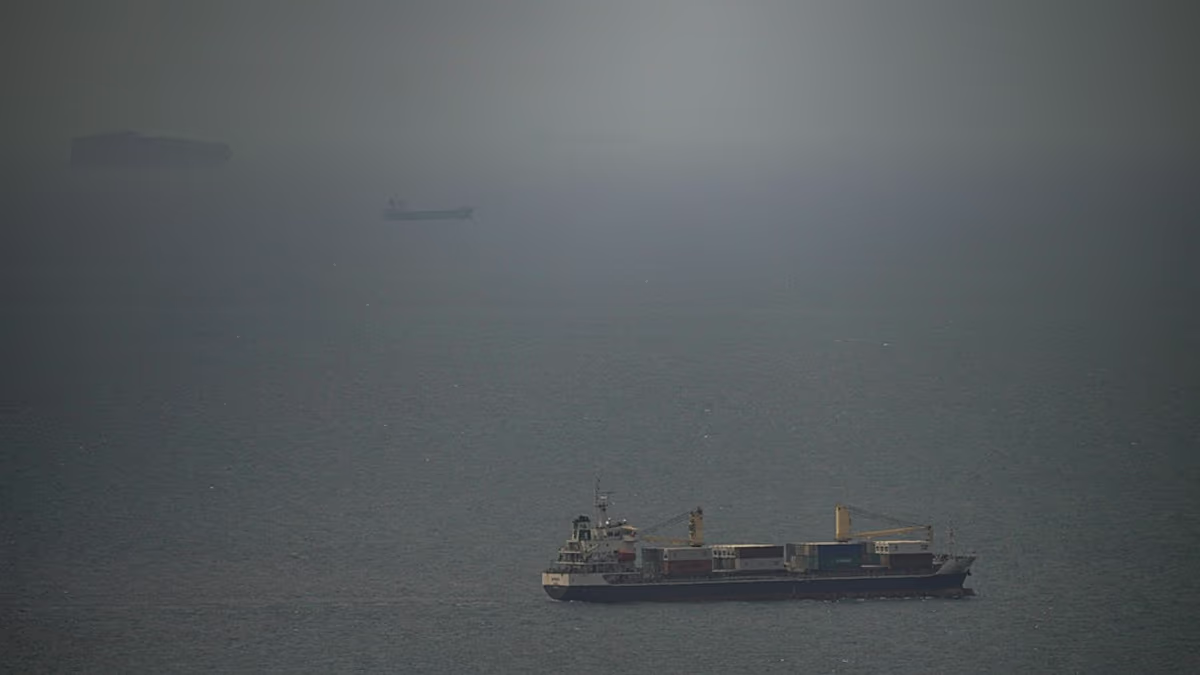
The already perilous standoff in the Middle East took a dangerous new turn on Wednesday as Iranian forces fired upon and seized commercial ships in the Strait of Hormuz, directly challenging a fragile truce. Iran’s paramilitary Revolutionary Guard Corps attacked three vessels, taking control of two—the MSC Francesca and the Epaminondas—and escorting them to Iranian ports. This aggressive move marked a significant escalation, coming less than a day after U.S. President Donald Trump extended a ceasefire in the wider regional conflict. However, that ceasefire remained brittle, as the U.S. simultaneously maintained its naval blockade of Iranian ports, a key point of contention. The seizure of the ships was described by one affected nation, Panama, as an “illegal” act and a serious assault on global maritime security, though the White House contended it did not technically violate the truce, as the vessels were not American or Israeli.
Paragraph 2
This incident is not an isolated event but part of a sustained campaign that has brought the world’s most critical oil shipping lane to a virtual standstill. Since the outbreak of war between the U.S., Israel, and Iran in late February, there have been more than thirty attacks on shipping in the region. The strategic Strait of Hormuz, through which a fifth of the world’s traded oil typically flows, is now effectively choked, with the ongoing maritime standoff showing no signs of resolution. The consequences are being felt far beyond the Persian Gulf, reverberating through the global economy. Energy prices have skyrocketed, with Brent crude oil breaching $100 per barrel—a 40% increase from pre-war levels—which in turn drives up the cost of transportation, food, and countless other goods, imposing a severe burden on consumers and businesses worldwide.
Paragraph 3
At the heart of this dangerous impasse is a fundamental disagreement over the terms of peace. Iranian officials, including chief negotiator Mohammad Bagher Qalibaf, insist that the U.S. naval blockade must be completely lifted before substantive talks can resume. From Tehran’s perspective, a ceasefire that allows the blockade to continue is meaningless and unfair. They argue that reopening the strait is impossible while their own ports are under siege. President Trump, however, has taken the opposite stance, declaring that the U.S. blockade will remain firmly in place until Iran itself ceases its restrictions on shipping in the Hormuz Strait. This deadlock creates a vicious cycle: without a diplomatic breakthrough, further attacks are likely, which will only deter more ship owners from risking the passage, tightening the chokehold on global energy supplies even further.
Paragraph 4
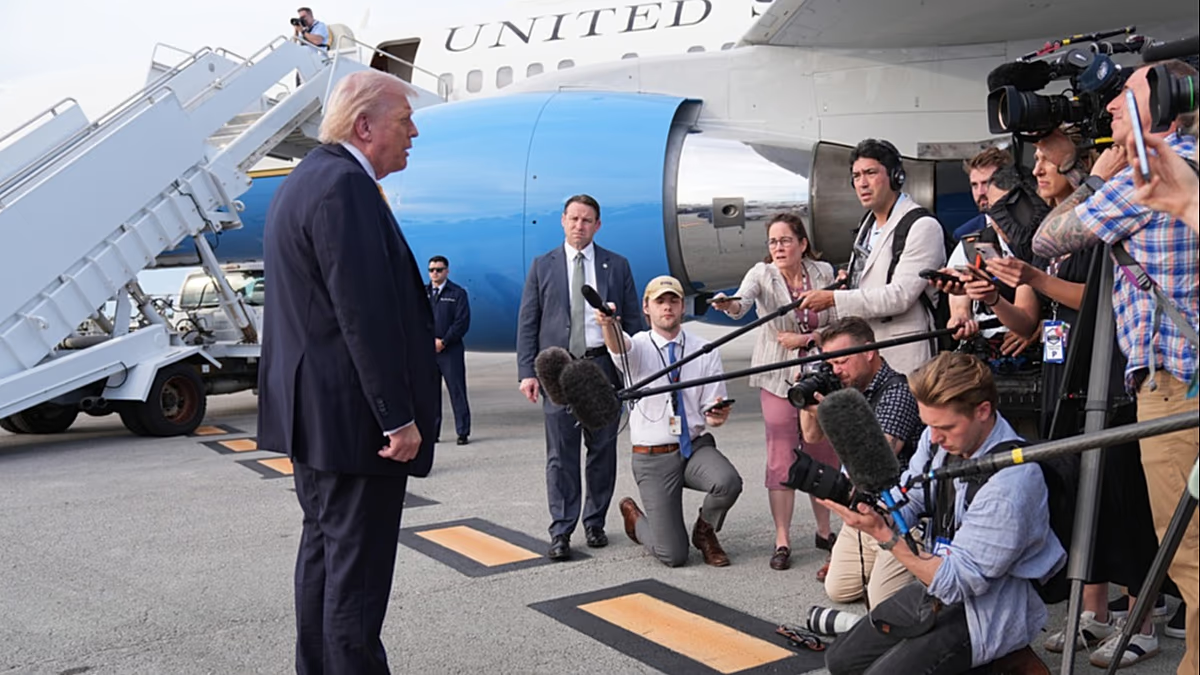
Amidst the high-stakes geopolitical maneuvering, a bizarre and bitter war of narratives has also unfolded. President Trump claimed a diplomatic victory, asserting that Iran had “respected” his personal request to call off the planned executions of eight Iranian women arrested during earlier anti-government protests. Tehran responded with scorn, dismissing the entire episode as a “fabrication” and a face-saving measure by a president who has achieved little on the battlefield, insisting the women were never slated for execution. This exchange underscores the deep mutual distrust and the use of information as a weapon, complicating any potential for understanding or de-escalation between the entrenched adversaries.
Paragraph 5
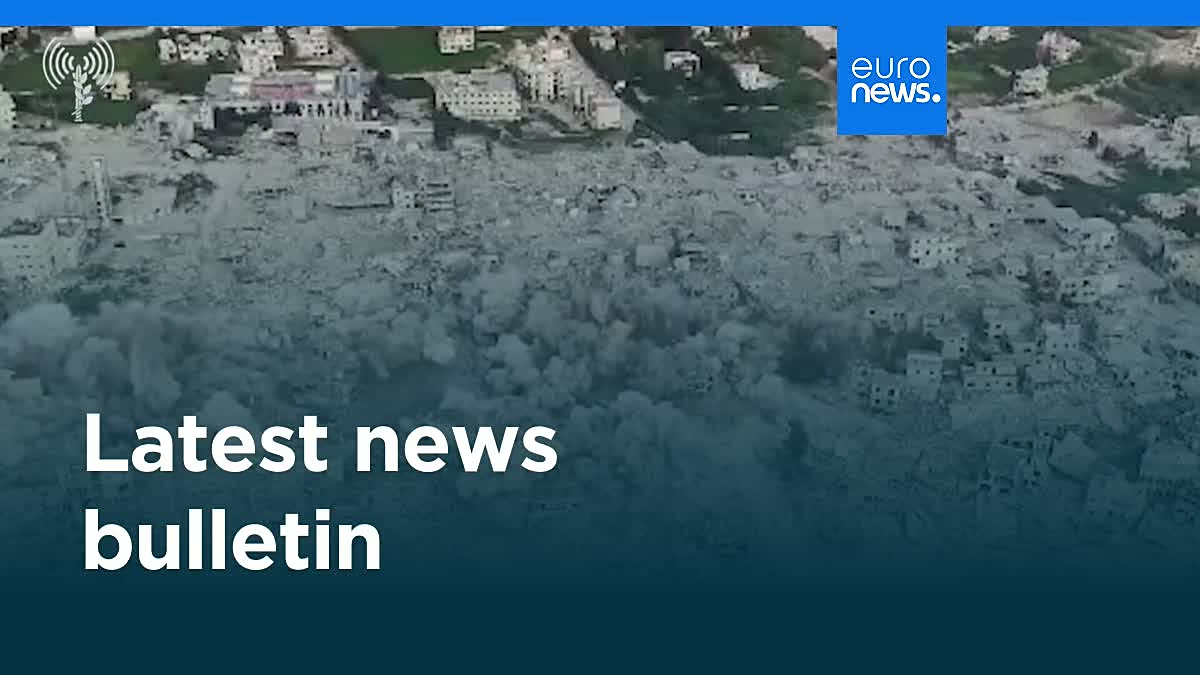
While the focus intensified on the Gulf, violence also flared on another fragile front. In southern Lebanon, Israeli airstrikes killed at least six people, including a journalist, despite a separate 10-day ceasefire agreement between Israel and Hezbollah. Local Lebanese authorities reported that attacks hit the villages of al-Tiri and Yohmor, with one strike allegedly hindering ambulance access to the wounded. Israel denied targeting rescue workers or journalists, justifying one strike by claiming its troops were endangered by ceasefire violations. This violence highlights how localized truces remain tenuous and how the broader regional conflict, ignited by the U.S.-Israel war with Iran, continues to spill over and inflict a terrible human cost, with Lebanese government figures reporting close to 2,300 killed and over 1.2 million displaced.
Paragraph 6
The events of this Wednesday paint a picture of a region trapped in a cycle of escalation, where ceasefires in name do not translate to peace in practice. The ship seizures in the Hormuz Strait, the unrelenting economic blockade, the deadly strikes in Lebanon, and the acrimonious propaganda all point to a conflict that is metastasizing. Each action provokes a reaction, deepening the humanitarian and economic crises. The path forward requires a painful diplomatic compromise—likely involving reciprocal steps to secure the shipping lane while addressing security concerns—that currently seems out of reach. Until then, the world watches as a vital artery of the global economy remains constricted, and the people of the region remain caught in a devastating and unpredictable storm.