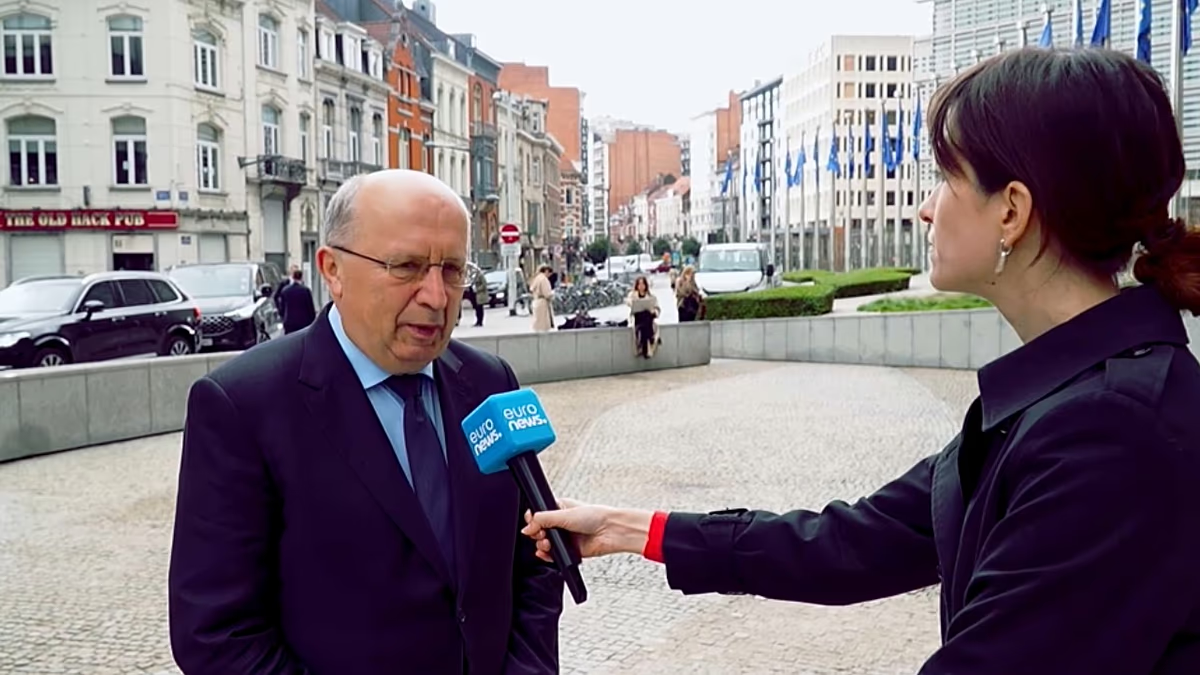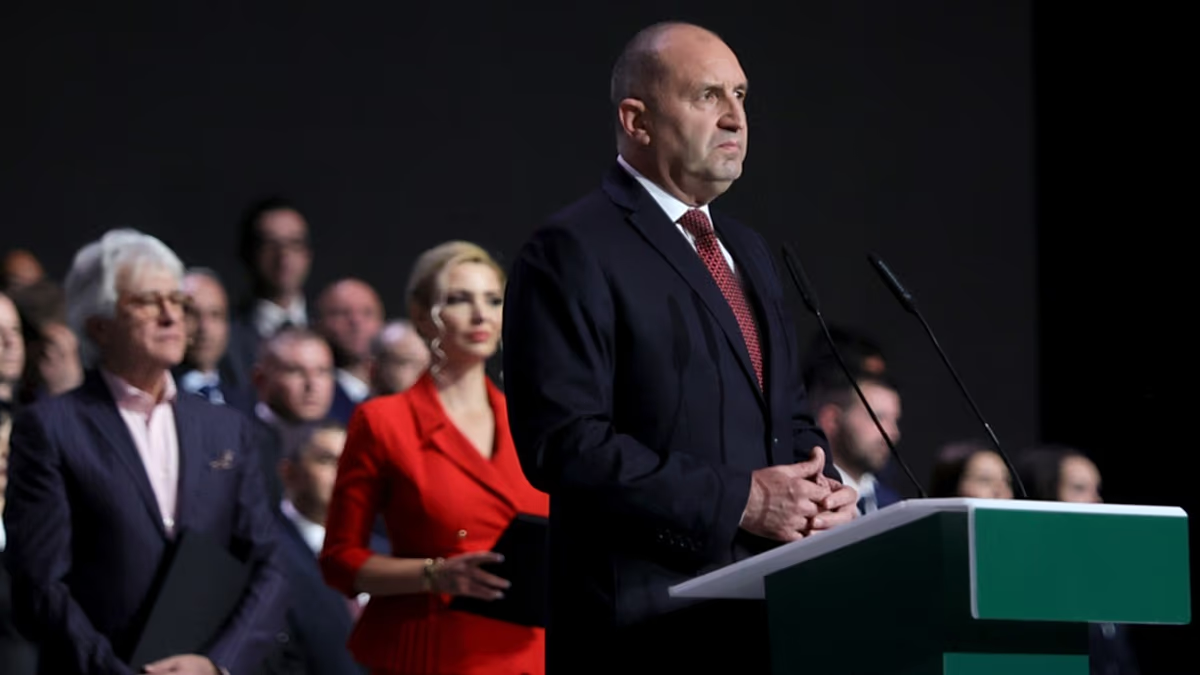





In a significant and sobering announcement, the European Commission has for the first time laid out a comprehensive strategy with the monumental goal of eradicating poverty and social exclusion across the European Union by the year 2050. This ambition was underscored by European Commission Vice-President Roxana Mînzatu in an interview, where she committed the EU to eliminating poverty within a generation, framing it as a defining mission for the bloc. The strategy, however, is not a binding legislative package but rather a set of recommendations and best practice guidelines intended to steer the social policies of its 27 member states. Its introduction is prompted by a stark reality: currently, an estimated 92.7 million people within the EU—nearly one in five Europeans—live at risk of poverty or social exclusion, a statistic that paints a troubling picture of inequality amidst general prosperity.
The scale of the challenge is immense, and Mînzatu openly acknowledged the uphill battle ahead. The EU is already lagging far behind its interim target for 2030, which aimed to lift at least 15 million people out of poverty. To date, progress has been modest, with only about 3.7 million individuals helped. Compounding this existing crisis, the Vice-President warned that external shocks, particularly the ongoing energy crisis exacerbated by conflict, threaten to push even more households into precarious situations. Rising bills and a higher cost of living mean the alarming figure of 93 million could swell in the coming months, making urgent and effective action not just a moral imperative but a pressing economic and social necessity to preserve the stability of European societies.
The newly proposed strategy outlines a multifaceted approach to this deep-rooted problem. It prioritizes breaking the cycle of intergenerational poverty by focusing on children from disadvantaged families, with initiatives like a pilot “child guarantee card.” This digital tool is designed to help governments identify children in need and ensure they receive essential services, from healthcare to education. Furthermore, the plan sets ambitious goals on housing, urging nations to prevent evictions through early warning systems and debt counselling, and to rebalance housing markets by making long-term rentals more attractive to landlords than short-term tourist lets. Other key pillars include bolstering support for the unemployed to find quality jobs and ensuring older citizens can live with dignity through adequate pension systems.
A critical point of contention, however, lies in the strategy’s execution. The European Commission has pointed out that significant funds are already available through existing channels, such as the €50.2 billion European Social Fund Plus and over €100 billion earmarked for social policies in the EU’s long-term budget. Therefore, the plan does not come with a new, dedicated financial package. This approach has drawn criticism from civil society organizations, such as Caritas Europa. While welcoming the strategy’s broad vision, they argue that the absence of concrete, binding legislation and specific new funding mechanisms risks leaving its most ambitious goals unattainable. They highlight glaring gaps, such as the lack of protection for “mobile” EU citizens—those who fall between the cracks of social safety nets in both their home and host countries.
Alongside this overarching anti-poverty framework, the Commission also reinforced its commitment to another vulnerable group by reviewing its strategy for the inclusion of the EU’s roughly 90 million citizens with disabilities. This parallel initiative focuses on practical, tangible improvements, such as the full rollout and digitalisation of the European Disability Card and the European Parking Card. These tools are designed to ensure that the rights and freedoms of movement promised to all Europeans are fully accessible, allowing people with disabilities to travel and live across member states with greater ease and recognition of their needs.
Ultimately, the EU’s first-ever anti-poverty strategy represents a pivotal moment of recognition—a formal admission that widespread poverty is incompatible with the foundational values of the European project. The commitment to a poverty-free EU by 2050 sets a vital north star for policy-making. Yet, as Vice-President Mînzatu’s own candid assessment and NGO critiques make clear, the chasm between aspirational guidelines and transformative change is wide. The coming years will test whether member states can muster the political will, innovate effectively, and deploy existing resources wisely to turn these recommendations into a lived reality for millions, proving that the dream of a socially just Europe is more than a distant vision.