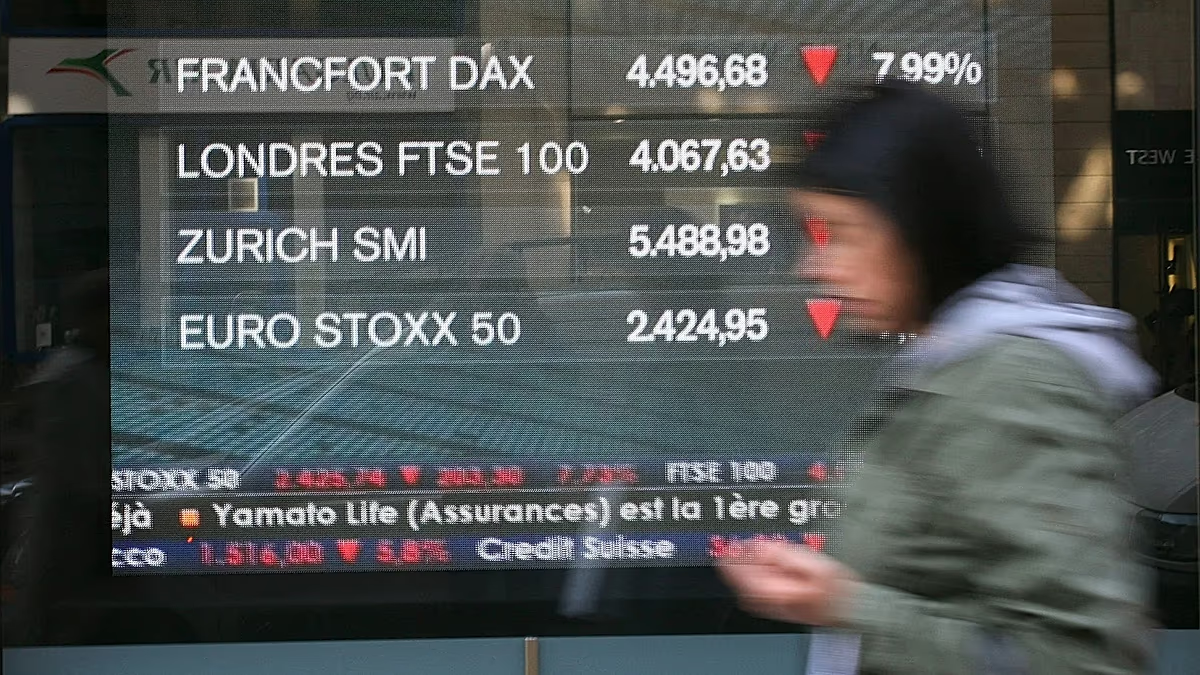



The German economy, long considered the resilient engine of Europe, is facing a profound crisis of confidence. A key measure of economic expectations has plummeted to its lowest point in three and a half years, casting a long shadow over the continent’s industrial heartland. The primary catalyst for this deepening pessimism is the ongoing conflict involving Iran, which has moved beyond headlines to inflict tangible, widespread anxiety within German boardrooms and factory floors. This isn’t merely about geopolitical unease; the war has triggered concrete fears about the stability of critical energy supplies, threatening to undercut the very foundation of Germany’s manufacturing prowess. As analysts surveyed express growing dread, the sentiment signals a potentially dangerous phase where cautious pessimism risks spiraling into a self-fulfilling prophecy of stalled investment and contraction.
Delving into the specifics, the ZEW Economic Sentiment Index—a closely-watched barometer of analyst and investor outlook—experienced a severe drop in April. Falling by 16.7 points to settle at -17.2, this marks the second consecutive month of significant decline. Achim Wambach, President of the Centre for European Economic Research which publishes the index, framed the situation starkly. He emphasized that the economic fallout from the Iran war extends far beyond immediate price hikes. Instead, it has seeded a pervasive worry among businesses about securing energy for the long term. This fundamental uncertainty about power and fuel is paralyzing; it discourages companies from making the investments needed for growth and innovation, effectively nullifying the potential positive impacts of government economic stimulus packages. The sentiment has shifted decisively into negative territory, reflecting a belief that headwinds are strengthening.
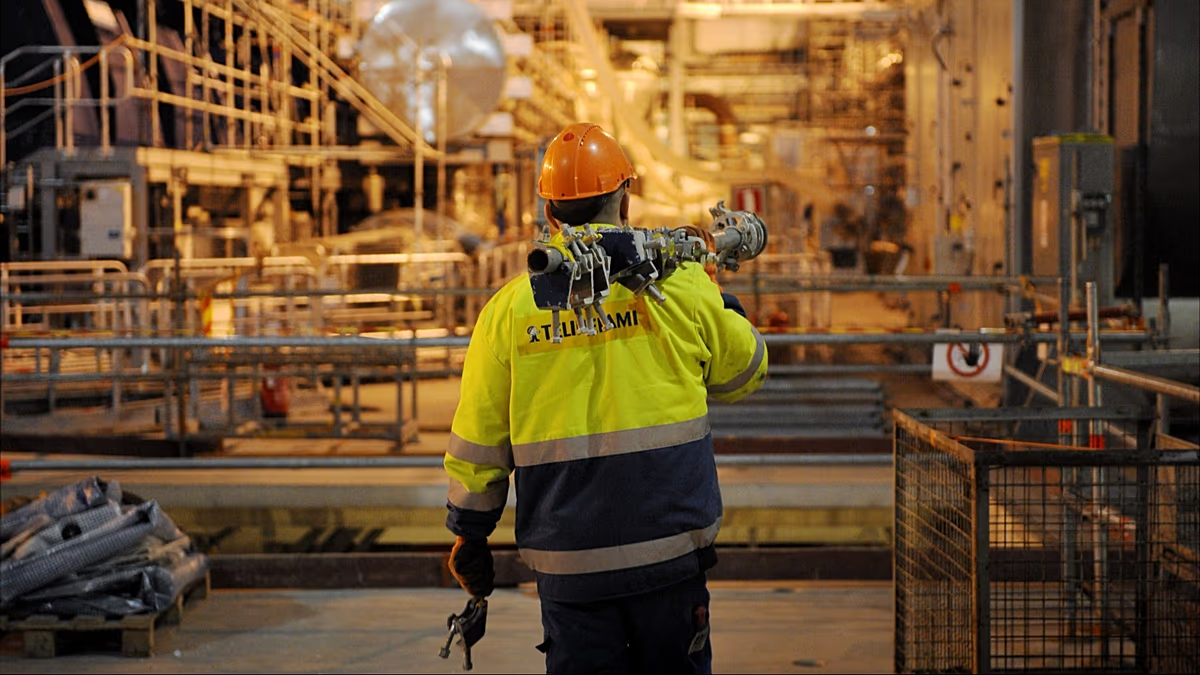
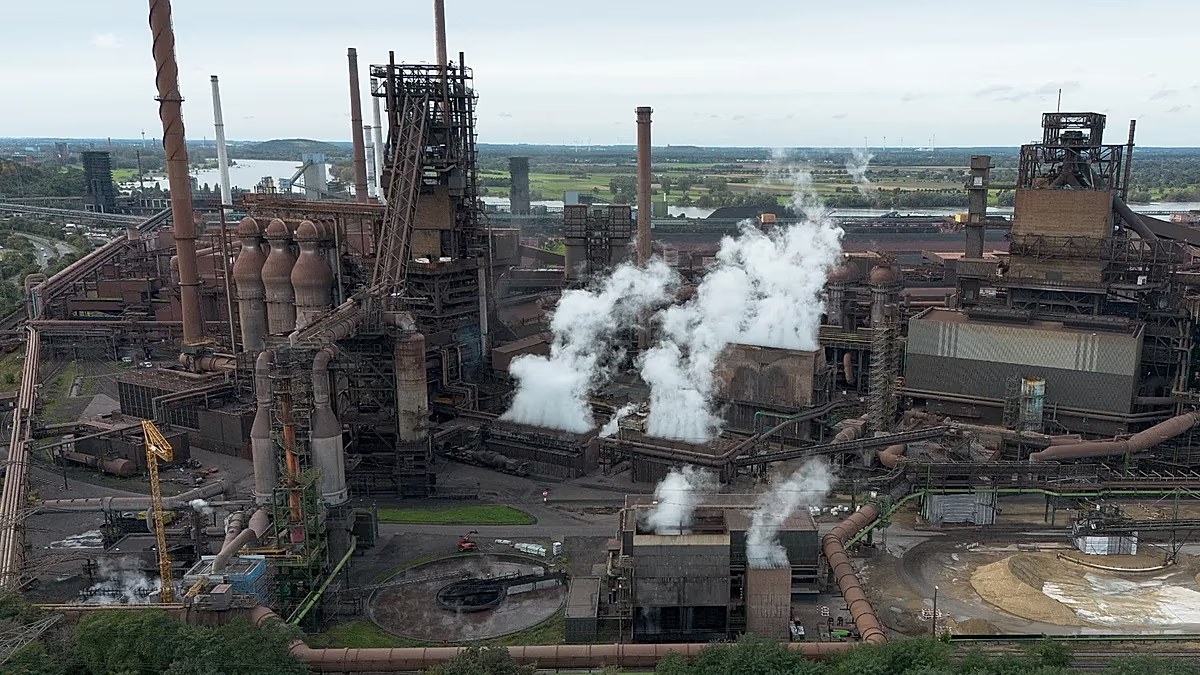
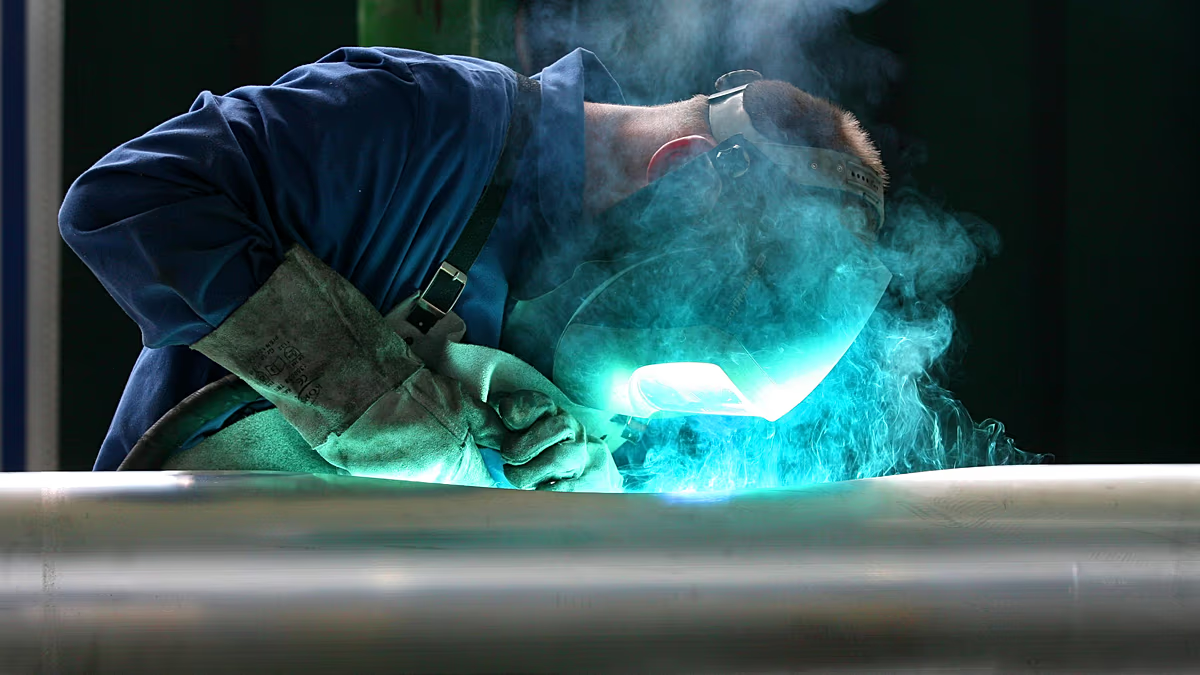
This economic chill is not being felt evenly across all sectors, revealing a fractured industrial landscape. The pain is most acute in energy-intensive heavy industries, where the specter of shortages and cost spikes is an existential threat. Expectations in the chemicals and pharmaceuticals sector, a traditional German strength, fell sharply. The decline was even more pronounced for steel and metal production, sectors where operations are inextricably linked to reliable, affordable energy. Meanwhile, the automotive industry, though managing to remain relatively stable in its assessment, is still mired deeply in negative sentiment. Perhaps most tellingly, even the construction industry, often a domestic economic bellwether, has seen its expectations dip slightly into the red. This broad-based downturn highlights how the crisis is permeating the entire industrial ecosystem, from foundational materials to finished goods.
However, the survey data reveals a complex, two-tiered economic reality. While manufacturing and industry brace for impact, other sectors of the German economy are showing surprising resilience or even optimism. The prospects for banks, insurance companies, and information technology firms actually improved in the same period. This divergence suggests a growing detachment between the “real economy” of physical production and the financial and digital sectors. Utilities, likely anticipating increased demand or regulatory shifts amid the energy crisis, also saw a rise in expectations. This split underscores a pivotal moment: the German economy cannot thrive on finance and tech alone. The nation’s wealth and employment are still deeply rooted in its industrial base, and its faltering confidence threatens to drag down the broader national outlook despite these pockets of strength.
The anxiety is not confined within Germany’s borders; it is a contagion affecting the wider Eurozone. The economic expectations index for the currency bloc as a whole also fell dramatically, dropping 11.9 points to -20.4. More alarmingly, assessments of the current economic situation have deteriorated severely. For the Eurozone, this current conditions index sits at a grim -43 points. In Germany, the picture is even more dire, with the index crashing to -73.7, a drop of over 10 points in a single month. This stark number indicates that analysts do not see this as a problem of future potential alone; they believe the negative impacts are already being felt in the present day. The simultaneous plunge in both future expectations and current assessments paints a comprehensive portrait of an economy that is losing momentum and entering a period of significant strain.
In conclusion, the latest data presents a sobering narrative of an economic powerhouse under duress. The war involving Iran has acted as a powerful accelerant, transforming abstract geopolitical risk into a concrete business threat centered on energy security. As confidence evaporates, particularly in the industrial sectors that define Germany’s economic identity, the risk of a sustained downturn increases. The government now faces the formidable challenge of restoring certainty in an uncertain world, needing to convince businesses that energy will flow and investments will be safe. The path forward requires not just fiscal stimulus, but a credible strategy to decouple the nation’s industrial might from the volatility of distant conflicts. The coming months will test whether Germany’s economic foundations are robust enough to withstand this storm, or if this crisis of confidence will mark the beginning of a more profound and lasting economic shift.