


On Tuesday, April 21, 2026, global markets began the day in a state of heightened anticipation, their movements a direct reflection of the geopolitical drama unfolding in the final hours of a precarious ceasefire. The financial world’s attention was sharply divided between two major stories: the high-stakes diplomacy between the United States and Iran, and a significant corporate restructuring in the United Kingdom. Oil prices, the most sensitive barometer of Middle Eastern tensions, had clawed back significant ground from recent lows. U.S. benchmark crude West Texas Intermediate (WTI) hovered around $86.3 per barrel, a notable 8.5% recovery from Friday’s dip, while the international standard Brent crude stood at roughly $94.5, up 9.5%. These gains underscored the market’s nervous optimism, even as the vital Strait of Hormuz remained closed and the clock ticked down toward a Wednesday deadline for the current truce.
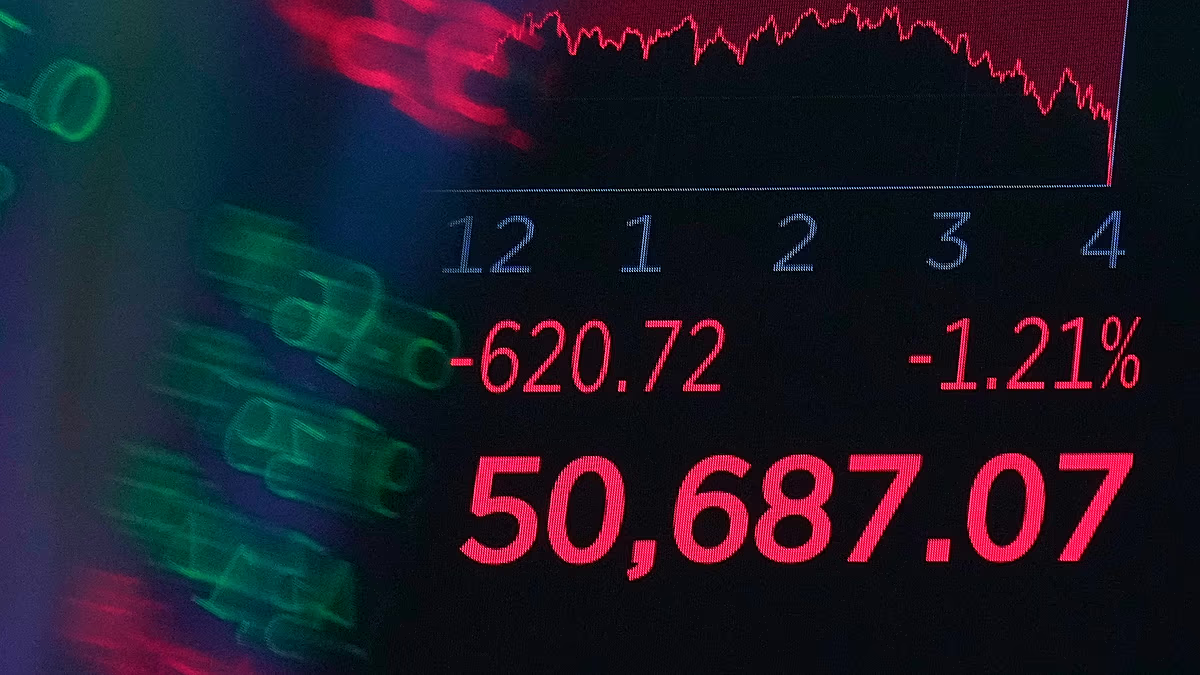
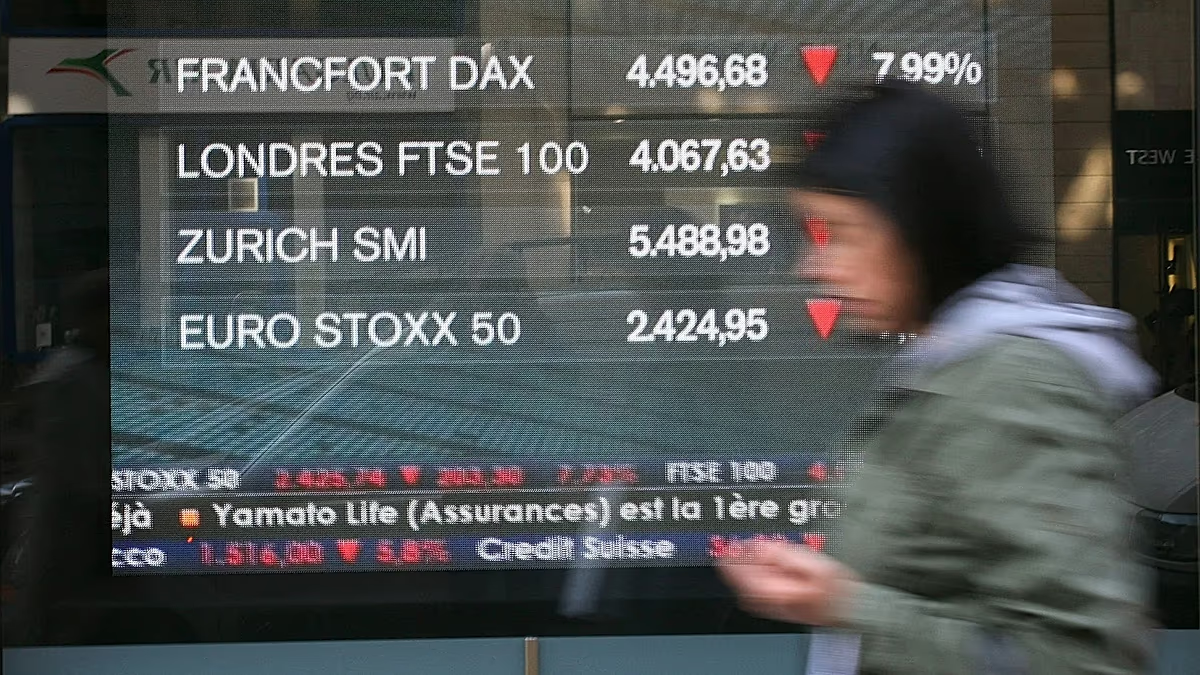
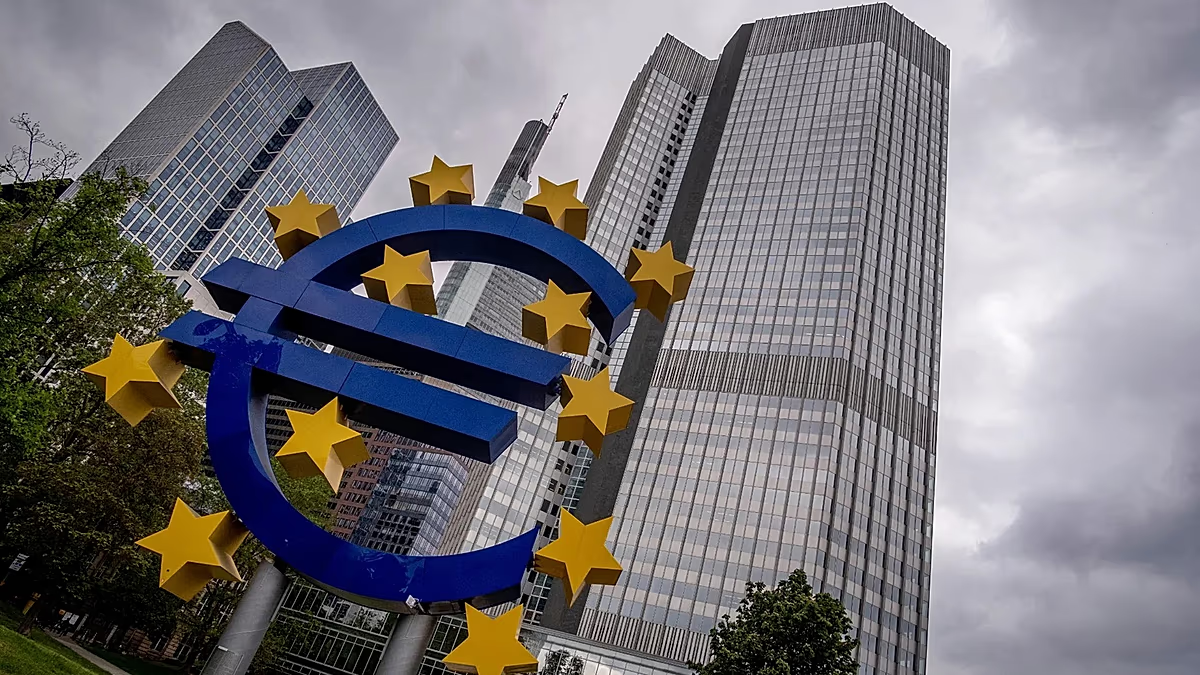
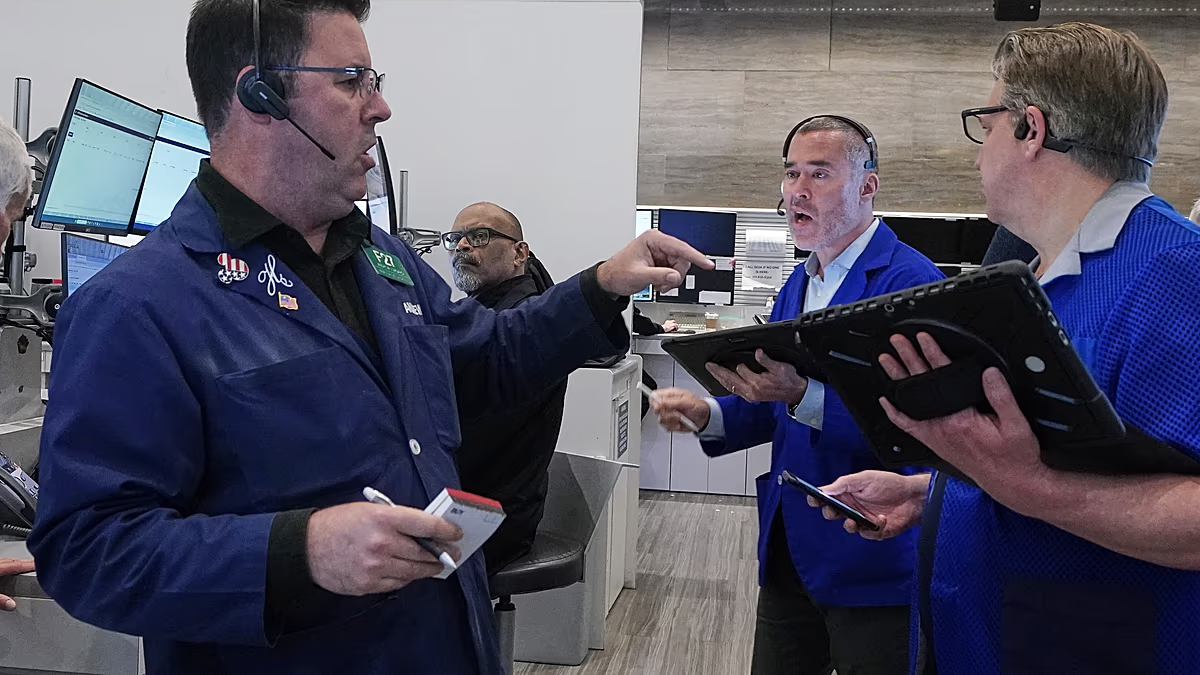
While energy markets buzzed with activity, stock indices in Europe and the United States presented a picture of cautious stillness. The Euro Stoxx 50 and the pan-European Stoxx 600 were virtually flat, trading within a narrow 0.2% range. Similarly, major national indices like the UK’s FTSE 100, Germany’s DAX, France’s CAC 40, and Italy’s FTSE MIB all moved within 0.3%. This inertia mirrored the pre-market activity on Wall Street, where futures for the S&P 500 and Nasdaq also showed minimal movement. The S&P 500 itself had closed Monday with a marginal 0.2% loss. This widespread flatlining was not a sign of disinterest, but rather of intense focus—investors were holding their breath, unwilling to make significant bets until the situation in the Gulf reached a clearer resolution.
The source of this global suspense was the lack of concrete progress in U.S.-Iran negotiations, despite visible diplomatic efforts. U.S. representatives, including special envoy Steve Witkoff and senior adviser Jared Kushner, had traveled to Islamabad as part of renewed outreach, but no announcements of a breakthrough had followed. President Donald Trump’s confident assertion that a new, “better” deal was being crafted—superseding the 2015 Joint Comprehensive Plan of Action (JCPOA) he had famously abandoned—was met with starkly contrasting rhetoric from Iran. Mohammad Ghalibaf, the speaker of Iran’s parliament and a key figure in the talks, declared on social media that Iran would “not accept negotiations under the shadow of threats” and was prepared to “reveal new cards on the battlefield.” Other Iranian officials had previously labeled U.S. demands as “excessive,” creating a public standoff that left markets highly sensitive to any incoming headline.
Against this backdrop of international tension, a major corporate story was developing in London. Associated British Foods (ABF), the conglomerate controlled by the billionaire Weston family, was poised to announce the outcome of a strategic review that could reshape its future. The company, with advisers from Rothschild & Co., was evaluating a demerger of its wildly successful fast-fashion retail arm, Primark, from its stable and diversified food business. The logic, as argued by analysts, was compelling: the two divisions operated in fundamentally different worlds. The food arm, encompassing household names like Twinings tea, Patak’s sauces, Jordans cereals, and Allied Bakeries, provided reliable cash flows. Primark, on the other hand, was a retail phenomenon engaged in aggressive international expansion within a brutally competitive sector. A split would allow each entity to focus on its distinct market dynamics and potentially unlock greater shareholder value.
This potential demerger was not merely an academic exercise in corporate structure; it was a strategic response to pressing challenges. ABF had warned in January of flat annual sales and declining profits, a situation exacerbated by rising costs across its operations. Furthermore, the ongoing Iran conflict posed a specific threat to Primark’s model. As a fast-fashion retailer heavily reliant on synthetic fibers, Primark’s cost base is intimately tied to petrochemical prices. Any sustained closure of the Strait of Hormuz or a broader escalation in the region could disrupt global energy and petrochemical supplies, driving up Primark’s input costs and squeezing its margins. The demerger review, therefore, was a move to fortify the company’s future amid both immediate economic pressures and looming geopolitical risks.
Thus, the morning of April 21, 2026, captured a moment of global financial equilibrium delicately poised between hope and fear. In one sphere, diplomats engaged in a silent, high-stakes poker game whose outcome would ripple through oil markets and global trade routes. In another, a British corporate giant contemplated a surgical split to better armor its components against the same volatile world. The flat trading indices were not a sign of calm, but of a market in waiting—a collective pause before potential news from Islamabad or London could trigger the next major move. Every investor understood that the coming 48 hours, leading to the ceasefire’s expiration, could reshape the landscape for energy, consumer goods, and global stability in profound ways.