




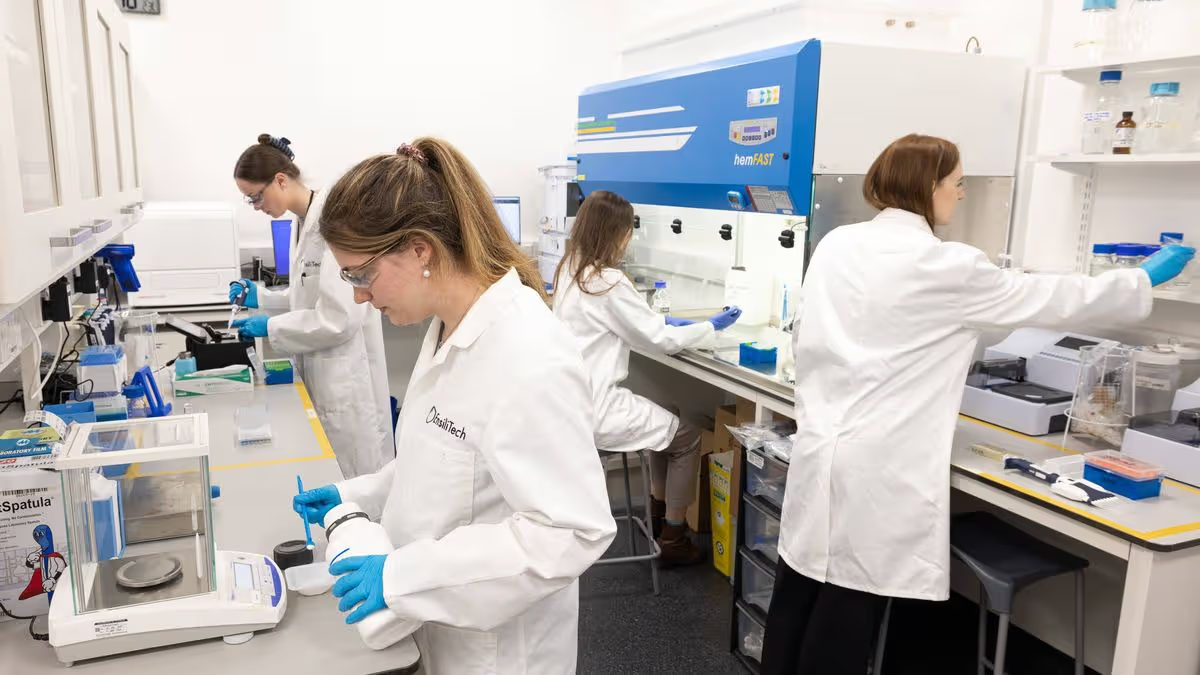
In the quiet laboratories of the University of Bath, a team of scientists is working on a medical breakthrough with global implications. They have successfully developed a new antigen targeting Hantaan disease, a serious strain of hantavirus. This development represents a crucial first step toward creating the world’s first effective vaccine for these dangerous pathogens. Hantaviruses, a group of viruses carried by rodents like mice and rats, are spread to humans primarily through contact with infected droppings, urine, or saliva. While person-to-person transmission is rare, as confirmed by both the World Health Organization and the UK Health Security Agency, the viruses pose a significant threat in many parts of the world. Currently, there is no specific antiviral treatment or approved vaccine available; care for infected patients is purely supportive, often involving intensive hospital treatment and respiratory support, underscoring the urgent need for a preventative solution.
The recent outbreak aboard the cruise ship MV Hondius, which resulted in three tragic deaths from the Andes strain of hantavirus, has cast a stark light on this hidden threat. While health authorities assure the public that this is not the start of a pandemic, the incident is a sobering reminder of the virus’s potency and its ability to emerge unexpectedly. The outbreak, with its confirmed and suspected cases, remains shrouded in mystery regarding its exact source onboard, highlighting the unpredictable nature of zoonotic diseases. This event has inadvertently underscored the timeliness and critical importance of the research being conducted at Bath, proving that such pathogens are not a distant problem but a present and pervasive danger, particularly in regions like Southeast Asia, Africa, and South America where certain strains are endemic.
What makes the University of Bath’s project particularly revolutionary is not just the antigen itself, but the groundbreaking technology intended to deliver it. Led by Professor Asel Sartbaeva, the team is utilizing a pioneering technique called ensilication, developed through the Bristol-based startup EnsiliTech. This innovation addresses one of the most formidable logistical challenges in global healthcare: the cold chain. Most modern vaccines, including mRNA-based ones, require stringent and expensive sub-zero temperature storage and transportation, which creates immense barriers to distribution in remote or resource-poor areas. Ensilication coats vaccine particles in a protective silica shell, making them remarkably stable at room temperature. This could potentially eliminate the need for cold storage entirely, transforming how vaccines are delivered to the farthest corners of the planet.
Professor Sartbaeva and her team had begun their work on the hantavirus vaccine before the cruise ship outbreak, driven by the clear and persistent gap in medical defenses. Their newly developed antigen has already shown promise in laboratory tests and animal models, eliciting what the team describes as an “excellent immune response.” This is a vital milestone, proving the vaccine candidate’s potential to train the immune system to recognize and fight the virus. While the path from successful animal trials to a publicly available vaccine is long, requiring rigorous clinical trials and regulatory approvals, this foundational work is a beacon of hope. It represents a tangible leap from theoretical research into the realm of viable medical solutions for a long-neglected threat.
The global footprint of hantaviruses is vast, with cases recorded across Europe, Asia, and the Americas. The diseases they cause range in severity; some strains lead to Haemorrhagic Fever with Renal Syndrome (HFRS), as seen with Hantaan virus in Asia, while others, like the Andes strain, cause Hantavirus Pulmonary Syndrome (HPS), a severe and often fatal respiratory illness. This variance adds complexity to vaccine development but also amplifies the need for a versatile solution. The ensilication platform pioneered by the Bath team offers a future where a single, stable vaccine formulation could be deployed efficiently anywhere it is needed, from rural South America to remote regions of Asia, without the risk of spoilage due to temperature fluctuations.
In summary, the work emanating from the University of Bath is a powerful convergence of urgent virology and innovative material science. It tackles the hantavirus problem on two fronts: by creating a promising new antigen that successfully provokes an immune response, and by embedding it within a transformative preservation technology that could democratize vaccine access worldwide. The tragic events aboard the MV Hondius serve as a somber reminder of why this research is so critical. While there is still a considerable journey ahead through clinical testing, the foundation laid by these scientists offers a compelling vision for the future—a world where robust, easily distributed vaccines can shield vulnerable populations from the silent threat lurking in rodent populations, finally bringing a formidable group of viruses within the reach of modern medicine.