




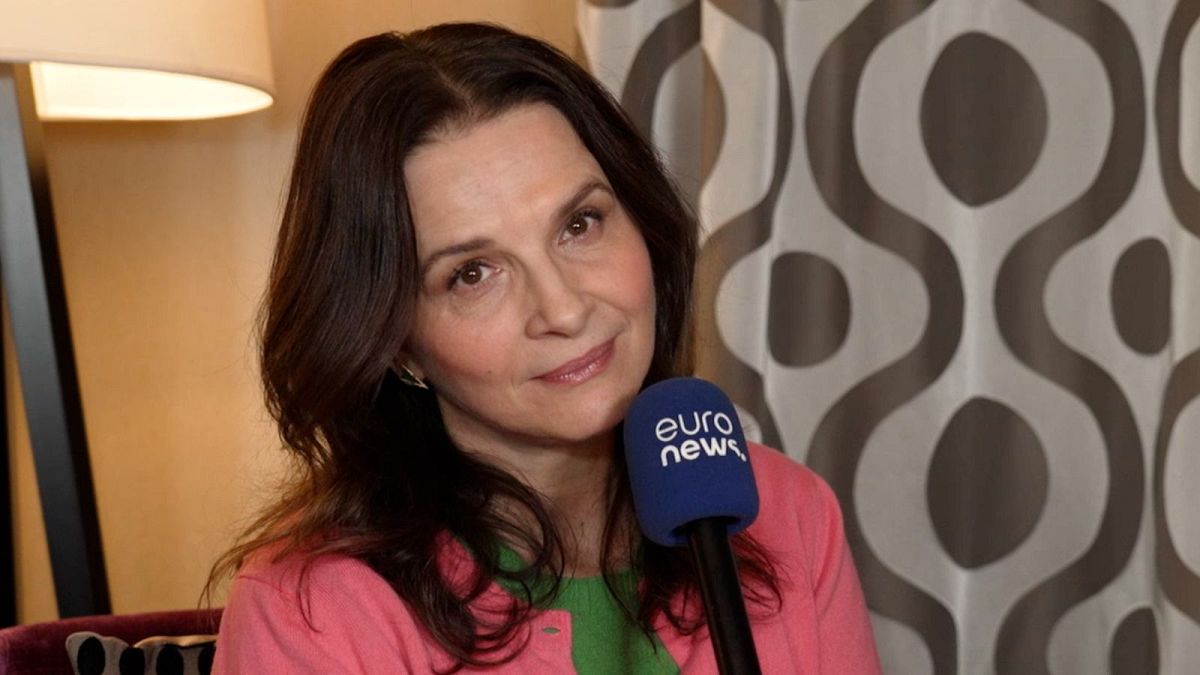
Juliette Binoche, a celebrated actress with a prolific career spanning decades and genres, has embarked on a new chapter as the President of the European Film Academy. Her extensive filmography includes collaborations with renowned directors like Jean-Luc Godard, Krzysztof Kieślowski, Michael Haneke, Anthony Minghella, Olivier Assayas, and Claire Denis, showcasing her versatility and talent. Her accolades are equally impressive, boasting an Oscar, a César, three European Film Awards, and the distinction of being the first actress to achieve Europe’s Triple Crown, winning prestigious awards at the Berlin, Cannes, and Venice film festivals. This remarkable resume testifies to her impactful contributions to cinema.
Taking on the presidency of the European Film Academy carries significant weight, especially given the legacy of her predecessors, including Agnieszka Holland, Wim Wenders, and Ingmar Bergman. Binoche views this role as an opportunity to champion artistic expression in film and to foster collaboration within a diverse European landscape. The Academy, founded in 1989 after the fall of the Berlin Wall, aims to unite Eastern and Western Europe through cultural exchange and to support young filmmakers. Binoche emphasizes the importance of showcasing a multitude of perspectives and voices, particularly in a continent marked by a complex history of conflict and division.
Despite the demands of her new position, Binoche remains committed to her acting career. She clarifies that her presidential duties, primarily involving speeches and award presentations, will not overshadow her work as a performer. She expresses enthusiasm for contributing a “Frenchy twist” to the Academy and for collaborating with its board members to further enhance its impact. Binoche’s recent on-screen appearance in Uberto Pasolini’s “The Return,” a reimagining of Homer’s “Odyssey,” demonstrates her ongoing dedication to her craft.
Reflecting on the current state of European cinema, Binoche acknowledges the diversity and social engagement evident in recent productions. She agrees with her predecessor, Agnieszka Holland, on the importance of filmmakers taking a stand on contemporary issues, particularly in the context of Europe’s historical and ongoing conflicts. Binoche believes that European films have a crucial role in amplifying marginalized voices and fostering understanding through diverse storytelling. This includes addressing sensitive topics, such as the portrayal and treatment of women in cinema, as exemplified in Coralie Fargeat’s film “The Substance.”
Binoche’s experience working in both European and American cinema provides her with a nuanced perspective on the challenges faced by female performers. While acknowledging potential systemic issues in Hollywood, she emphasizes the importance of collaborating with individual artists rather than navigating a rigid system. She recognizes the growing awareness within the industry, particularly regarding sensitive scenes, and emphasizes the importance of actors using their intuition and asserting their boundaries. Her advocacy for actors expressing their “being” and “lives” through their bodies, while maintaining a sense of trust and collaboration with directors, underscores the complexities of navigating artistic expression and personal boundaries.
Regarding the #MeToo movement, Binoche observes that progress has been made, with more women speaking out about their experiences. She encourages men to share their perspectives as well and recognizes the ongoing need for dialogue and institutional change. Binoche’s forthcoming participation in a French parliamentary assembly addressing these issues, despite her initial reluctance to engage publicly, demonstrates her commitment to supporting victims and promoting systemic change. She acknowledges the delicate balance between maintaining trust in artistic collaborations and addressing power imbalances.
Central to Binoche’s vision for the future of cinema is the idea of “re-humanizing” society. She believes that art, particularly film, has the power to provoke questions, spark emotions, and ultimately, transform lives. She stresses the importance of choosing films thoughtfully, viewing them not merely as entertainment, but as experiences that can nourish and enlighten. She shares an anecdote about a life-changing encounter with a viewer who was deeply impacted by her performance in Louis Malle’s “Damage,” highlighting the profound and lasting impact films can have on individuals.
Binoche’s passion for cinema extends beyond personal transformation. She emphasizes the role of films in facilitating communication and understanding within families, relationships, and communities. She believes that movies can spark dialogue, bridging differences and fostering appreciation for diverse perspectives. This, in essence, encapsulates her vision for the future of cinema: a powerful medium for personal growth, social connection, and ultimately, the re-humanization of society.