



Paragraph 1: The Russia-Belarus Security Pact and Nuclear Umbrella
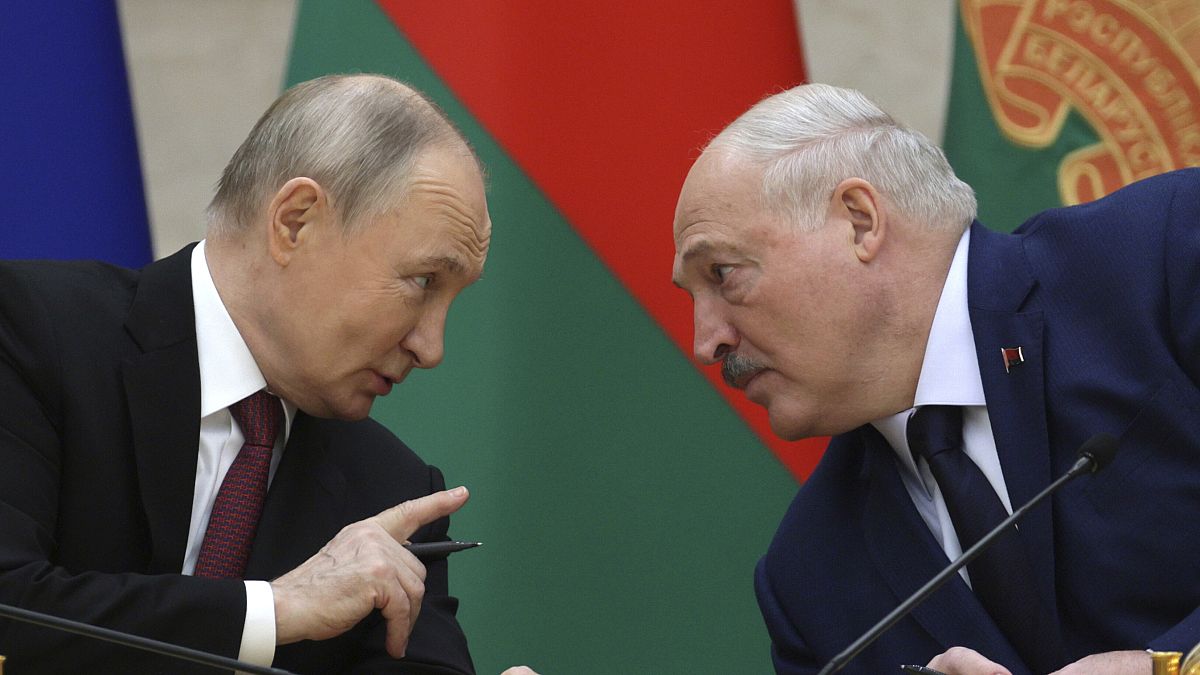
The signing of a security treaty between Russia and Belarus marks a significant escalation in the military cooperation between the two nations, particularly in the realm of nuclear weapons. Russian President Vladimir Putin’s visit to Minsk in December 2022 culminated in the signing of this agreement, which formalizes Belarus’s inclusion under Russia’s nuclear umbrella. This development follows the publication of a revised Russian nuclear doctrine that explicitly extends this protection to Belarus for the first time. The doctrine outlines scenarios under which Russia might deploy nuclear weapons, including responses to attacks using weapons of mass destruction or conventional aggression that threatens the sovereignty or territorial integrity of Russia or its allies.
Paragraph 2: Tactical Nuclear Weapons and the ‘Oreshnik’ Missile
The security pact opens the door for the deployment of Russian tactical nuclear weapons to Belarus, raising concerns about regional stability and the potential for nuclear escalation. President Putin stated that these weapons could be used to repel aggression against Belarus, further solidifying the military alliance between the two countries. During Putin’s visit, Belarusian President Alexander Lukashenko requested the deployment of more advanced Russian weaponry, including the ‘Oreshnik’ intermediate-range ballistic missile. Putin indicated that these missiles, capable of carrying both conventional and nuclear warheads, could be deployed to Belarus in the latter half of 2023, albeit remaining under Russian control, with Belarus given input on target selection.
Paragraph 3: The ‘Oreshnik’ Missile: Capabilities and Implications
The ‘Oreshnik’ missile, first used by Russia in Ukraine in November 2022, boasts advanced capabilities that pose significant challenges to existing defense systems. Putin described the missile as capable of delivering multiple warheads at hypersonic speeds, making it virtually impossible to intercept. Russian military officials claim the missile’s range extends across all of Europe, increasing its potential impact on regional security calculations. Putin’s justification for the use of the ‘Oreshnik’ in Ukraine centred on alleged Ukrainian attacks on Russian territory using Western-supplied weapons. He also warned that the missile could be used against facilities in NATO countries that provide such weaponry to Ukraine.
Paragraph 4: Russia’s Revised Nuclear Doctrine and Escalatory Potential
The revised Russian nuclear doctrine significantly lowers the threshold for the use of nuclear weapons, heightening concerns about the potential for nuclear conflict. The doctrine allows for the use of nuclear weapons not only in response to nuclear attacks but also in response to conventional attacks that threaten Russia’s or its allies’ existence. This shift echoes US President Joe Biden’s policy of providing Ukraine with longer-range missiles capable of striking targets within Russia, further amplifying the risk of escalation. The interplay of these policies creates a complex and potentially volatile security environment, with the possibility of miscalculation and unintended escalation.
Paragraph 5: Control Over Deployed Nuclear Weapons and Belarusian Opposition
While Russian officials maintain that tactical nuclear weapons deployed in Belarus will remain under Moscow’s control, Belarusian Security Council Secretary Alexander Volfovich stated that their use would require President Lukashenko’s approval. This apparent contradiction raises questions about the actual chain of command and the degree of Belarusian autonomy in such a scenario. Meanwhile, Belarusian opposition leader Sviatlana Tsikhanouskaya condemned the security pact, viewing it as a tool for Russia to exert greater control over Belarus and further integrate it into its military strategy. She warned that Belarus’s entanglement in Russia’s imperial ambitions poses a threat to the region and beyond.
Paragraph 6: Geopolitical Implications and Regional Security Concerns
The deepening military alliance between Russia and Belarus has profound geopolitical implications, particularly in the context of the ongoing war in Ukraine and the broader East-West tensions. The deployment of Russian tactical nuclear weapons to Belarus significantly alters the regional security landscape, introducing a new element of nuclear risk into the equation. The potential for miscalculation, accidental escalation, or even intentional use of these weapons raises serious concerns for the stability of the region and the broader international order. The international community is closely monitoring these developments, with many expressing alarm at the potential consequences of this escalating nuclear brinkmanship. The evolving security dynamic necessitates careful diplomacy and de-escalation efforts to prevent further deterioration of the situation and mitigate the risks of a larger conflict.