


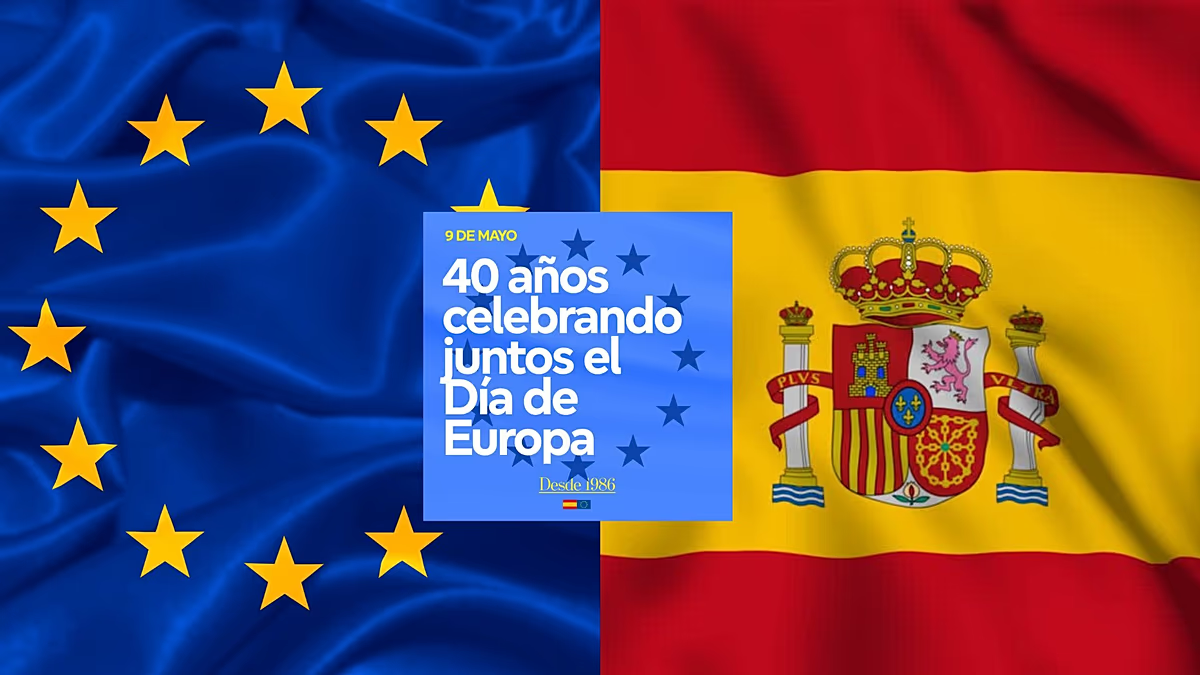
A Nation Reborn: Spain’s Forty-Year Journey Within Europe
Four decades ago, on a January night in 1986, Spain formally crossed a threshold that symbolized its profound rebirth. The country that knocked on Europe’s door was still emerging from the long shadow of nearly forty years of Francoist dictatorship, its nascent democracy fragile and seeking firm ground. European integration offered far more than an economic alliance; it was an institutional anchor and a solemn guarantee that the newly won freedoms would not be reversed. For Prime Minister Felipe González, who had first applied for membership while in opposition, this was a definitive statement of political identity—a return to the community of democratic nations from which Spain had been exiled. The starting point was humble: a per capita income around €7,300, life expectancy of 76 years, and exports constituting a mere 4.9% of GDP. Today, those figures—income above €31,000, life expectancy of 84, exports at 34% of GDP—chart a transformation inseparable from its European destiny, a journey from the periphery to the heart of the continent.
The early years of membership were a baptism by fire, a necessary shock to a protected economy. Spanish industry and agriculture faced the abrupt reality of European competition, leading to painful but vital restructuring. The Common Agricultural Policy, while forcing difficult reconversions, unlocked vast new markets for Mediterranean staples like olive oil, wine, and fruit, reshaping the countryside. Simultaneously, a historic transfusion of European structural funds began, building the skeleton of a modern nation. The highways that now seamlessly connect the peninsula, the high-speed trains, modernized ports, and advanced telecommunications networks largely owe their existence to investments from Brussels. Over forty years, this support exceeded €185 billion, accelerating modernization by generations. Perhaps the most poignant symbol of this new openness was the Erasmus programme. Spain, becoming the continent’s top host for Erasmus students, saw over 1.6 million of its young people participate. For them, it was more than an academic exchange; it was an awakening to a shared European identity.
The 1990s heralded a deeper political and economic union, and Spain was determined to be at its core. The Maastricht Treaty’s roadmap to a single currency required rigorous discipline—controlling deficits, taming inflation—a price Spain willingly paid for a seat at Europe’s top table. In 1995, another foundational freedom arrived: Spain joined the Schengen area, allowing citizens to cross borders without a passport for the first time in modern history, making the free movement of people a tangible right. Then came the emotional milestone of the euro. Adopted in 1999 for financial transactions, the physical notes and coins entered pockets in 2002, consigning the historic peseta to memory. While tinged with nostalgia, this moment cemented the feeling of sharing an economic destiny with hundreds of millions. Fittingly, it was at a Madrid summit in 1995 that the name “euro” was chosen, signifying Spain’s active role in shaping the project, not merely benefiting from it.
Indeed, Spain evolved from a recipient into a builder of Europe. It has held the rotating Presidency of the Council of the European Union five times, provided three Presidents of the European Parliament, and shaped key policies, from cohesion funds to social dimensions. It championed a mechanism to sanction states violating EU values and served as a crucial bridge to Latin America. This institutional leadership was severely tested during the Great Recession. The 2008 financial crisis devastated Spain, pushing unemployment above 26% and necessitating a partial banking bailout with European funds. Austerity measures bred deep social discontent and Euroscepticism. Yet, Spain remained within the euro and the EU framework. The crisis, though painful, revealed the Union’s indispensable safety net—from coordinated banking rescues to the European Central Bank’s support—demonstrating that facing the storm alone would have been far worse.
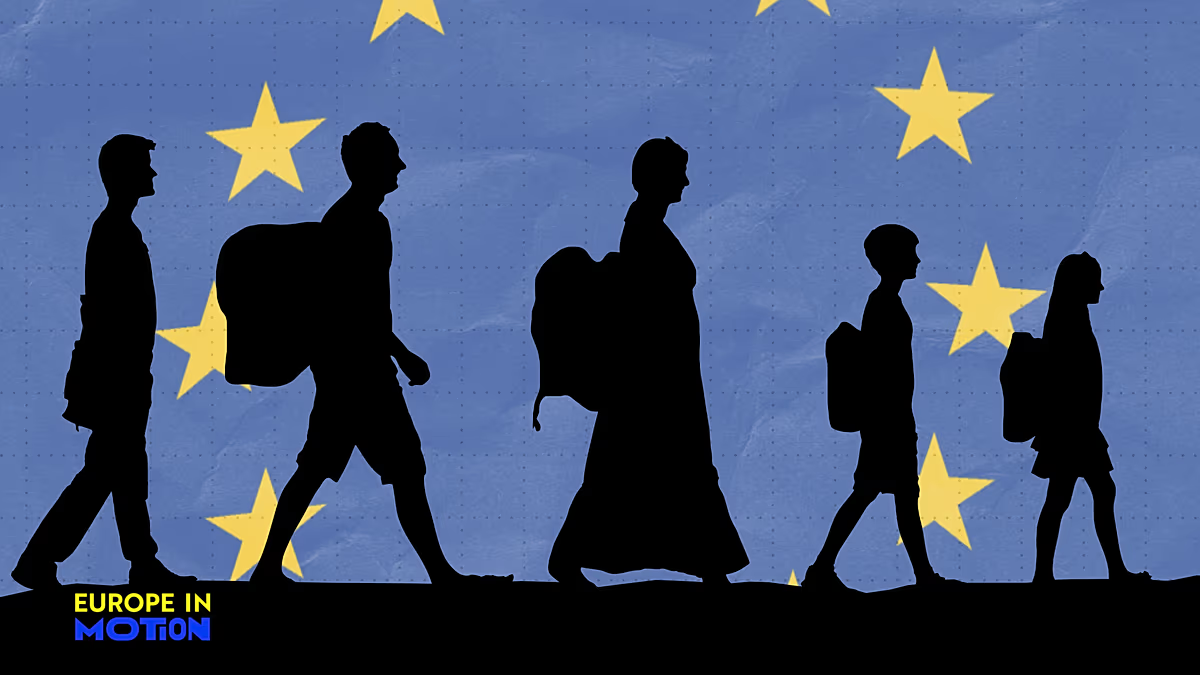
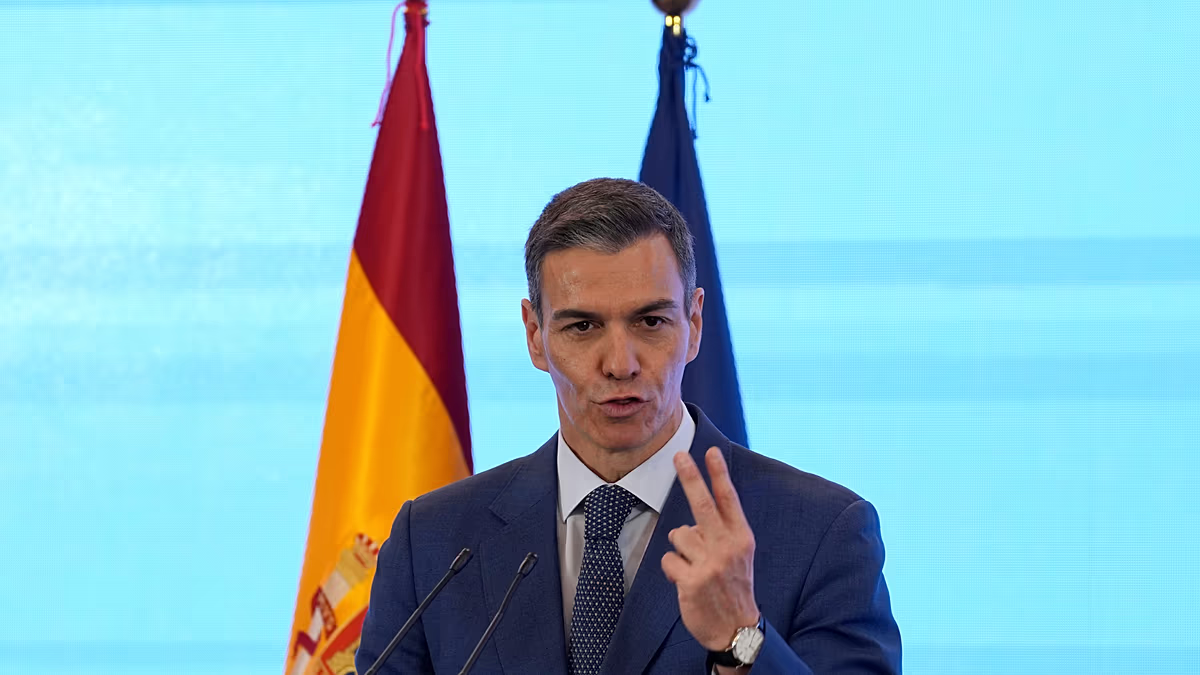
A decade later, the COVID-19 pandemic presented a different test, proving European solidarity could reach unprecedented heights. For the first time, the Union issued joint debt to fund recovery, channeling over €140 billion to Spain through the NextGenerationEU plan—the largest European investment in its history. The coordinated vaccine procurement and the EU Digital COVID Certificate restored mobility, showing citizens that the EU was a true community of shared destiny in a crisis. The tangible outcomes of four decades are staggering: goods exports soared from €12.6 billion to €141.5 billion, real GDP more than doubled, and the population grew by over 10 million, buoyed by immigration attracted by European prosperity. As Prime Minister Pedro Sánchez noted, the EU is now Spain’s “home and future.”
As Spain celebrates this anniversary, the occasion demands both pride and honest reflection on the road ahead. Significant regional inequalities persist, and daunting shared challenges—the green and digital transitions, demographic ageing, migration, and a new, volatile European security landscape—require more unified, effective responses. For younger generations who have never known a Spain outside Europe, the Union is not a cherished historic achievement to be defended, but a starting point to be improved. This demand for a more resilient, equitable, and responsive Europe is not a threat to the project but its greatest guarantee for the next forty years. Today, European membership is so woven into the fabric of Spanish life that it is almost impossible to imagine any other reality—a testament to a successful, transformative journey of national rebirth through continental unity.