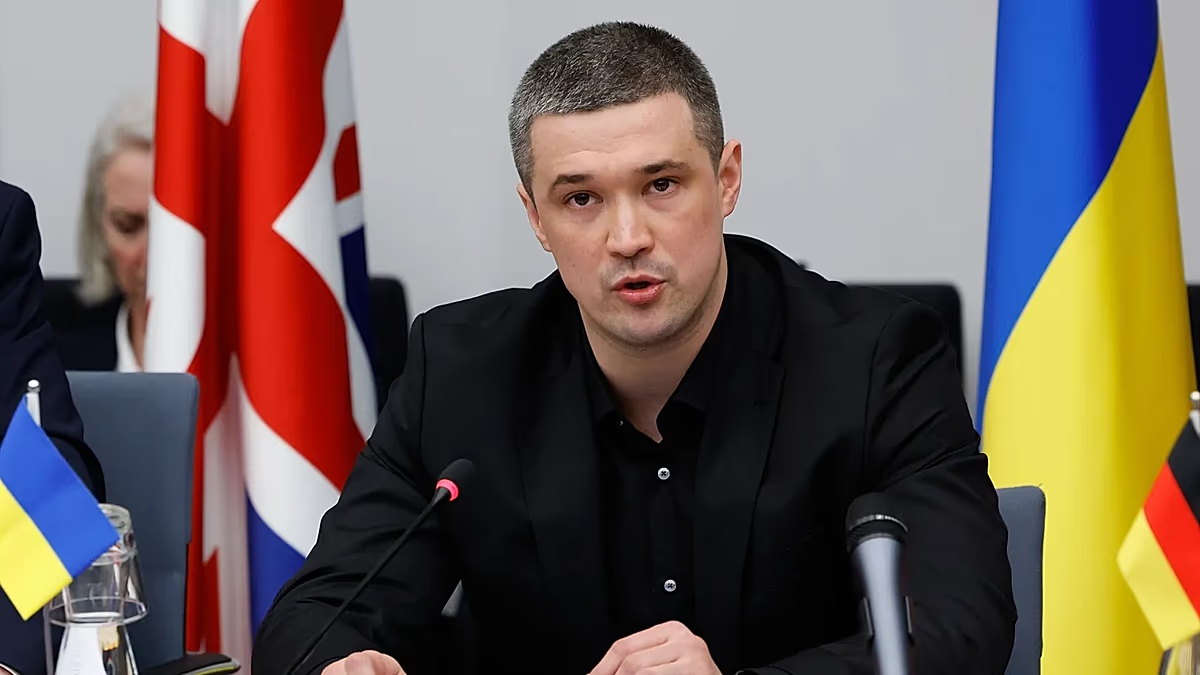


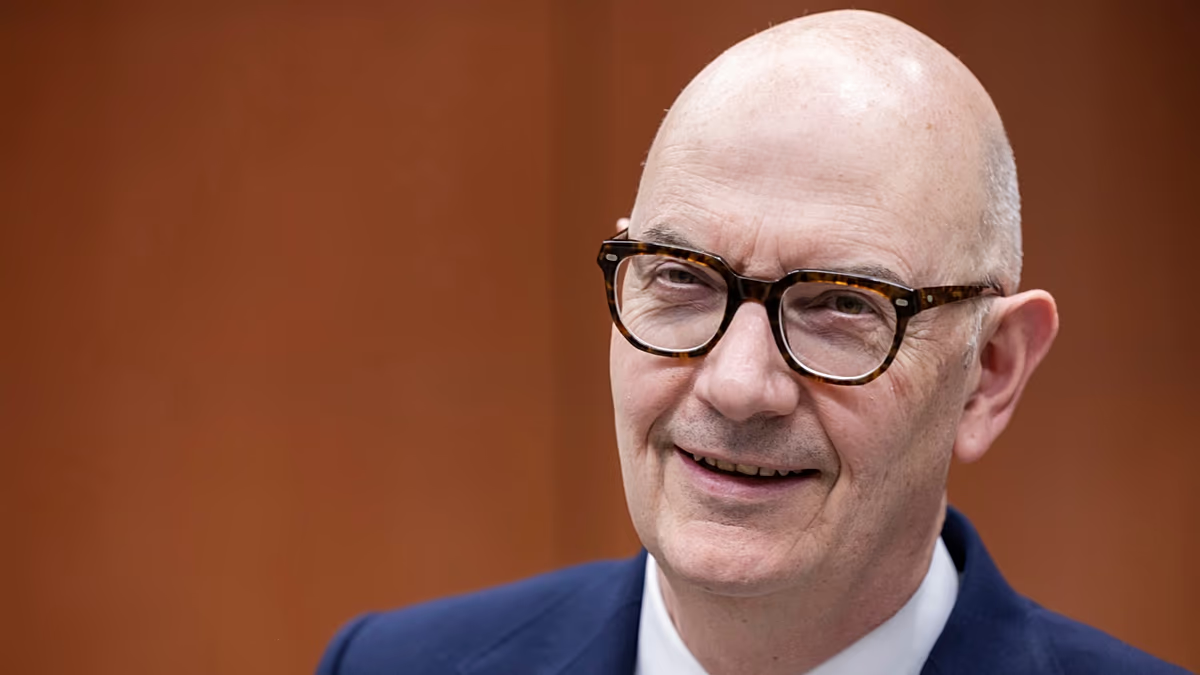
At the opening of the VivaTech conference in Paris, a powerful message echoed from the stage, delivered jointly by the economic and digital ministers of France and Germany. Roland Lescure, France’s Minister for the Economy, Finance, Industry and Energy Sovereignty, and Karsten Wildberger, Germany’s Federal Minister for Digital Transformation, issued a stark and urgent call to action. Their core argument was unambiguous: Europe stands at a critical juncture where it must rapidly build genuine technological sovereignty, particularly in artificial intelligence, or resign itself to being a mere spectator in the decade’s most defining technological shift. This plea was not born of abstract ambition but from a palpable sense of urgency, recognizing that the window for Europe to assert itself as a primary architect of the digital future, rather than a consumer of foreign innovation, is rapidly closing.
The ministers grounded their call in a candid acknowledgment of both concern and opportunity. Opening his remarks, Lescure directly addressed the underlying anxiety in the room, stating, “I can see some of us are worried [about the risks of artificial intelligence] — and worry is good. Concern is good.” However, he cautioned against allowing fear to paralyze action, emphasizing collective effort: “None of us is going to do it alone.” He then invoked the historic engine of European integration, the Franco-German partnership, arguing that when these two nations align, “Europe moves.” His conviction was clear: “I am convinced that France and Germany can make it — and be at the heart of what comes next. The next 10 years will be important.” This set the stage for a partnership framed not as a bureaucratic exercise but as a vital mission to secure Europe’s agency in the coming technological era.
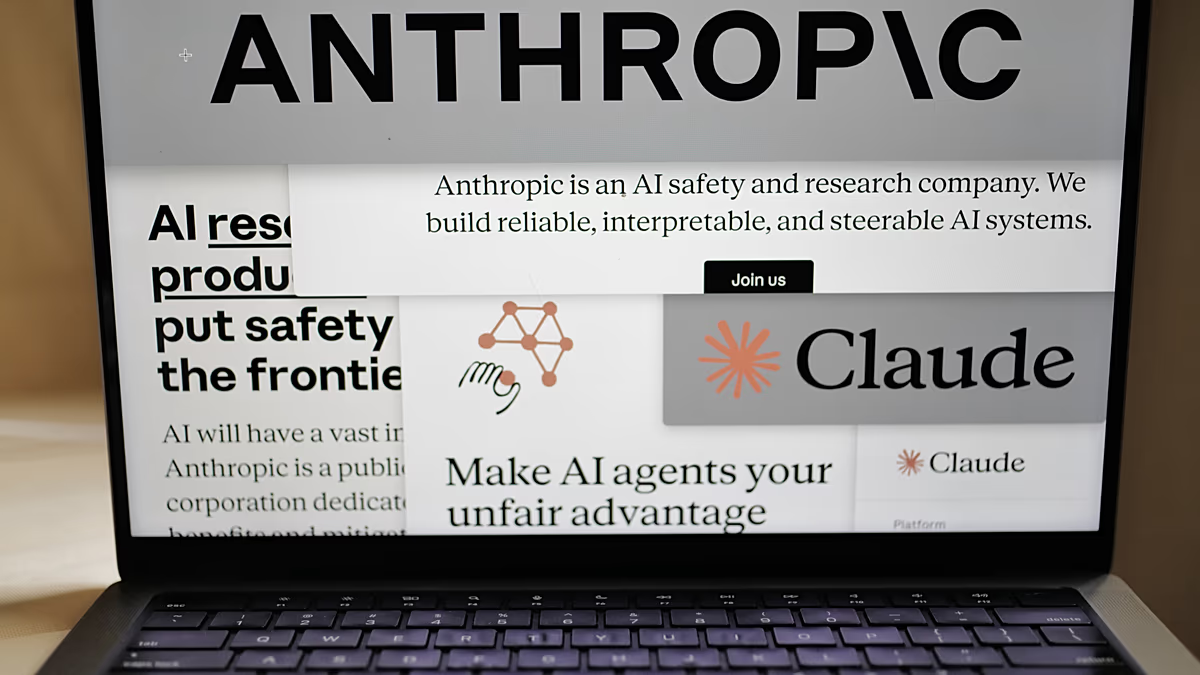
The urgency of this mission was given a concrete and recent example by Minister Wildberger. He pointed to the United States’ decision to ban foreign nationals, including employees of the company itself, from accessing Anthropic’s latest AI models. “The suspension of access to the most advanced models makes one thing clear to everyone,” Wildberger stated. “This is no longer an access debate; rules can change overnight, and sovereignty means we can still act if things like that happen.” This incident crystallized the ministers’ argument: technological dependence creates vulnerability. Sovereignty, therefore, is not about nostalgic protectionism but a practical necessity for maintaining the ability to innovate and operate independently. As Wildberger clarified, “Sovereignty is not isolation. It is openness from a position of strength.”
To translate this vision into reality, both ministers outlined tangible steps their countries are already taking, while acknowledging that state action alone is insufficient. Wildberger detailed Germany’s push to implement a national data centre strategy, aiming to quadruple AI computing capacity by 2030, alongside efforts to build a sovereign cloud infrastructure. Crucially, however, he celebrated the private sector’s role, declaring, “The heroes here are the great startups. Europe can do innovation, and we do scale, and we do matter.” This highlighted a key pillar of their strategy: leveraging Europe’s vibrant startup ecosystem and existing industrial strengths. The goal is not to build a walled garden but to create a powerful, homegrown foundation from which European companies can compete and collaborate globally.
The practical path forward, as presented, lies in deepened bilateral cooperation between France and Germany as a catalyst for broader European momentum. The ministers pointed to new joint initiatives as the essential starting point, embodying the principle that strength begets strength. “When we pull our technologies together, we shape what comes next,” Wildberger asserted. “We will not be spectators of the years ahead.” This collaborative spirit is intended to prove that Europe possesses all the necessary raw materials for success. The continent does not lack for brilliant ideas, world-class talent, or ambitious companies willing to build the future. The challenge, as framed in their concluding remarks, is one of will and execution.
Ultimately, the ministers’ joint appearance transcended a simple policy announcement; it was a rallying cry infused with both warning and hope. The warning is that inaction or slow movement will cede the future to others, leaving Europe strategically dependent. The hope is that by combining France’s and Germany’s resources, regulatory foresight, and industrial might, they can ignite a continent-wide resurgence in technological ambition. The final message was a challenge to Europe’s collective psyche: “It is not a question of whether Europe is ready. What Europe needs now is courage, ambition, and the discipline to execute and turn this into scale.” The call at VivaTech was for Europe to move from concern to concerted action, ensuring it is a author of the next chapter in technology, not just its reader.