

Our children are now growing up in a world profoundly shaped by their digital experiences, from fleeting viral trends to the unsettling proliferation of AI-generated content. This immersion has sparked a global crisis of conscience. With mounting evidence linking excessive screen time and social media use to serious harm, governments worldwide are urgently seeking solutions. Australia set a stark precedent in December by becoming the first nation to enforce a comprehensive social media ban for users under 16, blocking access to major platforms like Facebook, TikTok, Instagram, and YouTube. This move has ignited a heated debate across Europe, where countries like Austria are considering bans for those under 14, and the European Parliament is proposing a bloc-wide minimum access age of 16 for social media and video platforms.
The push for stricter regulation is fueled by alarming realities. Many argue that extreme measures are necessary to shield young people from the rampant cyberbullying and harmful content that flourish online. These concerns were powerfully validated by a recent landmark ruling in the United States, which found Meta—the parent company of Facebook and Instagram—guilty of knowingly exploiting children’s psychological vulnerabilities to the detriment of their mental health. This legal decision has added tremendous weight to the argument that social media platforms, in their current form, are fundamentally unsafe for developing minds. The core business model, built on addictive algorithms designed to maximize engagement, is increasingly seen as incompatible with child welfare.
Yet, a blanket ban is not without its critics and potential pitfalls. Opponents warn that age verification systems are often flawed and easily circumvented by tech-savvy youth. There is a genuine fear that driving young people off mainstream platforms could push them toward more dangerous, unregulated corners of the internet. Furthermore, such bans might deprive teenagers of digital spaces crucial for social connection and identity formation. Despite these disagreements, a crucial consensus is emerging from the debate: regardless of age restrictions, the fundamental architecture of social media needs a radical redesign. The question remains whether legislation should focus on keeping children out or forcing the platforms themselves to become less toxic.
To understand the human dimension of this policy dilemma, Euronews Next gathered perspectives from citizens across Europe. In France, where the senate is debating a ban for under-15s, 26-year-old Margot from Lyon spoke from personal experience. Having suffered from online bullying and exposure to inappropriate content, she sees merit in protection but doubts an outright ban is practical. “It’s the parents that should really educate their children and also schools about the dangers,” she reflected, highlighting the need for digital literacy education alongside any regulatory action. Her fellow Lyonnais, Hanif Ibrahim, 26, echoed this, cautioning that a sudden ban could leave young adults unprepared, arguing for guided, gradual exposure to build responsible users.
Sentiments in other nations reveal a spectrum of worry and resolve. In Belgium, where the minimum age may rise from 13 to 15, Brussels resident Alexandra Barilova strongly supported a Europe-wide ban, citing the profound impact on the teenage psyche. Sorengo Guie, a 27-year-old nurse, offered a harrowing professional perspective, linking his daily encounters with young patients suffering depression directly to social media pressures around harassment and unrealistic body standards. Conversely, in the United Kingdom, Tyler, a 27-year-old Londoner, was skeptical about a ban’s enforceability, noting that determined teenagers would use technical workarounds like VPNs. He placed the onus squarely on the companies: “They should be self-governing themselves.”
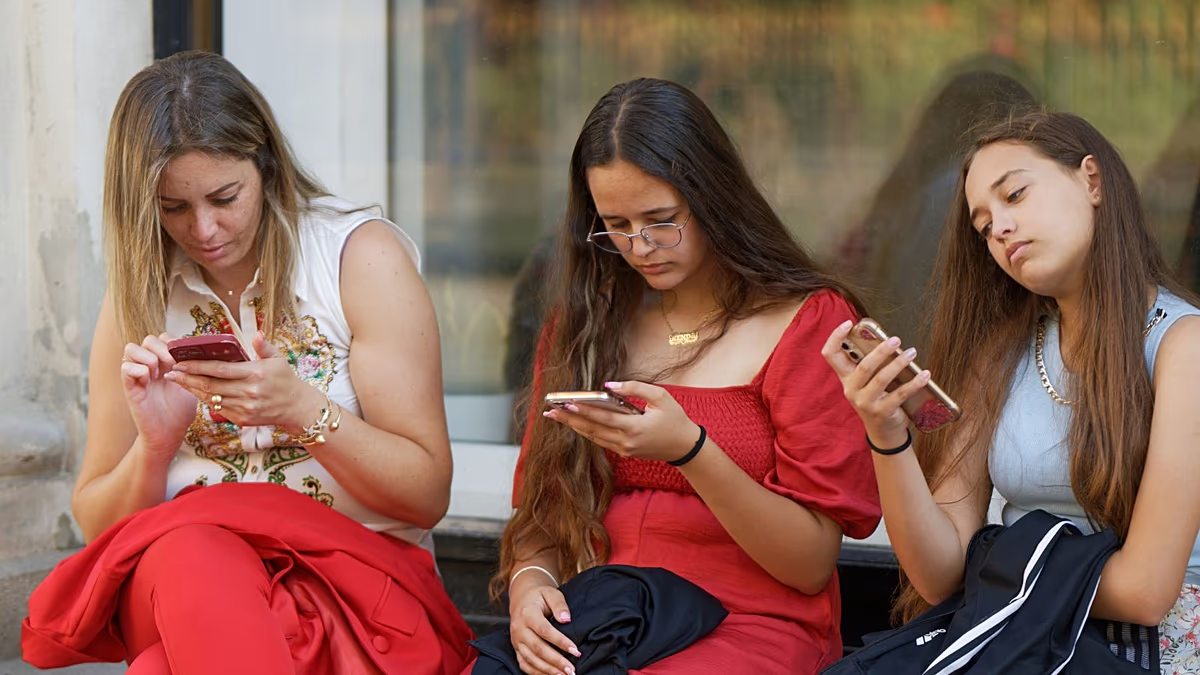
The most poignant reflections often came from those closest to the challenge of parenting in the digital age. In Portugal, which has approved a bill requiring parental consent for social media use by under-16s, a mother in Lisbon voiced strong agreement. She described the struggle of monitoring screen time and expressed relief that legislation could help shoulder a burden that feels overwhelming for parents alone. “Exposure to screens… is harmful to children whose brains are still in formation,” she explained. This view was shared by a fellow Lisbon resident who feared the “manipulation, false information and loss of identity” fueled by these platforms. Yet, another local offered a crucial nuance, stating that any regulation “depends on the social context of each person,” underscoring that family guidance and education cannot be legislated away.
Ultimately, the dialogue across Europe paints a complex picture. There is widespread and justified fear about the documented harms social media inflicts on youth mental health, coupled with a deep frustration at the failure of powerful platforms to self-regulate. While the desire for swift, protective action is strong, so is the understanding that simplistic bans may create new problems or fail entirely. The path forward appears to demand a multifaceted approach: robust legislation that holds tech giants accountable for their design choices, enhanced digital literacy curricula in schools, empowered and informed parenting, and perhaps most critically, a fundamental reimagining of the online environments that have become the de facto public squares for the next generation. The goal is not just to build higher walls, but to create a safer world within them.