

A New Chapter for Hungary: Unlocking Frozen EU Funds Through Reform
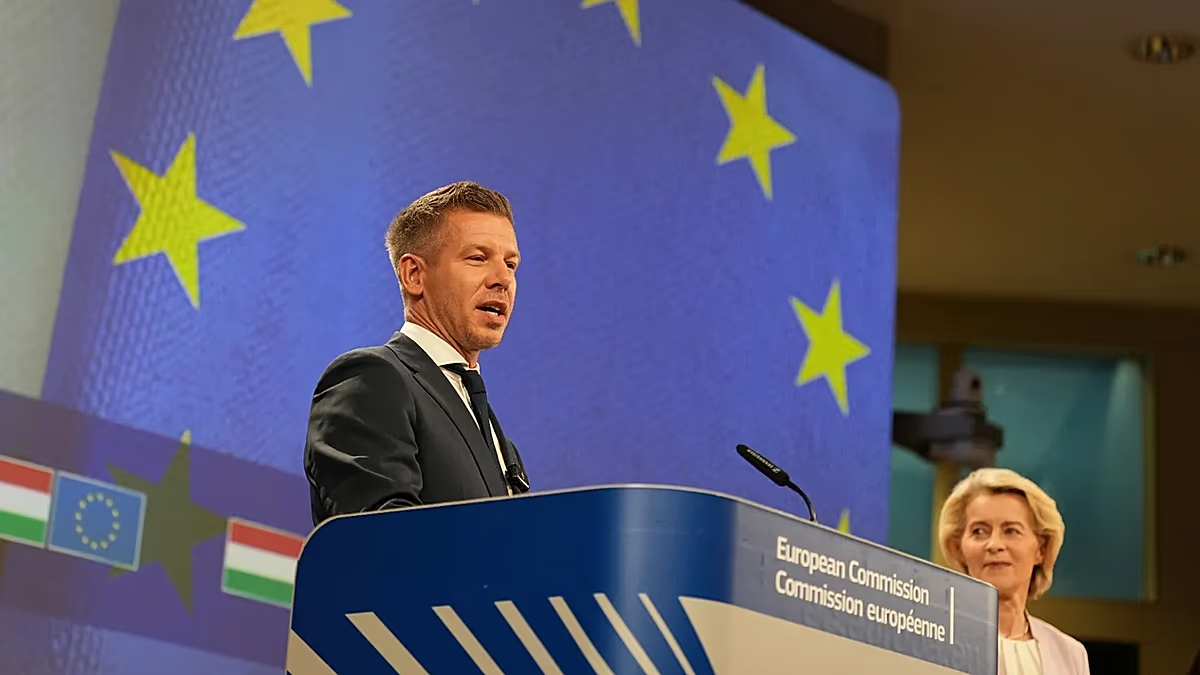
In a pivotal move toward economic revitalization, Hungary has formally submitted its revised national recovery plan to the European Commission. This step represents a crucial effort to unlock approximately €16.4 billion in European Union funds that had been frozen due to protracted concerns over corruption and systemic rule-of-law deficiencies during the previous administration. The funds are part of the EU’s post-pandemic Recovery and Resilience Facility, a time-sensitive program requiring all allocated monies to be committed by the end of August 2026. The submission signals a new phase in Hungary’s relationship with Brussels, following the electoral victory of Prime Minister Péter Magyar in April, which ended Viktor Orbán’s 16-year tenure.
The Path to Release: Conditions and Commitments
Accessing these substantial resources is contingent upon Hungary satisfying a stringent set of EU conditions. The revised plan is built around 27 so-called “supermilestones,” which are comprehensive benchmarks focused on judicial independence, public procurement transparency, and anti-corruption frameworks. While the full text of the plan remains confidential, officials indicate it prioritizes investments in national energy infrastructure, railway modernization, housing, and support for small and medium-sized enterprises. Crucially, the Hungarian government has concurrently initiated legislative reforms to meet these conditions, including proposed amendments to the governance of state-funded foundations and bolstering the powers of the national Integrity Authority.
Legislative Reforms Demonstrate Goodwill
To solidify its commitments, the Magyar government has fast-tracked a package of draft laws to parliament. These legislative proposals include introducing prison sentences for public officials who violate asset declaration rules—a direct measure aimed at combating graft. The proposed extension of the Integrity Authority’s mandate is particularly significant, as it suggests a move toward a more robust and independent oversight body. These actions are designed to demonstrate tangible progress to the European Commission, which must assess and approve Hungary’s fulfillment of the milestones before any funds can be disbursed.
Scrutiny from the European Parliament
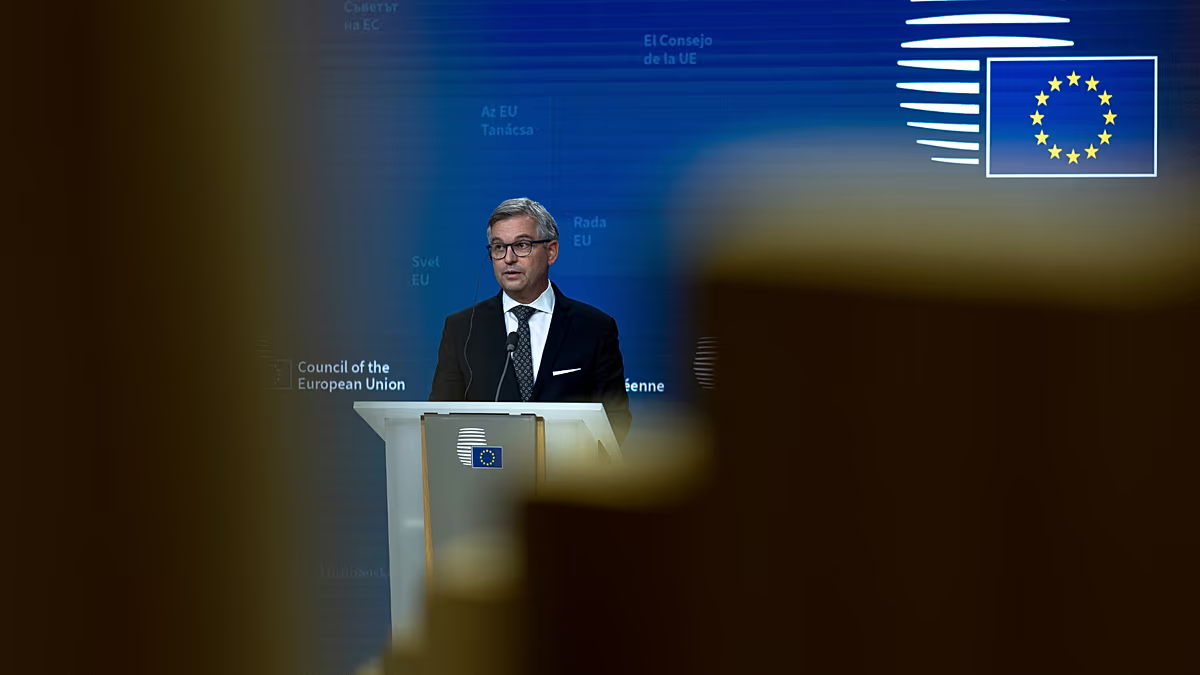
Despite these developments, the process faces intense scrutiny from the European Parliament, particularly its Budgetary Control Committee. Several Members of the European Parliament (MEPs) have expressed deep skepticism, demanding full transparency regarding the political understanding reached between Commission President Ursula von der Leyen and Prime Minister Magyar. German Green MEP Daniel Freund characterized their recent joint press conference as a “carefully orchestrated PR event,” highlighting the absence of publicly available written agreements detailing Hungary’s specific commitments or any potential shifts in the Commission’s assessment criteria.
The Stakes: Trust and Taxpayer Money
The debate transcends mere procedure; it touches on core issues of accountability and the stewardship of public funds. MEPs emphasize that the €16.4 billion in question constitutes European taxpayers’ money, necessitating the highest standards of oversight. Their scheduled hearing with EU commissioners in mid-July will be a critical forum for demanding concrete details. The underlying tension pits the urgency of Hungary’s economic needs and the Commission’s political desire for a functional partnership against the Parliament’s mandate to ensure that financial injections genuinely reinforce democratic norms and are not merely a short-term political fix.
A Delicate Balancing Act Ahead
The coming weeks will determine the success of Hungary’s bid. The European Commission must now rigorously evaluate the revised plan and the accompanying legislative steps, while navigating pressure from the Parliament for greater openness. For Hungary, the process is a test of its new government’s ability to implement lasting structural reforms. The outcome will resonate beyond Budapest, serving as a case study for the EU’s capacity to leverage its financial tools to uphold its foundational values. The ultimate goal—a more resilient, transparent, and prosperous Hungary—remains shared, but the path to achieving it is fraught with legitimate demands for proof and enduring change.